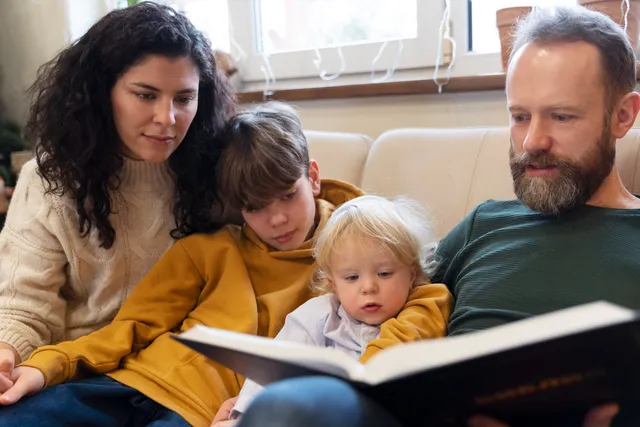
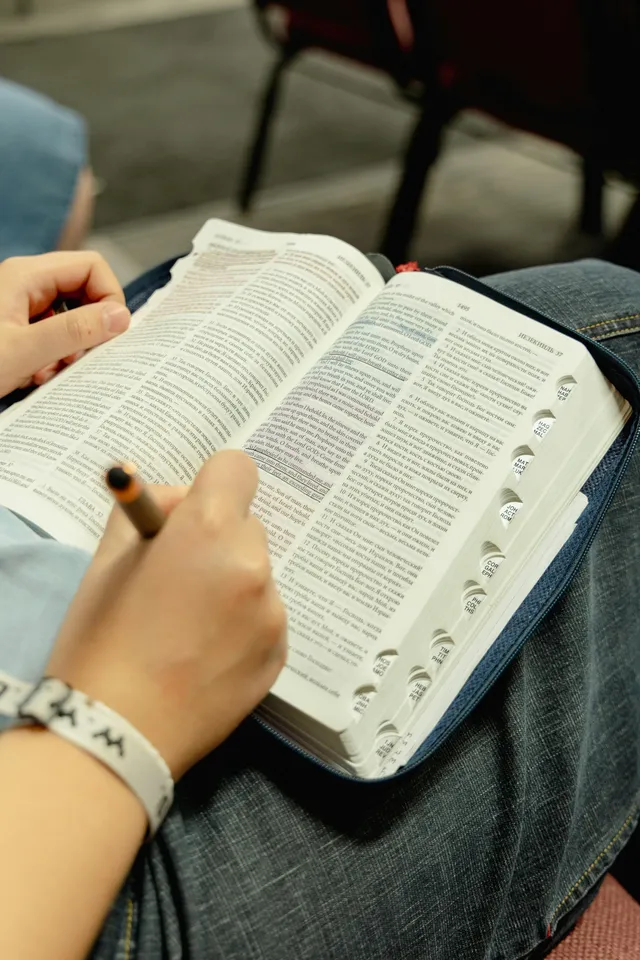
Parenting, in its truest sense, is holy ground. It's the everyday altar where love is tested, patience is refined, and grace is poured out like morning manna. The Bible never shies away from the sacred weight of this calling-it portrays parenting not merely as managing behavior or ensuring success, but as shepherding souls toward the heart of God. From the opening chapters of Genesis to the final words of Revelation, Scripture speaks to the joys, trials, and divine purpose of raising children in faith.
The First Pattern: God as the Model Parent
Before the Bible tells us how to parent, it shows us who God is as a parent. The very first human beings, Adam and Eve, experienced God's fatherhood firsthand-His provision, His teaching, His discipline, and His compassion. When they hid among the trees in shame, He did not abandon them; He sought them out: "Where are you?" (Genesis 3:9). That question, gentle yet piercing, sets the tone for all godly parenting. It reminds us that the heart of parenting is the pursuit of our children-seeking them in love, even when they wander.
God models patience as He guides His people through failure and immaturity. Throughout the Old Testament, He nurtures Israel as a child learning to walk, correcting yet never forsaking. In the New Testament, Jesus deepens that image when He teaches us to pray "Our Father in heaven," revealing the intimacy and authority mingled in God's parental care. Every act of Christian parenting begins by reflecting that divine pattern-firm yet tender, just yet merciful, anchored in truth yet overflowing with love.
Raising Children in the Lord
Few verses capture the biblical calling of parents more directly than Ephesians 6:4: "Bring them up in the training and instruction of the Lord." This single sentence holds both simplicity and depth. It calls parents to see their children not as possessions or projects, but as souls entrusted to them by God. To "bring them up" is to nourish-to cultivate an environment where faith can grow naturally, like a well-tended vine.
Discipline and Grace in Balance
The Bible's view of discipline is often misunderstood. In Proverbs, "discipline" is not about punishment but about formation-guidance that shapes character and calls a child toward wisdom. "The Lord disciplines those He loves," says Hebrews 12:6. If God's discipline flows from love, so must ours. A parent's authority, rightly exercised, mirrors God's steadfast desire for His children's good. The goal is not control, but Christlike maturity.
At the same time, discipline without grace can lead to despair, just as permissiveness without guidance breeds confusion. Godly parenting seeks the narrow way between the two-the kind of love that defines boundaries and offers abundant mercy when those boundaries are crossed. Real parenting requires teaching truth and embodying grace, again and again.
Teaching by Example: Faith Lived Out Loud
Deuteronomy 6 shines like a lamp on this truth: "These commandments that I give you today are to be on your hearts. Impress them on your children." Notice the order-truth must first reside in the parent's heart before it can rest in the child's. Faithful parenting begins with personal devotion. We can't pour into our children what we haven't received ourselves.
But the passage continues, painting an intimate picture of everyday discipleship: "Talk about them when you sit at home and when you walk along the road, when you lie down and when you get up." The sacred happens not only at bedtime prayers or Sunday worship, but in the ordinary rhythms-car rides, kitchen tables, backyard games, and shared tears. Children learn who God is by watching who we are when no one else is looking.
Faith That Feels Real
One of the most powerful gifts parents can give their children is authenticity. Scripture doesn't demand perfection from parents; it invites transparency. When children see their parents admit mistakes, ask forgiveness, and continue trusting God, they witness firsthand what a living faith looks like. In fact, those humble moments may become the clearest testimony of all-that Christianity is not a mask we wear, but a relationship we live.
The Tender Strength of a Mother and Father
Throughout Scripture, fatherhood and motherhood reveal distinct but deeply complementary dimensions of God's heart. A mother's compassion reflects the nurturing aspect of God's care: "As a mother comforts her child, so will I comfort you" (Isaiah 66:13). A father's instruction echoes God's wisdom and guidance: "My son, do not forget my teaching" (Proverbs 3:1). Both images are essential, woven together in the divine design of family. Whether in traditional homes, single-parent homes, or blended families, the biblical principle remains-children thrive when love and instruction walk hand in hand.
It is not about adhering to cultural ideals of parenting, but allowing God's own nature-His compassion and His truth-to shape how we relate to our children. The "ideal" parent in Scripture is not flawless; rather, it is the parent who continually seeks God's wisdom, repents when wrong, and keeps moving forward in faith.
When Parenting Feels Impossible
Every parent knows the feeling of inadequacy. There are moments when love feels stretched thin, when words fail, when children make choices that break your heart. The Bible never promises ease-but it offers hope that even in our weakness, God's strength is made perfect (2 Corinthians 12:9). He walks with parents in the mess, not just the milestones.
Consider Hannah in 1 Samuel. Desperate for a child, she pled for God's mercy and promised to dedicate her son to His service. When Samuel was born, she kept that promise, surrendering the very child she'd longed for. Her story teaches us the essence of Christian parenting: our children ultimately belong to God, not to us. We are caretakers of a divine trust. Letting go-sometimes in small daily ways, sometimes in heart-wrenching big ones-is part of the journey of faith.
Enduring the Long Seasons
There will be seasons of sowing where we see no fruit, prayers that seem unanswered, and lessons that appear ignored. Yet Scripture encourages us, "Do not grow weary in doing good, for in due season we shall reap, if we do not give up." (Galatians 6:9). Parenting, in the biblical sense, is planting seeds for eternity. The harvest may not always be immediate, but it is promised.
Hospitality of the Heart: Expanding the Family of Faith
The Bible's vision of parenting also expands beyond biological family. Throughout the New Testament, believers are called "children of God" and the church is described as a household of faith. Spiritual parenting-mentoring, guiding, nurturing others in Christ-is a continuation of this holy calling. Paul referred to Timothy as his "true son in the faith" (1 Timothy 1:2), showing that parenting, in God's kingdom, extends to spiritual relationships that build the next generation of believers. Every Christian is called to a form of parenthood-to nurture others toward maturity in Christ.
This means that grandparents, single adults, and childless couples all share in the stewardship of raising spiritual sons and daughters. The family of God is bound not by bloodlines but by grace. When the church embraces this call, it becomes the living reflection of God's parental love-a place where no one grows alone.
Parenting as a Path of Sanctification
Perhaps the deepest truth about biblical parenting is that it changes the parents as much as the children. Every sleepless night, every hard conversation, every moment of surrender is an invitation to become more like Christ. Parenting is one of God's primary classrooms for spiritual growth. It teaches humility-because we quickly discover our own limits. It teaches grace-because we must constantly receive it to give it. It teaches faith-because so much is beyond our control.
Ultimately, the purpose of parenting isn't simply raising "good" children-it's about raising disciples and becoming better disciples ourselves. As we guide our children toward Jesus, He is quietly shaping us through them. The parent who prays with a restless child or forgives a rebellious teen is participating in a divine mystery: the slow, sanctifying work of love that mirrors God's own heart toward us.
Walking in the Light Together
No parent's story is perfect, but every story can be redeemed. The Bible invites us to parent not from fear or performance, but from faith-trusting that God is at work in our homes even when the days are long and the progress is unseen. The same grace that covers our sins covers our parenting, too. If we keep our eyes on Christ and walk humbly with Him, our households-no matter their shape or size-become places where heaven touches earth.
As Psalms 127 reminds us, "Children are a heritage from the Lord." They are not trophies nor burdens-they are blessings, entrusted for a time, loved for eternity. Let us, then, love them well, teach them faithfully, and entrust them wholly to the One who calls us His own. For He is the ultimate Father, and from His heart flows every lesson worth learning about parenting.