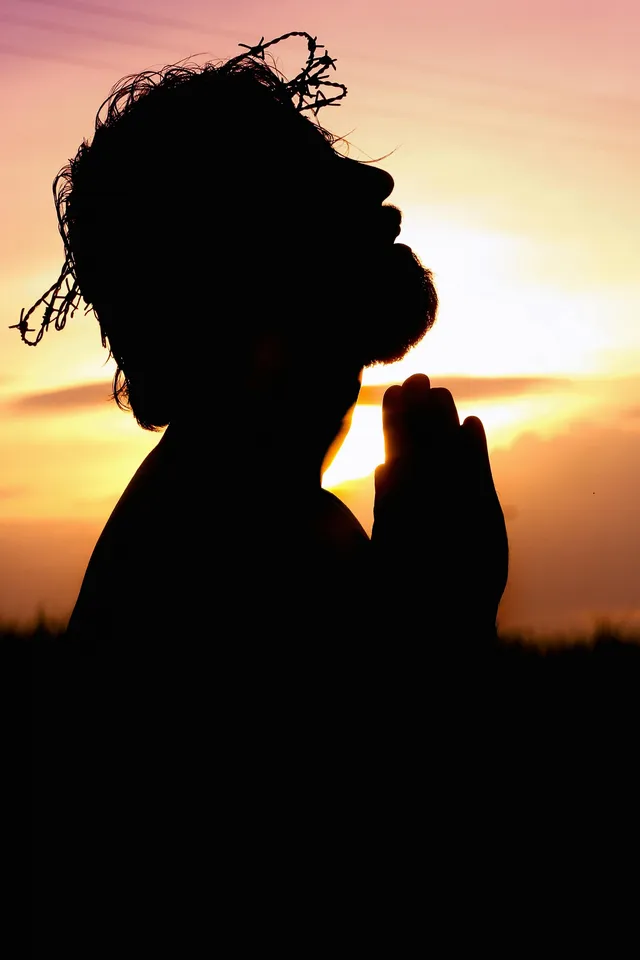
There's something both thrilling and dangerous about learning. Knowledge opens the world before us, lights torches in the dark, and invites our minds to run free. Yet even as we explore that light, pride waits in the shadows-quiet, subtle, whispering its favorite line: "Now you're wiser than others." When learning becomes a mirror instead of a window, we lose touch with the humility that keeps our hearts teachable before God.
The Gift and the Temptation
Education is one of God's most generous gifts to humanity. From the garden of Eden, God invited Adam to name the animals-to observe, discern, and create language. Learning is built into our design, an echo of the divine mind. And yet, after the fall, the pursuit of knowledge often became twisted by ego. The tree of knowledge that was meant to bless became a symbol of disobedience when humanity reached for wisdom apart from God.
That same tension lives on today. We are called to grow, study, and understand, but the posture of the learner must remain one of dependence, not dominance. The more we know, the more we must remember that every insight is a gift, not a possession.
Education as Worship
What if we approached learning as an act of worship? Not simply absorbing information, but cultivating awe for the Creator through everything we discover-whether in theology, science, art, or literature. The psalmist writes, "The heavens declare the glory of God; the skies proclaim the work of his hands" (Psalms 19:1). When we study those heavens, rightly and reverently, we join their Song of Songs of praise.
For Christians, every classroom, laboratory, or quiet reading chair can become a chapel. We learn not just to know, but to bow. True wisdom-unlike mere intelligence-always bends the knee. It humbles itself before mystery, recognizing that even as we uncover how creation works, we are still looking through a glass dimly (1 Corinthians 13:12).
Learning as a Spiritual Discipline
In a world obsessed with credentials and competition, humility in learning feels countercultural. Yet Christian education is not about climbing a ladder; it's about kneeling at the foot of the cross. When Jesus washed His disciples' feet, He wasn't only modeling servanthood in physical tasks-He was revealing the way of the truly wise: to serve rather than to impress. A mind devoted to Christ learns best when the heart is surrendered.
The Subtle Sin of Intellectual Pride
Knowledge can intoxicate. It can make us feel that we are the authority rather than the steward, the judge rather than the witness. The apostle Paul warned, "Knowledge puffs up, but love builds up" (1 Corinthians 8:1). That's not an indictment of learning; it's a warning about what happens when information outpaces transformation.
Intellectual pride rarely announces itself. It surfaces in dismissive attitudes, in impatience toward those who know less, in the quiet assumption that understanding equals holiness. But the wise of heart know that humility is the truest proof of learning. The more we understand God's world and Word, the more profoundly we should feel the weight of what we do not know.
When Learning Becomes a Stage
There's a temptation, especially in our social-media age, to turn knowledge into performance. We share insights, quotes, and commentary-sometimes less to encourage others and more to signal our depth. But learning, when detached from love, quickly becomes vanity dressed in intellect. Jesus called out the Pharisees not for their knowledge, but for their pride in it. It's possible to learn Scripture yet miss the Savior standing before us.
Each time we gain understanding, we face a choice: Will this knowledge draw us nearer to Christ or farther into self-importance? The mature believer learns to say with John the Baptist, "He must increase, but I must decrease" (John 3:30).
Models of Humble Wisdom
Scripture gives us tangible portraits of what humility in learning looks like. Moses, "learned in all the wisdom of the Egyptians" (Acts 7:22), did not flaunt his intellect; he fell on his face before God, declaring himself "slow of speech." His wisdom was not in eloquence but in dependency. Similarly, Solomon asked not for wealth or fame but for understanding to discern rightly-a prayer that began from the soil of humility.
In the New Testament, Paul's transformation from scholar to servant is striking. Trained under Gamaliel, fluent in the Law, Paul could have built a life of influence through knowledge alone. But after encountering Christ, he counted all his achievements as loss compared to knowing Him. The once-proud Pharisee became the apostle who wrote, "Let the one who boasts, boast in the Lord." His education became his servant, not his master.
Listening as a Form of Learning
One of the surest signs of humility in education is the ability to listen deeply. Listening acknowledges that truth does not begin or end with us. The humble learner hears God's voice not only in lectures or books, but in people-especially those the world overlooks. A child's question, an elder's story, a stranger's perspective-all can become instruments of grace if we have ears to hear.
Listening also protects us from isolation. Pride tries to monopolize understanding; humility invites conversation. It says, "I may be wrong. Teach me." This posture keeps learning relational instead of transactional, sacred rather than self-centered.
Community as a Classroom
God rarely teaches us in solitude for long. The body of Christ itself is a living school. Each person offers a piece of the puzzle. When Paul describes the Church as a body with many parts (1 Corinthians 12), he's showing that no one mind-or member-contains the fullness of wisdom. We learn best together, when our different gifts correct and complement one another. Within that diversity, humility becomes both the curriculum and the reward.
Relearning Dependence
The longer we walk with God, the more we realize how easily pride camouflages itself as maturity. Sometimes our greatest lesson is to relearn dependence-to admit that even after years of faith and study, we still need fresh grace. Jesus said the kingdom belongs to those who become like little children. He didn't mean naïveté but a spirit open to wonder, eager to be taught, quick to trust.
Childlike humility doesn't erase intellect; it redeems it. It allows an educated mind to remain tender. We can master theology and still marvel like disciples watching the wind obey His voice. That posture makes learning a lifelong pilgrimage rather than a competition for status.
Humble Learning in a Competitive Age
Our modern world often measures worth by achievement. We pursue degrees, credentials, and accomplishments as badges of validation. Yet God's kingdom turns these values upside down. There, the first become last, the greatest become servants, and wisdom grows in hidden corners where the world isn't looking.
Christians should pursue excellence-but with a different spirit. Our excellence is not to impress the crowd, but to honor the Creator. This means we can work hard, think deeply, and study diligently-not to outshine others but to reflect God's glory more clearly. The humility of the learner frees us from the tyranny of performance.
Imagine what our churches, classrooms, and communities would look like if our learning were saturated with prayer instead of pride-if every discovery led us to gratitude rather than comparison. Education, then, would cease to be a ladder to climb and instead become an altar of surrender.
Walking Humbly in the Light
There's a beautiful paradox in the Christian life: the more we truly learn, the smaller we feel before the vastness of God's wisdom. But that smallness is not discouraging-it's liberating. It reminds us that we are safe in the care of an infinite Teacher. As the Prophet Micah wrote, "What does the Lord require of you but to do justice, to love mercy, and to walk humbly with your God?" (Micah 6:8). The humble learner doesn't merely collect facts; they walk with God, moment by moment, in trust and reverence.
So, as we open books, enter classrooms, engage in conversation, or marvel at new discoveries, may we do so with hearts bowed low and eyes lifted high. To learn is to worship, when every insight becomes a doorway into deeper awe. And when knowledge tempts us toward pride, may we return to the One who knelt to wash our feet-the Master who teaches us that the greatest wisdom is found in humility.
In the end, the purpose of learning is not to become greater, but to become truer-to be more like Christ, who knew all things and yet chose the form of a servant. May our education, whatever form it takes, lead us there: into the quiet joy of the humble heart that still longs to learn.