Anxiety is one of the quiet epidemics of our time. It sneaks into our thoughts before dawn, sits beside us at work, and sometimes slips into our prayers. For many believers, the tension between faith and anxiety can feel especially heavy-after all, if Scripture tells us not to be anxious, what does it mean when anxiety still clutches us so tightly? Yet a deeper look at the Bible's treatment of fear, worry, and peace reveals that God offers not condemnation but companionship, compassion, and courage amid our anxious hearts.
When Worry Meets the Word
The Bible doesn't shy away from anxiety. From Genesis to Revelation, we find people facing overwhelming uncertainty-Abraham stepping out not knowing where he was going, Moses trembling before Pharaoh, Elijah running for his life into the wilderness. The pages of Scripture are not a sanitized record of fearless faith, but a vivid testament to a God who meets people exactly in their trembling moments.
Jesus Himself addressed anxiety directly in His Sermon on the Mount: "Therefore I tell you, do not be anxious about your life..." (Matthew 6:25). He points to the birds of the air and the lilies of the field as reminders of divine care. His words are not a finger-wagging command to simply 'stop worrying,' but an invitation to trust-to lift our gaze from the spinning wheel of "what ifs" toward the steady providence of a loving Father.
Seeing Anxiety as a Window, Not a Wall
Too often, Christians interpret these verses as a failure checklist: "If I feel worried, I must lack faith." But Jesus was not chastising the anxious; He was calling the weary into rest. His teaching reframes worry as a window through which we can see our longing for security, meaning, and control-and then discover that only God can truly satisfy those needs. Anxiety, in this light, is not the enemy of faith but the very soil in which deeper trust can grow.
David's Honest Cry: An Ancient Voice for Modern Hearts
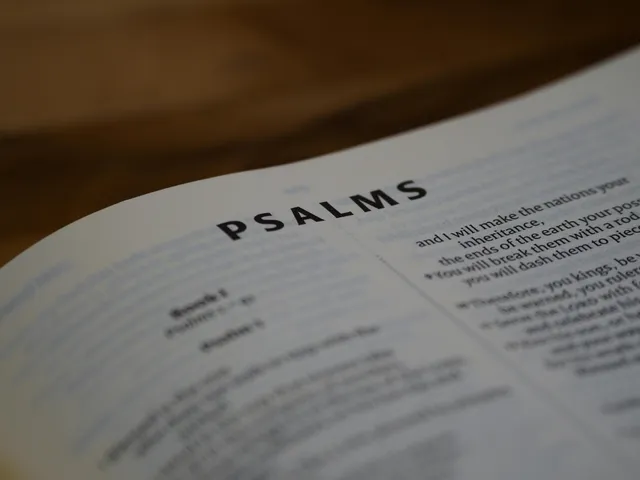
If Jesus taught us how to redirect anxiety, the psalmists show us what it feels like to live through it. The Book of Psalms pulses with raw emotion: despair, fear, trembling, and even panic. "When my heart is overwhelmed, lead me to the rock that is higher than I" (Psalms 61:2). David doesn't hide his turmoil; he pours it out before God like water spilling from a broken cup. And in doing so, he finds something astonishing: honesty before God becomes an altar of peace.
God's presence does not demand our composure. David teaches us that faith and fear can dwell in the same heart, as long as both are directed toward God. Anxiety has a silencing effect-it isolates, making us feel shame for our unrest. But the Psalms invite us to bring those fragile places into dialogue with the One who listens. Every trembling word is welcome in His presence.
Paul and the Practice of Peace
Centuries later, the Apostle Paul wrote from a prison cell: "Do not be anxious about anything, but in every situation, by prayer and supplication, with thanksgiving, present your requests to God. And the peace of God, which transcends all understanding, will guard your hearts and your minds in Christ Jesus" (Philippians 4:6-7). These are some of the most frequently quoted verses on anxiety. Yet they were penned by a man in chains, facing uncertainty and possible death.
Paul does not minimize our fears; rather, he offers a spiritual rhythm for resilience: prayer, supplication, and thanksgiving. Notice the progression-our worries, when offered to God, become the raw material for gratitude. The very act of turning them over to Him invites the divine peace that stands guard over our hearts. This peace is not the same as calm circumstances. It is an inward assurance that, no matter what tomorrow brings, we are held by Someone stronger than our fears.
The Discipline of Thanksgiving
Thanksgiving may seem like an odd antidote to anxiety, yet it is precisely the one Paul emphasizes. Gratitude reorients the anxious heart from scarcity to sufficiency. Each whisper of thanks becomes a foothold in the climb toward peace. When we recall what God has already done, our confidence in His care for tomorrow deepens. Thanksgiving doesn't erase anxiety, but it changes the way we face it-it becomes a weapon of spiritual perspective.
Jesus in Gethsemane: The Sacred Weight of Fear
Perhaps the most profound biblical picture of anxiety comes not from a Psalms or an epistle but from the garden of Gethsemane. On the night before His crucifixion, Jesus is "sorrowful and troubled," His sweat "like drops of blood." He prays earnestly, "Father, if it is possible, let this cup pass from me; yet not as I will, but as You will" (Matthew 26:38-39).
This is holy ground for anyone who struggles with anxiety. Here, the Son of God bows beneath the full human weight of dread-and chooses surrender. Jesus was not immune to anguish; He was intimately acquainted with it. His prayer doesn't rush past fear but moves through it, modeling a trust that holds steady in the storm. In Gethsemane, we learn that faith is not the absence of distress-it is devotion in the face of it.
Faith as a Steady Companion
Throughout Scripture, we encounter a God who addresses our fear not with rebuke but with presence. To Moses, trembling before his calling, He said, "I will be with you." To Joshua, stepping into leadership, He said, "Be strong and courageous... for the Lord your God is with you wherever you go." To the disciples quaking in a boat, He said, "It is I; do not be afraid." Again and again, He replaces the command "Do not fear" with the promise "I am with you."
Fear is not canceled by willpower but displaced by presence. When anxiety rises, we can look not to our ability to feel brave, but to God's unwavering commitment to stay near. The promise of Emmanuel-God with us-echoes across every anxious hour we endure.
The Power of Dwelling
Psalms 91 opens with this assurance: "Whoever dwells in the shelter of the Most High will rest in the shadow of the Almighty." Dwelling suggests lingering, not rushing. In an anxious world that demands constant motion, God invites us to abide-slowly, deeply, securely. We do not overcome worry by escaping it, but by discovering we are already safe in the presence of One who never leaves.
Walking Through Anxiety, Not Around It
Anxiety can feel like quicksand-the more we fight to escape, the faster we sink. But faith offers a different motion: not fighting, not fleeing, but walking through with trust. Psalms 23 paints this beautifully: "Even though I walk through the valley of the shadow of death, I will fear no evil, for You are with me." Notice the verb-walk. Not run, not stumble, but walk. The pace of faith is steady, deliberate, companioned by the Shepherd who leads us through the darkest valleys, not around them.
When we face anxiety, we can pray not only for deliverance but for discernment: "Lord, what are You showing me about Your character in this moment?" Sometimes peace is found not beyond our fears but in discovering that our comfort is not the prize-His presence is.
Modern Struggles, Ancient Promises
In today's world, anxiety is often clinical, complex, and deeply intertwined with our emotional and physical health. Scripture does not dismiss that reality. Seeking therapy, medication, or support groups does not betray a lack of faith-it can be an act of wise stewardship. The Bible affirms that we are holistic beings: body, mind, and spirit. God cares for them all. The promises of peace we cling to are spiritual truths, but they intersect with tangible care as well.
At its core, the biblical conversation about anxiety is not a contest between belief and biology. It is a reminder that whatever form anxiety takes-spiritual, emotional, physiological-God remains the ultimate healer of hearts. His Word offers tools for our souls while leaving room for the full care of our humanity.
Practicing Peace Daily
Peace is not a one-time achievement; it's a practice, a way of life. Here are some rhythms inspired by Scripture that can help us live more deeply rooted even as anxious thoughts whisper around us:
- Daily Surrender: Begin each day with a short prayer of release-naming your worries before God and entrusting them to His care.
- Scripture Meditation: Let verses like Isaiah 26:3 ("You will keep in perfect peace those whose minds are steadfast, because they trust in You") anchor your thoughts when fear rises.
- Gratitude Journaling: Record moments when you sensed God's provision or peace. Gratitude transforms memory into worship.
- Community Connection: Share your burdens with trusted friends or mentors. Isolation multiplies anxiety; fellowship diffuses it.
- Rest and Renewal: Even Jesus withdrew to quiet places to pray. Rest is not optional-it's obedience in the rhythm of grace.
The Stillness That Holds Us
What does the Bible say about anxiety? It says that anxiety is real-but so is God's peace. It tells us that fear is human-but faith is divine. It assures us that while our hearts may tremble, we are never alone in the trembling. The message of Scripture is not "be strong" in yourself, but "be still and know" that He is God.
In every anxious moment, the invitation remains the same: Lift your eyes. Trust the One who clothes the lilies, counts the sparrows, and calls you His own. Let His presence speak louder than your fear. The silence that follows won't always be immediate or complete-but beneath it all, the shepherd still whispers: "Peace, be still."
And perhaps, in that sacred stillness, we'll discover that peace was not something we had to find at all-it was Someone walking with us, every step of the way.