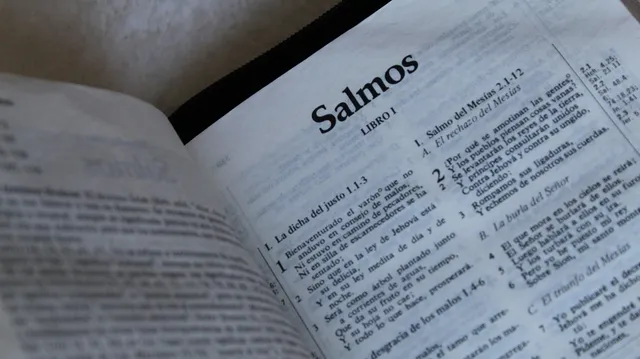
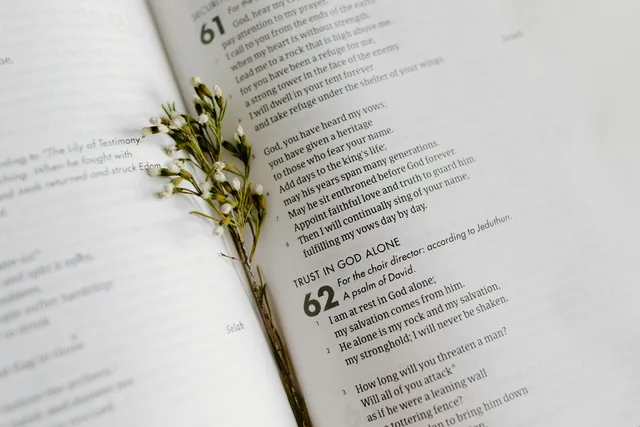
There's a sacred honesty pulsing through the Psalms, a rawness that disarms our tendency to tidy up our feelings before bringing them before God. In a world often more comfortable with curated smiles and polished prayers, the Psalms invite us into something different-something deeper. They remind us that the life of faith isn't about suppressing our emotions; it's about sanctifying them through honest communion with the One who already knows them.
The Language of the Heart
The Psalms are the Bible's songbook, but they're also the heartbeat of Scripture's emotional life. We find there the full range of human feeling: grief, joy, rage, confusion, trust, hope, despair, and delight. No emotion is too unruly for God, and no heart too chaotic to be heard.
Consider David's lament in Psalms 13: "How long, Lord? Will you forget me forever?" These words aren't neat or polite-they're desperate, almost accusatory. Yet they find their way into sacred Scripture. That's astonishing. It means that God not only permits emotional honesty; He welcomes it. The Psalms teach us that our feelings, far from being enemies of faith, can become instruments of it.
When Faith Feels Fragile
There are moments when faith feels fragile-when the heavens seem silent, prayers seem to bounce off the ceiling, and God feels far away. The Psalms do not deny those moments. They stare them straight in the face. Psalms 42, for instance, captures the ache of spiritual thirst: "My tears have been my food day and night."
But even as the psalmist pours out sorrow, he also speaks to his own soul: "Why, my soul, are you downcast? Put your hope in God." This dual movement-lament and hope, sorrow and faith-reveals the paradox of spiritual honesty. The psalmist does not wait until he feels better to trust God; he trusts in the midst of his pain. Emotional honesty in the Psalms never stays static-it bends toward hope, even if that hope is barely a whisper.
The Courage to Feel Before God
We often assume that maturity in faith means managing emotions, keeping them under control. But the Psalms turn that idea upside down. They show us that spiritual maturity is not emotional control-it's emotional surrender. To bring God our unfiltered emotions is not weakness but worship. It is to trust that He can handle the full weight of who we are.
Think of Psalms 22, later echoed by Christ on the cross: "My God, my God, why have you forsaken me?" Jesus Himself entered into that cry, sanctifying our questions and our pain. If the Son of God could pray such words, then surely our own expressions of anguish are not outside the boundaries of faithful prayer.
Honesty Transforms Prayer
Real prayer begins where pretense ends. Many of us were taught, perhaps unconsciously, that prayer should be reverent, calm, composed. But the book of Psalms cracks that assumption wide open. There, prayers thunder and weep; they burn with anger and dance with joy. The psalmists model a kind of relationship with God that is deeply personal and uncomfortably transparent.
When we pray like that, something shifts in the soul. The walls we've built between our emotions and our faith begin to crumble. We discover that God doesn't simply tolerate our transparency-He meets us in it. The Psalms give us a language for truth-telling before God, a blueprint for what it means to pray with every fiber of our being.
Transformative Honesty
The beauty of emotional honesty is that it leads not to self-absorption but to transformation. Psalms 73 begins with envy and confusion-"I envied the arrogant when I saw the prosperity of the wicked"-but it ends in worship: "Whom have I in heaven but you?" The psalmist doesn't deny his emotional turmoil; he brings it into the sanctuary, where truth reframes his vision.
This journey-from turmoil to trust, from complaint to confidence-is the pattern of many Psalms. It's the path of honest faith. The transition doesn't come from repressing emotion, but from offering it to God who refines it.
Anger, Grief, and the Grace of Expression
Some of the hardest Psalms for modern readers are the imprecatory ones-those fierce passages where David asks for justice, even vengeance. It's tempting to skip over those sections, but to do so is to miss something profound. These Psalms do not commend violence; they model honesty about the anger that seethes in every human heart. In those verses, we see a man wrestling with injustice in God's presence rather than taking matters into his own hands.
When we learn to bring our anger to God, it loses its power to consume us. The Psalms teach us that holy honesty becomes holy healing. Suppressed emotions become festering wounds; expressed in prayer, they become pathways to redemption.
The Compassionate Space of Lament
Grief, too, finds its sacred echo in the Psalms. Psalms 34:18 says, "The Lord is close to the brokenhearted." The Psalms of lament give us permission to sit in sorrow without shame. They affirm that faith does not require pretending we are okay when we are not. Instead, it bids us to weep in the presence of God, who weeps with us. This divine companionship in suffering transforms despair into communion.
Worship on Both Sides of Emotion
If lament is one side of emotional honesty, praise is the other. The Psalms do not linger forever in sadness-they also erupt in joy. But the joy of the Psalms is not shallow optimism. It is joy tested by tears, a joy that has passed through the fire of doubt and emerged refined.
Their praise is not naïve. It's resilient. It's the Song of Songs of those who have learned that God's faithfulness isn't defined by our circumstances but revealed through them. Psalms 30 declares, "Weeping may stay for the night, but rejoicing comes in the morning." That kind of joy doesn't ignore pain; it looks pain in the eye and still chooses to sing.
Learning to Praise in the Valley
Praise offered after lament carries a unique weight. It has been forged in the furnace of trust. The psalmists teach us that the valley is not the end of the story. When we bring our emotions honestly before God, sorrow and praise begin to coexist-not as contradictions but as companions on the same pilgrimage. To worship in that tension is one of the greatest acts of faith.
Applying the Psalms to Our Emotional Lives
How do we take this ancient wisdom and walk it out in our everyday lives?
First, by refusing to sanitize our prayers. It's tempting to approach God the way we might approach a job interview-neat, composed, impressive. But He already knows the truth. Prayer loses its power when we hide behind performance. Bring your tears, your doubts, your irritation, even your indifference. God can work only with what we offer Him.
Second, by allowing Scripture to give us language for our emotions. When words fail, the Psalms can speak for us. Sometimes the holiest act is simply to pray someone else's words until they become our own.
And third, by cultivating community that reflects this same honesty. The Psalms were not meant to be private journals only; they were Israel's worship songs, shared and sung together. Our churches and friendships grow deeper when they become places where people can speak truthfully about sorrow and joy alike-where the full range of the human heart is welcomed, not feared.
When Honesty Becomes Worship
Ultimately, the Psalms show us that emotional honesty before God is not only therapeutic; it is worship. To tell God the truth about our souls is to honor His sovereignty and compassion. It says, "You are big enough for my sorrow. You are safe enough for my anger. You are kind enough for my confusion." This is not irreverence; it is intimacy.
Honest prayer doesn't push God away-it draws Him near. The God who inspired these songs is the same God who hears our cries today. He meets us not in our polished perfection, but in the unvarnished reality of our longing.
The Freedom of Being Known
Emotional honesty is not a spiritual luxury; it's a necessity for a living, breathing relationship with God. In the Psalms, we find permission to be human and the invitation to trust that our humanity, offered to Him, becomes holy ground. They remind us that God does not want our performance-He wants our presence.
When we pray as the psalmists prayed-with all the ache, joy, fury, and wonder of being alive-we step into a deeper kind of freedom. We discover that faith is not about having the perfect emotional balance, but about bringing every emotion into the light of divine love. The Psalms teach us to live open-heartedly before God, knowing that in every mood and moment, He remains the same: faithful, patient, and unfailingly near.
So the next time your heart is too heavy for words, turn to the Psalms. Read them slowly. Let their cries and songs become your own. Because when you bring the truth of your heart to the heart of God, you are doing what the Psalms have always done: you are worshiping-with honesty, and therefore, with freedom.