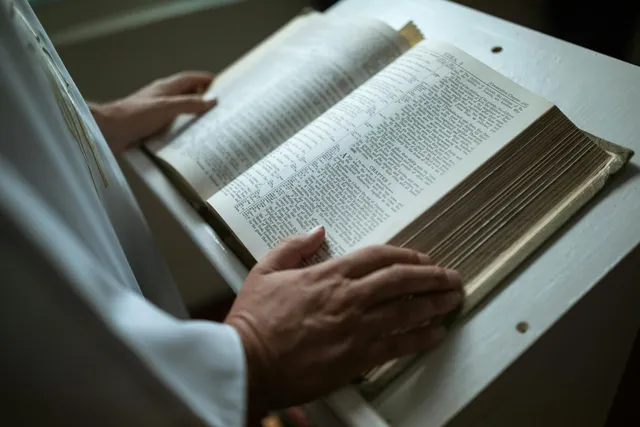
When you open your Bible and glance at the tiny notes tucked between the columns or resting in the margins-small clusters of letters, numbers, or abbreviations-you're seeing one of Scripture's quietest yet most powerful gifts: cross references. They are the hidden threads that weave together the tapestry of God's Word, helping us see that the Bible is not a collection of isolated writings, but a single, unified story.
The Bible as a Living Web
Imagine a vast network of paths connecting mountain ranges and valleys-each leading back to the same heartland. That's what cross references do. They show us how Genesis reaches forward to Revelation, how prophecy sings in harmony with fulfillment, and how the same Spirit breathes through history, poetry, law, and letters.
These little connections are often so subtle that many readers overlook them. Yet once you begin to follow them, something changes. You discover that Scripture interprets Scripture. The Bible begins to speak in stereo, layering meaning upon meaning until truth glows in three-dimensional depth. A verse you once thought simple opens into a panorama of God's story from beginning to end.
What Are Cross References, Exactly?
Cross references are not mystical codes-they are simply Scripture passages linked to other verses that cover similar words, themes, or events. A reference beside John 3:16, for example, might point you to Romans 5:8 or 1 John 4:9, allowing you to see the thread of divine love running through all three. Usually, these notes appear in the column next to the text or in the footnotes of study Bibles, sometimes provided by scholars, editors, or translators who have traced connections across the canon.
But more than a tool for study, cross references are a way of listening to Scripture as a living conversation. They remind us that the Bible speaks with one voice, even though it was written by many hands over centuries of time. In them we glimpse the mystery of inspiration-that the same Spirit guiding Moses and Isaiah also guided Paul and John.
From Shadows to Substance
The power of cross referencing is often revealed when we trace how a theme develops through Scripture. Take the image of the Lamb, for instance. In Exodus, a lamb's blood marks the doorway to life. Centuries later, Isaiah speaks of the Suffering Servant led like a lamb to the slaughter. Then in John's Gospel, the Baptist declares, "Behold, the Lamb of God, who takes away the sin of the world!" Each verse stands alone, but linked together they unveil the sweeping beauty of redemption's story-one promise unfolding across time.
Cross references help us see these patterns of fulfillment and foreshadowing. They show us that what begins as a shadow in the Old Testament becomes substance in the New. The temple, the sacrifices, the manna in the wilderness-all find their fulfillment when Christ walks among us. Without these scriptural signposts, those connections might remain hidden. But cross references invite us to follow the trail and find Christ at the center of every path.
A Devotional Practice, Not Just a Study Technique
For some, cross references may sound like a tool for theologians or serious Bible students hunched over thick commentaries. But they are also a beautiful doorway for the heart. When you trace one verse to another, you engage in a kind of spiritual journey-a conversation between different parts of God's Word, and between God's Word and your life.
There's a quiet joy in opening your Bible during morning prayer and noticing a little letter beside a familiar verse. You follow it, and suddenly you're in an entirely different book of the Bible, reading a line that deepens your understanding or lifts your spirit. The connection was always there; the cross reference simply helped you notice it. Over time, this rhythm of discovery builds a greater trust that God's Word speaks with coherence and truth, no matter where you open it.
Following the Thread in Prayer
Cross references can even shape our time with God. Try beginning your devotion with a single verse-say, Psalms 27:1: "The Lord is my light and my salvation." Check the margin, and you might find references to passages like John 8:12, where Jesus proclaims Himself the Light of the World. Suddenly, your prayer deepens. The psalmist's confession becomes your own, illuminated by Christ's fulfillment. The Spirit uses that link not just to inform your mind but to warm your heart.
Scripture Interpreting Scripture
One of the most transformative things about cross references is how they embody a principle of biblical interpretation: let Scripture explain Scripture. When we have questions or uncertainties, we don't have to rely only on outside opinions; we can look to how the Bible already speaks about that subject elsewhere. It's as if the Word of God comes with its own commentary-written by the Author Himself.
For example, when you read about faith in Hebrews 11, you can follow cross references to Genesis and see faith embodied in Abraham's story. When Paul writes about grace in Ephesians 2, you can trace that grace back to Exodus, where God reveals His mercy to an undeserving people. These interconnections give weight and witness to truth. They remind us that the Bible does not contradict itself; it resonates with itself. Every book sings a harmony line in the same divine Song of Songs.
Guardrails of Truth
In a world filled with fragmented ideas about spirituality and countless interpretations of Scripture, cross references act as guardrails. They pull us away from isolated readings and back into the full witness of God's Word. When a verse is quoted out of context, cross references pull it home, showing us how it fits within the larger story. In this way, they protect the unity of faith and preserve us from distortion. Scripture affirms Scripture-and cross references reveal how strong and intricate that affirmation truly is.
Historical Roots and Modern Access
Cross references as we know them didn't appear in early manuscripts. For centuries, readers would have known the connections by heart or through oral teaching. But with the printing press and later biblical scholarship, systems of cross referencing began to appear in margin notes to help readers navigate the canon. The Geneva Bible (1560) was among the first to popularize them, and later editions expanded the practice. Today, nearly every modern Bible includes them, often enhanced through digital tools and online databases.
Yet while technology has multiplied accessibility, the essential act remains spiritual: hearing the dialogue of Scripture as one continuous voice. Whether you're turning delicate pages or scrolling on a phone, the practice is the same-listening, connecting, worshiping. The more you trace these connections, the more you grow in awe of how profoundly the Word holds together.
The Cross at the Center of Every Reference
Perhaps it's not accidental that we call them "cross" references. The word may be technical, but spiritually speaking, the cross of Christ truly stands at the center of every connection in Scripture. The Old Testament points forward to it; the New Testament flows from it. Every covenant, prophecy, and promise ultimately intersects with Calvary, where the threads of history are tied together in grace.
When you follow a reference from Law to Gospel, from sacrifice to salvation, you're witnessing the cross woven into every page. It's where judgment meets mercy, where shadow meets light, where the scattered voices of Scripture become one great Hallelujah. To read with cross references is to read in light of the Cross itself-to see that all things hold together in Christ.
Practical Ways to Use Cross References
So how can you begin using them in your own study or devotion? Here are a few simple, life-giving practices:
- Follow one theme. Pick a central word-like "peace," "kingdom," or "promise"-and follow every cross reference that touches it. Watch how the meaning deepens as the Bible defines its own terms.
- Trace one story. Begin with a key event such as the Exodus, and follow cross references through the prophets and the New Testament. You'll see how one event becomes a pattern of salvation later fulfilled in Christ.
- Pray through them. Turn the process into worship. As you read linked verses, pause and pray through what you discover. The connections often lead not only to insight but also to awe.
- Journal your discoveries. Note the moments when themes echo across Scripture. Over time you'll build your own map of how God's truth flows through the pages of His Word.
Relearning to Wonder
The beauty of cross references is that they restore our wonder. The Bible becomes more than a familiar book-it becomes a living universe to explore. You find yourself traveling between texts, meeting old friends in new places. The words of David, Isaiah, Paul, and John begin to converse like distant stars forming a single constellation.
And as wonder grows, so does faith. Because every cross reference whispers a reminder: God is consistent, faithful, and sovereign. What He spoke centuries ago still speaks now. His promises hold firm across time, cultures, and languages. Every connection reminds us of the steadfast love that connects every verse-and every life-to His eternal story.
The Gift of Connection
Cross references might appear small on the page, but they hold one of the greatest treasures of Bible reading-the Revelation that God's Word is whole, complete, and intertwined with purpose. Each link between verses is like a bridge between hearts-the writers', God's, and ours. Through them, we glimpse the vast intelligence and tender intention of the One who knit Scripture together for our good.
As you open your Bible tomorrow, don't rush past the tiny letters tucked in the margins. Pause. Follow one. Let it lead you into the great story of redemption that spans every page. You may begin with a single sentence, but you'll end with a symphony-the Word of God speaking from Genesis to Revelation, calling you to see, believe, and belong. That's what cross references truly are: invitations to discover how every word of Scripture leads us deeper into the heart of Jesus.