The Word in Our Own Tongue
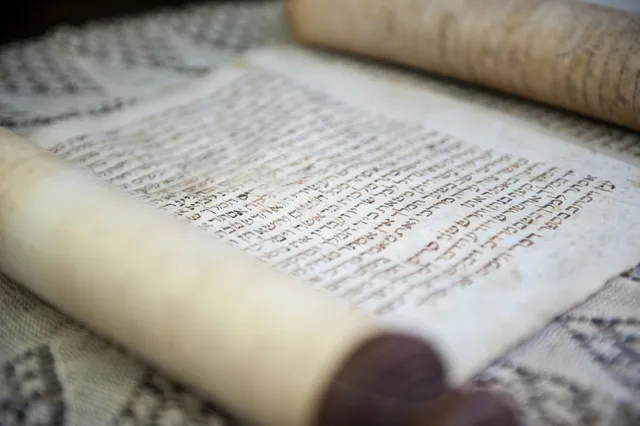
The story of the Bible's translation is, in many ways, the story of faith made personal. From scrolls of papyrus whispered in Hebrew melodies to printed pages that transformed nations, each translation has carried something more than words-it has carried encounter. When a person reads Scripture in their own language, a sacred threshold is crossed. A distant God becomes near. Truth stops being transmitted through another's voice and begins to echo within one's own heart. "The Word became flesh," John reminds us, "and dwelt among us" (John 1:14). Every translation is a small reenactment of that same miracle-God's Word dwelling among people, in their native tongue, in their everyday life.
The Vulgate: A Common Voice for a Divided World
When Jerome undertook the translation of the Bible into Latin in the fourth century, he could not have imagined the centuries of influence that would follow. Latin-the language of scholars, soldiers, and merchants-had become the common voice of the Roman world. Jerome's Vulgate (from vulgata editio, meaning "common version") was intended to unify a fragmented Church that read from a mix of Greek, Syriac, and Old Latin texts. In his cave in Bethlehem, Jerome wrestled with Hebrew verbs and Greek idioms not as an academic but as a man desperate to preserve truth in faithful words.
His work changed everything. For over a millennium, the Vulgate was the Bible of the Western Church. It shaped theology, worship, and the vocabulary of prayer. From Augustine to Aquinas, from the monastic scriptoria to the candlelit cathedrals of Europe, Jerome's translation became the heartbeat of Christian language. Even as Latin faded from the markets and fields, it remained vibrant in the sanctuary, where the sacred syllables of the Vulgate continued to declare grace and truth.
When Words Became a Revolution
The invention of the printing press in the fifteenth century was not merely a technological marvel; it was a spiritual earthquake. Suddenly, the Word of God could multiply like seed falling on new soil. When reformers such as John Wycliffe, Martin Luther, and William Tyndale labored to render Scripture into the speech of their people, they were doing more than linguistic work-they were reclaiming access.
In Wycliffe's England, reading the Bible in English was dangerous. Entire copies had to be written by hand, carried in secret, and read by candlelight. Yet those who read it described feeling as though the veil had been lifted. Luther's German Bible did the same for his countrymen-uniting dialects, shaping national identity, and swelling hearts with the assurance that God spoke their language too. Tyndale paid the ultimate price for this conviction, executed for translating the Scriptures-but his final prayer, "Lord, open the king of England's eyes," found its answer when the English Bible eventually took its rightful place in the churches of the land.
The Bible and the Birth of Nations
Bible translation has often been entwined with cultural awakening. Luther's German Bible gave rise to modern German. The King James Version enriched English literature. In more recent years, translations into indigenous and underrepresented languages have not only evangelized hearts but revived tongues that were near extinction. The Word, when translated, does not merely travel-it transforms the very fabric of human identity. Language is no longer just a vessel for meaning; it becomes a vessel for grace.
The Quiet Power of the King James Version
In 1611, when the first edition of the King James Bible appeared, it was more than a government commission-it was an act of faith in the beauty and authority of God's Word. Its phrases have since shaped English-speaking Christianity, influenced law and literature, and given cadence to prayer. Phrases such as "the valley of the shadow of death," "a still small voice," and "let there be light" ring with enduring poetry. Even unbelievers often quote them without realizing their origin.
Yet behind the majesty of the language stands the same desire that drove Jerome and Tyndale: to hear God clearly, faithfully, and intimately. The strength of the King James Bible was not just its literary excellence but its confidence that Scripture could speak for itself-that divine truth, well rendered, draws the listener in without ornament or apology.
Beyond the Vulgate: The Living Word in a Global Age
Today, the Bible continues to be translated, refined, and made accessible with almost miraculous speed. Modern missions organizations labor to bring Scripture into every tongue on earth-sometimes through painstaking linguistic work, sometimes aided by digital technologies that Jerome could never have imagined. For many, the moment of reading a verse of Scripture in their mother tongue is a moment of tears. It is an echo of Pentecost, when the apostles spoke "in other tongues, as the Spirit gave them utterance" (Acts 2:4), and every listener heard the wonders of God in their own language.
The Digital Scroll
In our century, Bible access has been revolutionized once more. Apps, online study tools, audio Bibles, and film adaptations now carry Scripture to people who may never hold a printed page. Some lament this as a decline in reverence; others see it as expansion of mission. Yet the heart of the matter remains unchanged: How will we receive the Word that has come so far to meet us? Whether we read from vellum, paper, or glass, the call is the same-'Today, if you hear His voice, do not harden your hearts' (Hebrews 3:15).
Translating More Than Words
Every translation project is both technical and spiritual. It involves grammar and grace, syntax and Spirit. When missionaries and linguists labor over obscure verbs deep in a rainforest or a remote mountain village, they participate in something sacred. They are not simply producing vocabulary-they are giving people the chance to hear God call them by name. The translation of Scripture always carries vulnerability: what if there is no word for 'grace,' no perfect equivalent for 'mercy'? Yet again and again, communities discover that their language is not too small for God. The act of translation itself becomes Revelation: every tongue has room for the Word made flesh.
When the Word Translates Us
Perhaps we could say that translation works both ways. As we render the Bible into our languages, it renders us into its image. When we study, interpret, and apply it, we become living translations-our lives expressing, however imperfectly, the meaning of love, justice, and mercy described on the page. The Church, scattered across cultures and continents, becomes a living polyglot testimony to God's Word-some voices speaking softly, others singing loudly, all proclaiming, each in their own accent, "Jesus is Lord."
Why Translation Still Matters
We might assume that in the twenty-first century, with so many versions available, translation no longer matters. But it matters more than ever. New translations are not competitors but companions. They speak to generations shaped by evolving language, broadening empathy, and global diversity. Where one translation opens a door of understanding, another may open a window of wonder. And in that abundance, we experience the inexhaustible vitality of the Word of God.
Translation, at its deepest level, is a confession of belief in incarnation. It insists that the eternal can be spoken in the temporary, that divine mystery can inhabit human speech. To translate Scripture is to echo Bethlehem-to proclaim that the Word can dwell again among us, full of grace and truth.
From the Pages to Our Hearts
As we trace the path from the Vulgate to our modern Bibles, from Latin to local dialects, from paper to pixels, one truth remains constant: God desires to be known. Through centuries of translation, persecution, and innovation, His Word has crossed boundaries of empire, language, and technology to reach each of us. It whispers now as it did then: Come and see.
Maybe we keep a well-worn Bible near the coffee table, or perhaps we swipe open a verse on our phone. The setting doesn't matter. What matters is that we open it. For the same Spirit that inspired Moses in the desert and Paul in prison breathes through the words before us. The miracle of translation continues each time we allow God's Word to become flesh again-in our thoughts, our speech, our acts of compassion.
A Closing Reflection
History shows us that translations have always been more than literary achievements; they are holy invitations. From Jerome's lonely study to Wycliffe's defiance, from missionary huts to digital screens, every translation retells the same story: God's relentless pursuit of the human heart. As we read our Bibles today-whatever version we hold-we are heirs of that pursuit. We are part of the unfolding history of a Word that refuses to stay silent.
So let us not take lightly the privilege of reading the Word in our own tongue. Let us read it with gratitude, live it with integrity, and share it with courage. For the same Voice that spoke in Eden, at Sinai, and in a Bethlehem manger still speaks today-clearly, personally, and graciously-in the language we understand best.