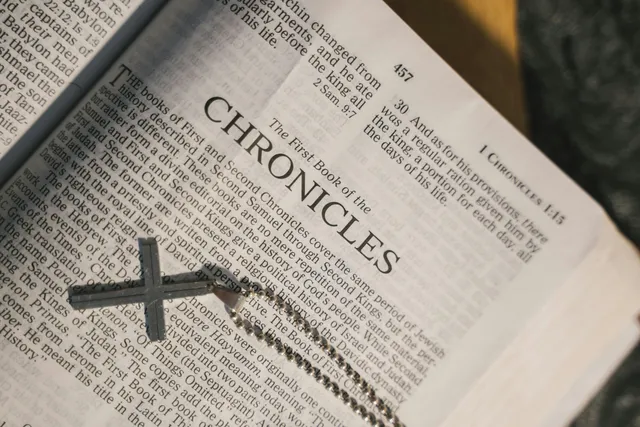
The clatter of metal type must have sounded like thunder in the fifteenth century-the echo of something far greater than any press could contain. When Johannes Gutenberg's printing press began turning out copies of the Latin Bible around 1455, few people realized that the world had just shifted on its axis. Words that had once been locked away in handwritten volumes-precious, guarded, and rare-were now taking their first steps into the homes and hands of ordinary Christians. The pages of Scripture could finally travel faster than the messenger, reach beyond the abbey wall, and whisper the voice of God into towns, villages, and hearts across Europe. This was not merely an advance in technology; it was the dawn of spiritual transformation. The Word was going out again, as if echoing Isaiah's ancient promise: "The grass withers and the flower fades, but the word of our God will stand forever" (Isaiah 40:8).
The Great Shift from Parchment to Print
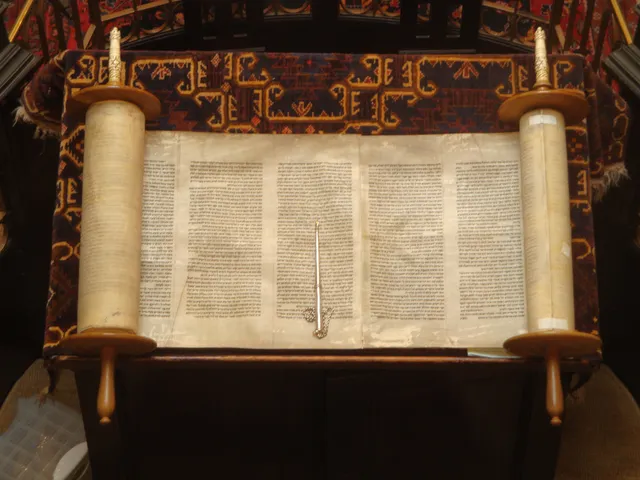
Before the printing press, every Bible was an act of devotion and exhaustion. Monks labored for months, sometimes years, to copy Scripture by hand. The work was sacred, but the product-rare and expensive-rested mainly in churches and monasteries. Ordinary believers often never saw a full Bible in their lifetime. They listened as clergy read aloud from the pulpit and trusted what they heard. The Word of God was more like the sunlight through a stained-glass window-brilliant but filtered.
Then came the press. Movable type turned time-consuming transcription into multiplication. Within years, the Bible became not only reproducible but increasingly reachable. The Scriptures began to belong to the people once more. Every impression of ink upon paper was another invitation from God: "Come and see. Come and read."
Bread for the Hungry Soul
When Jesus declared, "Man shall not live by bread alone, but by every word that comes from the mouth of God" (Matthew 4:4), few could have imagined how literally that truth would manifest centuries later. The printing press became the oven in which heaven's bread was baked daily. Hungry hearts, weary of religious distance, found nourishment in words they could finally hold in their hands.
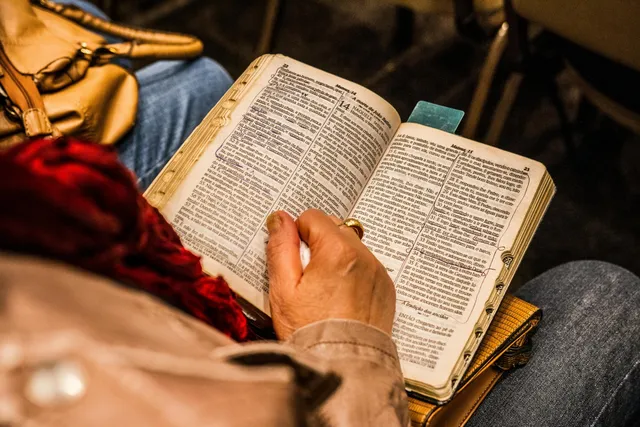
Imagine the wonder of a believer in 15th-century Germany or England, running a finger across the black letters of Scripture for the first time. Reading the Psalms in their native tongue must have ignited tears-the same kind that still wet pages in quiet corners today. For the first time, faith could be read and whispered privately, shared around the family hearth, discussed among farmers, artisans, and apprentices. God's Word became portable grace.
The Reformation's Accelerant
The timing of Gutenberg's invention was no accident in the scope of divine providence. When reformers like Martin Luther and William Tyndale set out to restore the Gospel's clarity, the press had already prepared the field. Luther's translation of the New Testament into German in 1522 spread like wildfire-almost 5,000 copies sold within weeks, unprecedented for the era. Ordinary believers were reading "the just shall live by faith" (Romans 1:17) for themselves, and the Reformation caught the wind of print.
Words that Could Not Be Chained
Authorities tried to suppress this movement. Bibles were banned, burned, even outlawed in some regions. But once the press started rolling, the words could not be chained. Every secret printing workshop became a new upper room; every courier carrying Scripture pages risked his life to share light in the dark. It recalled the courage of the early apostles who said, "We cannot help speaking about what we have seen and heard" (Acts 4:20). The printing press gave that same unstoppable voice to the Word itself.
Transformation of Home and Heart
Something remarkable happened when Bibles entered everyday life. Family devotions became possible. Parents could teach their children not from memory but from the book. Communities organized readings and discussions; literacy itself blossomed wherever Scripture went. The Bible not only fed souls; it built minds. Educators noticed that when people learned to read so they could read Scripture, they soon read everything else, too.
In this way, the accessibility of the Bible reshaped entire cultures. It expanded compassion, deepened moral frameworks, and inspired art, music, and charity. When hearts were exposed directly to the teachings of Christ-the Beatitudes, the parables, the cross-lives changed from the inside out.
From the Page to the Pulse
One could almost say the press printed more than Scripture; it printed courage, mercy, imagination. Revival movements of later centuries-Wesleyan, Pietist, evangelical-owed much to the fact that believers everywhere had learned how to encounter God through His Word. The printed Bible didn't replace preaching or community, but it gave each believer a personal altar-a meeting place with God in the quiet of their own heart.
The Ripples Through the Centuries
What began in a workshop in Mainz became an unstoppable river flowing through time. Missionaries carried printed Bibles to distant continents; explorers tucked them into their luggage alongside maps; sailors read them by lamplight. Every age since Gutenberg's has been marked by new bursts of dissemination-from pocket editions to Braille versions, from digital platforms to audio streams. Yet the question remains as ancient as ever: What do we do with such access?
It's easy to forget how precious the Word became once it was free to all. Today, we have multiple translations on our shelves, our phones, even our watches. We scroll through verses as though they were momentary inspirations rather than living truths spoken by God. The printing press gave us abundance; faith calls us to stewardship. The psalmist still reminds us, "Your word is a lamp for my feet, a light on my path" (Psalms 119:105)-but a lamp still needs to be lit.
Modern Echoes of Gutenberg's Gift
Think for a moment about how the printing press lives on in modern evangelism. Every Bible app, every missionary tract, every online devotional stands on Gutenberg's shoulders. The original press may seem primitive beside digital networks, yet its spiritual mission remains identical: to make God's Word known. The miracle is not in the machinery but in the message.
The Same Word, Still Living
The Bible is not a relic that the press preserved. It is a voice that still speaks. Whether ink on parchment or pixels on a screen, its truth remains incisive and alive. The same Spirit that moved in medieval scribes and reformers breathes still when we open our Bibles on a quiet morning. The most cutting-edge technology will never surpass the timeless promise contained in those pages: salvation through Jesus Christ.
Personal Reflections: Holding the Word with New Reverence
There's something sacred in remembering the cost and care through which Scripture reached us. Every English translation, every bound copy, every verse committed to memory has behind it a chain of sacrifice and faith. When we think of the printing press, we're not just thinking of gears and ink-we're thinking of the providence of God making a way for His word to saturate the world.
Perhaps the call for us today is to recover a sense of holy wonder. Imagine if each time we opened our Bibles, we remembered the centuries of longing that preceded that privilege. Consider reading the Scriptures not merely as students but as witnesses-holding in our hands what saints once dreamed of touching. The printing press gave humanity a gift we dare not take for granted: daily, personal access to God's eternal story.
The Press That Keeps Turning
Gutenberg's invention reminds us that God often uses human creativity to amplify divine truth. We may not all be inventors or translators, but each of us can be a printing press of grace-impressing God's words onto the lives around us. Our speech, compassion, and testimony can print Christ's message anew with every act of love. In that sense, the press never stopped running; the ink never dried.
Just as every printed Bible once carried the hope of revival, every believer today carries the living Word within. Paul wrote to the Corinthians that we are "epistles of Christ... written not with ink, but with the Spirit of the living God" (2 Corinthians 3:3). That, perhaps, is the ultimate fruit of Gutenberg's legacy: not merely that the Bible could be read, but that its message could be lived.
Ink, Spirit, and the Living Word
The story of the printing press and the explosion of Bible access is more than a historical event-it is a reflection of God's relentless desire to be known. From the prophets who spoke aloud His words, to the scribes who penned them, to the printers who multiplied them, to the readers who now absorb them-God has been drawing near, speaking through time and text.
So let us not leave this divine Word neglected on our shelves or reduced to quick inspirational quotes. Let us approach it with the awe of those first readers whose fingers trembled over fresh ink, realizing they were touching eternity. Every printed page still whispers the same truth: the Word became flesh, and the Word still dwells among us. May we read deeply, live boldly, and share freely-becoming, in our generation, the next link in the holy chain of proclaiming that Word to the world.