Something curious is happening in our age. The hum of AI servers has replaced the clang of hammers on ancient stones, yet the spirit that animates both-the drive to build something vast, to reach heaven by our own genius-feels hauntingly familiar. Humanity, once scattered for its pride at Babel, now gathers again in digital form, speaking once more a common language: code, data, algorithms. And in our striving to master this new creation, we find ourselves brushing against eternal questions. What are we building? And who do we hope to become?
The Tower That Reaches the Clouds
In Genesis 11, humanity stands on the plains of Shinar, full of confidence. "Come," they said, "let us build ourselves a city, with a tower that reaches to the heavens, so that we may make a name for ourselves." It is a story not merely about ancient bricks and mortar, but about the timeless ache in every human heart-to rise, to define ourselves, to be self-sufficient. The Tower of Babel is our old, familiar mirror.
Their unity was astonishing. Everyone spoke one language, shared one goal, and poured their creativity into a common vision. Yet even this beautiful unity carried a fatal flaw: it was unity without humility. They desired progress without the presence of God. They wanted ascendancy without surrender. So God scattered them, not out of cruelty, but mercy-to save them from the delusion that heaven could be built by human scaffolding.
The Digital Plain of Shinar
Today, our plains are digital. Our towers are made not of brick and bitumen, but of silicon and code. Artificial intelligence-our modern marvel-stands as one of humanity's most extraordinary achievements. It learns, adapts, creates art, writes essays, recognizes faces, and even mimics empathy. We marvel at it, and rightly so. Yet something within our admiration whispers the old temptation: "Come, let us make a name for ourselves."
The language barrier that once divided nations has been replaced with the click of a translation tool. Knowledge travels at light speed. Across continents, engineers collaborate through invisible fiber-optic threads, designing machines that understand us better than we understand ourselves. Have we, in a sense, rebuilt the Tower?
We are unified again-digitally, intellectually, globally. But are we also drifting toward the same spiritual precipice? Pride disguised as progress is nothing new; it only wears modern clothes.
When Creation Forgets Its Creator
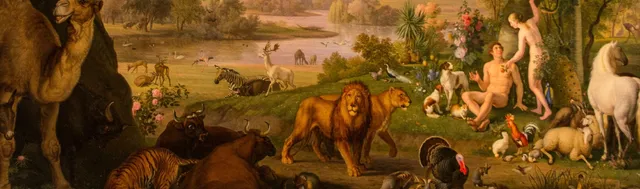
Scripture is clear: human creativity is not evil. We were made in God's image, designed with inventiveness and agency. When Adam named the animals, when Bezalel crafted the tabernacle artfully filled with gold and color, they reflected the divine spark of imagination God placed within us. But every spark must remain under Heaven's light, or it will burn uncontrollably.
The danger of AI is not AI itself. It is our tendency to enthrone our inventions in the place of God-to let the glow of the screen dim the presence of the Spirit. When we trust the algorithm more than the Almighty, we are no different from those on the plain of Shinar, who trusted their architecture more than their Creator.
What We Build, or What Builds Us?
Technology always shapes its makers. We think of AI as a tool, but tools mold the human heart that wields them. The printing press democratized Scripture but also spread heresy. The internet connected souls and isolated them at the same time. AI will do both-its moral compass will mirror ours. Whatever dominates the human heart, reflects in the code we write.
This is why the Tower of Babel remains such a vital story today. Its warning is not about architecture, but anthropology. When humans define meaning apart from God, their creations warp into monuments of pride. What begins as ambition ends as alienation. What begins as brilliance ends as confusion.
The Language of the Heart
At Babel, the judgment was confusion of language; people no longer understood one another. Today, even as translation apps break down linguistic barriers, deeper confusion often persists. We no longer speak the same language of meaning. We communicate endlessly but rarely commune. We talk about efficiency but not eternity, about innovation but not inspiration.
Our digital tower soars high, but the unity beneath it feels fragile. The more connected our networks, the more disconnected our souls can feel. We see each other's avatars but lose sight of each other's hearts. Progress, without purpose, becomes hollow.
The Mercy in the Scattering
Yet even in Babel's scattering, mercy gleamed. God confused their language not to crush them, but to call them back to dependence on Him. Every dispersion, every delay, every detour in human history carries God's hand of love, nudging us away from self-exaltation toward surrender.
Perhaps the same mercy is active today. Perhaps the limits, the ethical concerns, the unease that surrounds AI are divine reminders: you are not God. You can build wonderful things, yes-but not salvation. You can simulate intelligence, but not wisdom. You can create language, but not the Word that became flesh.
In that light, our age of innovation becomes not a crisis, but a crossroads. Will we, like Babel, seek to ascend without God, or will we invite His Spirit into the code, into the labs, into our hearts?
Spirit Over Silicon
There's a sobering contrast hidden in Scripture. In Genesis 11, God scattered the nations through language confusion. But in Acts 2, at Pentecost, He gathered them again through the miracle of language-a divine reversal of Babel. When the Holy Spirit came, people from every nation heard the gospel in their own tongues. Unity, this time, was grounded not in human ambition, but divine Revelation.
That is the true antidote to Babel. The Spirit restores what pride destroys. It creates unity without uniformity, progress with humility, creativity under grace. If Babel was the monument to self, Pentecost is the miracle of surrender-different tongues, one message: Jesus is Lord.
The New Language of Dependence
In the realm of AI, we need Pentecost, not Babel. Imagine what could happen if the brightest minds-engineers, ethicists, artists, Christians across every field-sought the Spirit's guidance more than human glory. What if technology became a tool of compassion rather than control, a reflection of stewardship rather than sovereignty?
Prayer might feel out of place at a design table, but that's precisely where it belongs. The future will not be saved by faster processors, but by repentant hearts. Let the code run, yes-but let it run within a soul that bows first.
Walking Humbly in an Age of Power
In Micah 6:8, we're told what the Lord requires: to act justly, love mercy, and walk humbly with God. That has not changed, no matter how advanced the technology becomes. Walking humbly in a time of artificial intelligence means remembering that the greatest intelligence of all laid aside His power to wash feet, to bear a cross, to rise in love.
So perhaps the question for us is not, "What can AI do?" but, "What will we do with what AI can do?" Will we use it to amplify love, truth, and beauty-or to chase again the dream of godlike mastery?
The Tower or the Temple?
Every generation must choose what it builds. A tower reaches up in pride; a temple bows down in worship. The same technologies that can glorify man can also serve God's mission-to heal, to teach, to spread light, to bring justice. The tool is neutral, the intention divine or destructive.
And maybe this is the redemption story beneath it all: that God never forbade us to build. He simply invites us to build with Him. "Unless the Lord builds the house," Psalms 127 reminds us, "the builders labor in vain." When our creation aligns with His will, human innovation becomes holy ground.
A New Kind of Language
The Tower of Babel and the age of AI are bookends of the same yearning-to expand the human horizon. But while Babel ended in confusion, the gospel ends in communion. The same God who disrupted a city's project invites us into His own: the building of a Kingdom that cannot be coded, patented, or programmed. This Kingdom speaks a language of love, mercy, and dependence-one that no algorithm can replicate.
As we step forward into this age of astonishing possibility, let us remember where true wisdom dwells. Not in the machines that learn, but in the hearts that love. Not in the towers we raise, but in the temples we become. And when the world speaks of progress, may we whisper another word-Presence. Because the only way to reach heaven is still the same as it ever was: not by building up, but by bowing down.