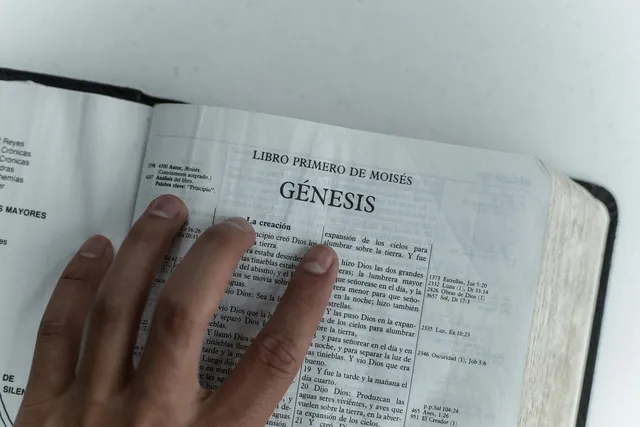
Every believer who has journeyed through the Old Testament has likely paused at least once and thought, "Wait... what?" Certain laws in the Bible stop us in our tracks - not because they lack wisdom, but because they reveal a world so different from ours that it feels almost foreign. Yet, under those layers of ancient culture and ritual lies an extraordinary truth: God's laws were never random. Every command, however strange it might appear to modern eyes, pointed toward holiness, compassion, and profound order - the sacred rhythm of a people learning to walk with their Creator.
The Divine Hand Behind the Unusual
When we open Leviticus or Deuteronomy, we step into a world where faith wasn't confined to heart and mind but extended into how one dressed, farmed, cooked, or even cleaned. To modern believers, such regulations can feel unnecessarily meticulous, even bizarre. But the heart of these commands reveals something profound: God was shaping a people set apart.
Israel had been surrounded by nations whose customs were harsh, idolatrous, and exploitative. Their new laws, therefore, were not meant merely to control behavior but to construct identity - a visible declaration that they belonged to the Lord. What looks strange on the surface often becomes a mirror reflecting divine wisdom and loving intention.
Do Not Mix Fabrics - A Law About Wholeness
One of the more curious rules appears in Deuteronomy 22:11: "Do not wear clothes of wool and linen woven together." It's easy to read that and imagine God micromanaging wardrobes. But this command went far deeper than fashion.
For the ancient Israelites, mixtures symbolized confusion and compromise. Just as they were to maintain purity in worship - serving no other god alongside Yahweh - they were also to maintain integrity in daily life. The mixed fabric became a metaphor: life with God was meant to be undivided, whole, consistent.
In a devotional sense, we might say God still calls His people to spiritual "unmixedness" - faith that's not half-rooted in trust and half-rooted in fear. To be God's chosen garments in this world, we ourselves must be woven with one material: His righteousness.
Don't Cook a Goat in Its Mother's Milk
Few biblical laws sound stranger to modern ears than Exodus 23:19: "Do not cook a young goat in its mother's milk." Yet this command appears three separate times - proof that it mattered deeply.
Scholars believe it was a direct rejection of a Canaanite fertility ritual, where milk and meat were combined as part of a pagan harvest blessing. For Israel, such mixing wasn't just culinary confusion - it represented participation in idolatry. God was teaching His people to refuse the symbols of other gods, even in something as simple as their cooking.
But look deeper again: the image itself - boiling a baby goat in the very substance meant to give it life - violates the tenderness of God's created order. The law demonstrates divine compassion disguised in dietary discipline. It calls us to be mindful: Do the things we create, consume, and celebrate honor the sacred rhythms of life that God designed?
Trimming Beards and Planting Fields - Holiness in the Details
Marks of Identity
Another puzzling command comes in Leviticus 19:27, where Israel's men are told not to "cut the hair at the sides of your head or clip off the edges of your beard." Why would facial hair matter to the Creator of the universe? Because those details marked identity. Other nations used certain haircuts or tattoo-like markings in their rituals to honor false gods. By forbidding such patterns, God was insisting that His people look distinctly different from everyone else.
Today, physical appearance is no longer bound by those ritual laws. But the principle remains: our identity - how we live, speak, and love - should still make us recognizable as children of grace. Our "set apartness" no longer grows from patterns of hair but from patterns of holiness.
Fields Not Entirely Harvested
Another command, found in Leviticus 19:9-10, instructed farmers not to reap the edges of their fields or go back for dropped grain. In a time when every kernel counted, this must have sounded illogical. Yet, it's one of Scripture's most compassionate laws. God was carving generosity into the heart of His society: leave space for the hungry, the foreigner, and the poor.
The book of Ruth is a living example. Ruth gleans behind Boaz's harvesters - fulfilling precisely this command. What looked odd on a practical level became a vessel for redemption and lineage leading straight to Jesus Himself. God shows that even His "strange" laws grow from His heart of mercy.
The Red Heifer and the Mystery of Purity
Among the strangest rituals described in Numbers 19 is that of the "red heifer" - a cow without blemish, burned in a ceremonial act to create ashes for purification. To anyone but an ancient Israelite, that would have been baffling. Why burn a perfectly good animal to create symbolic ashes?
At the center of this ritual lies a profound paradox: what was burned to death became the agent of cleansing. The red heifer foreshadowed a far greater sacrifice - Christ Himself. He who died outside the city's gates (Hebrews 13:12-13) purified us through His own suffering. The ashes of the red heifer pointed ahead to the cross, where death made way for life.
That's the beauty behind many ancient laws: though wrapped in mystery, they whisper the same message - holiness requires sacrifice, and God Himself would one day provide it.
No Eating Blood - The Sacred Symbol of Life
Perhaps no law is as primal and symbolic as the prohibition against consuming blood (Leviticus 17:10-12). To modern sensibilities, it may seem hygienic or superstitious, but God revealed its sacred underpinning: "For the life of a creature is in the blood."
This command was not about dietary rigidity; it declared a theological truth - life belongs to God. By forbidding the eating of blood, God taught His people to respect life in all its forms and to recognize that life itself is holy, a divine possession, not a human commodity.
In the New Covenant, that meaning deepens: we partake of Christ's body and blood not in violation of this law, but in its fulfillment. We receive His life as sacred gift, not as common sustenance. The "strangeness" of the old command gives way to the stunning intimacy of communion.
The Leper's Isolation - A Law of Protection and Grace
In Leviticus 13, lepers were commanded to live outside the camp, crying "Unclean!" to warn others. To our modern eyes, that seems harsh and cruel. Yet if we pause, we find that beneath this difficult law lies both mercy and safety. Lepers were protected from physical harm and from the crushing shame that might have come from ignorance or fear within the camp. This separation wasn't simply punitive - it was a system of quarantine guided by love.
Even more beautiful is how Jesus later interacts with lepers in the Gospels. He doesn't just heal the sick; He restores them to community. By touching the untouchable, He fulfills the law's intent, bringing cleansing without condemnation. What once seemed strange becomes, through Christ, a symmetrical act of compassion.
Finding the Heart Beneath the Rule
The strange laws of the Old Testament often provoked misunderstanding, but they form a tapestry of theological truth. Every woven thread - whether about fabrics, food, hair, or purity - told Israel one thing: God is holy, and His people must live consciously before Him. The purpose was never to weigh down life with prohibitions, but to lift life toward awareness - awareness of God's presence in every detail.
In the New Covenant, many of these laws no longer apply in their ritual form, but their moral and spiritual resonance remains. The law about mixed fabrics challenges us to spiritual consistency. The command about harvest fields urges generosity. The rule about blood urges reverence for life. The pattern goes on - lessons whispered across centuries, still echoing if we have ears to hear.
What These Ancient Laws Still Teach Us
We live in a world that prizes freedom but often mistakes it for self-definition. We shape our own boundaries, craft our own moral systems, and lean on reason rather than Revelation. Yet, as odd as some ancient laws may appear, they remind us of a vital truth: we do not belong to ourselves. The boundaries God sets - then or now - are not cages, but guardrails guiding us toward life.
When a law seems strange, it may actually be the lens through which God invites us to see differently. The command about the red heifer calls us to embrace cleansing through sacrifice. The restriction on mixing fabrics teaches us authenticity. The limits on harvest teach compassion. These lessons hold power precisely because they arose from an unlikely source - from a God who speaks not only in thunder, but through thread, grain, and daily bread.
The Wonder in the Strangeness
Perhaps that is the beauty of the Bible's strangest laws: they whisper of a God who cares so deeply for His people that even their smallest gestures could be turned into worship. While our context has changed and Christ has fulfilled the ceremonial code, the same God still calls us to a life of intentional holiness - a holiness that honors both the vast and the minute, both the Sabbath and the simple act of kindness.
So the next time we stumble across a puzzling verse about fabrics or farming, let's pause. Instead of asking, "Why would God say that?" we might ask, "What truth of His heart hides here for me?" Often, it is in the strangest laws that we find the deepest wonder - proof that God's wisdom is not of this world, yet perfectly designed to shape ours.
Strangeness, in the hands of a holy God, becomes sacred logic - a language through which He still teaches us how to live, love, and belong.