There are few questions that stir as much curiosity-and sometimes as much controversy-as the question, "How old is the earth?" It's a question that has fascinated scientists, theologians, and believers for centuries. When we turn to Scripture, we find that the Bible speaks powerfully about the beginning of all things, but perhaps not in the way our modern age often demands. The deeper truth undergirding the question is not merely about numbers or years. It's about the heart and intention of the Creator who formed this world and called it good.
The Beginning of Beginnings
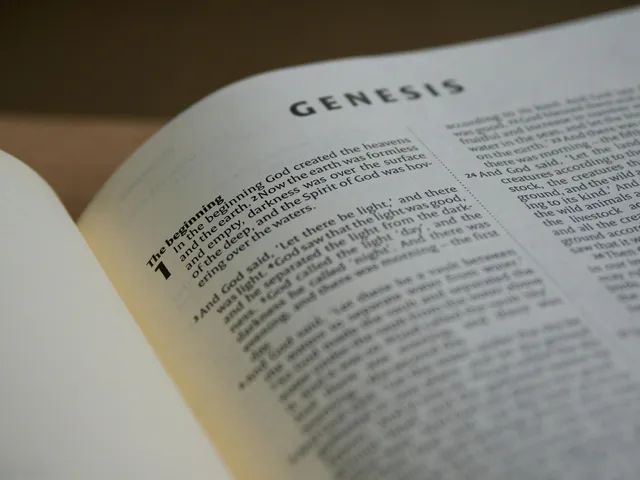
Genesis opens not with a timeline, but with majesty: "In the beginning, God created the heavens and the earth." Those words stand as the most theologically weighty declaration ever written. They do not begin with methods, measurements, or material ages-they begin with God. That is both the power and mystery of the Bible's view of time. Before there were clocks or calendars, there was eternity. Before there were mountains or seas, there was a Maker.
The ancient Israelites who first received the Genesis account were not preoccupied with identifying a geologic era. They lived in a world of competing stories-myths of gods battling chaos or being birthed from the elements themselves. In contrast, the Hebrew Scriptures begin with a simple but world-changing truth: all things came into being by God's word. This is not merely history; it is Revelation.
Six Days-and the Question of Time
One of the most discussed issues among believers is the nature of the six days of creation. Were they literal 24-hour days? Were they symbolic of longer epochs? Many sincere Christians have stood on both sides of this question, seeking to interpret Scripture faithfully. What Scripture gives us, however, is less an age to be measured and more a rhythm to be worshiped.
The Rhythm of Creation
Each day in the Genesis account follows a divine pattern: God speaks, creation responds, God names, and evening and morning mark the passage of time. The language is deeply poetic, even liturgical, inviting the reader to see God's work as orderly, purposeful, and personal. The seventh day-God's rest-is the crown of this pattern, a picture of completeness, inviting humanity into fellowship with the Creator. Whether one sees these days as literal or figurative, the message remains the same: God is the Lord of time and creation.
The Hebrew word for "day," yom, is used variously throughout Scripture-it can mean a literal day, an age, or a season. For example, Psalms 90:4 tells us, "For a thousand years in your sight are like a day that has just gone by." Peter echoes this thought in 2 Peter 3:8, reminding believers that "with the Lord one day is like a thousand years, and a thousand years like one day." These verses are not meant as scientific formulae, but as reminders: God's perspective on time is vastly different from ours.
The Genealogies and the Clock of Scripture
Some readers have tried to calculate the age of the earth using the genealogies found in Genesis chapters 5 and 11, tracing the lineage from Adam to Abraham. Bishop James Ussher famously estimated that creation began in 4004 B.C. While such calculations once held great influence, they depend on genealogies that may not have been intended as exhaustive chronologies. Hebrew genealogical lists often highlight spiritual lineage rather than strict succession-showing divine promises, not precise ages.
What the genealogies do clearly reveal is God's ongoing faithfulness through time. The God who created the heavens and the earth is the same God who sustains the generations, guiding human history toward His purposes. Every name recorded, from Adam to Noah to Abraham, proclaims continuity-the Creator's hand never left His creation. In that sense, the Bible's concern is not how long the story has been running, but Who has been writing it.
Science, Faith, and the Mystery Between Them
Modern science estimates the earth to be about 4.5 billion years old, drawing conclusions from methods like radiometric dating and cosmic background measurements. For some, this directly conflicts with a traditional "young earth" timeline. For others, it poses no contradiction at all, since the Bible, in their view, never aimed to provide a scientific manual. Rather, Scripture offers a divine narrative of meaning, purpose, and origin.
As Christians, we do not have to fear science. All truth, rightly understood, belongs to God. The study of nature is the study of His handiwork. Psalms 19:1 declares, "The heavens declare the glory of God; the skies proclaim the work of his hands." Science can tell us how creation unfolds; the Bible tells us why. When we blend the humility of faith with the wonder of discovery, we begin to see time itself as part of God's artistry-a canvas stretched across eternity, brushed with stars, oceans, and the story of redemption.
The Purpose Hidden in Time
Regardless of whether the earth's age is measured in thousands or billions of years, Scripture affirms that history is moving toward a divine goal. In Revelation, John sees a "new heaven and a new earth," signaling that creation's story is not static-it is headed somewhere glorious. Every sunrise, every turning of the seasons, is a reminder that the God who began time has also appointed its fulfillment. As Paul wrote to the Ephesians, God's purpose was "to bring unity to all things in heaven and on earth under Christ" (Ephesians 1:10).
In that sense, asking "How old is the earth?" can invite us to a more personal question: "How do I fit within God's grand timeline?" Whether we live in an ancient world or a young one, our days are precious and purposeful. The Psalmist prayed, "Teach us to number our days, that we may gain a heart of wisdom." Every moment is a stewardship of time gifted by the eternal God.
Living Today in Light of God's Eternal Story
The deeper lesson of the earth's age is not in precision, but in perspective. When you look at the mountains, stand under starlight, or dig your fingers into the earth's dark soil, you are encountering something ancient-and yet continually renewed by God's presence. The same God who formed the first garden walks still among His creation, redeeming, restoring, renewing.
Whether He formed the world in six literal days or over vast epochs, the truth is the same: God's power is limitless, His word is decisive, and His love is constant. What the Bible gives us is not a chronology to satisfy curiosity, but a cosmic Revelation meant to ignite worship. Our response is not calculation-it is adoration.
The Beauty of Trusting the Mystery
One of the marks of faith is the willingness to live with divine mystery. Job, who pondered the wonders of creation long before science had instruments to measure them, was humbled when God asked, "Where were you when I laid the earth's foundation?" (Job 38:4). Those words remind us that no matter how deep our understanding becomes, the creation itself points beyond human comprehension. We are called not to control the mystery, but to behold it.
That doesn't mean disengaging our minds; rather, it means anchoring them in awe. The more we learn about the universe's grandeur and age, the more our hearts should swell with worship for the One who spoke it into being. The Bible is not frightened by discovery-its pages sing of a Creator whose wisdom precedes time and whose purposes transcend measurement. The age of the earth is vast, but the love of God is vaster still.
Finding Eternity in Every Day
When we understand that all time is held in God's hands, our perspective on our own brief lives begins to shift. We are no longer just counting years; we are offering them back to the One who gave them. The same God who authored creation also entered time through Jesus Christ-stepping into history, bearing our sin, renewing the story from within. He turned eternity into something we could touch, know, and follow.
That means this present moment-your morning commute, your quiet prayer, your words of kindness-exists within the same divine frame that began with "Let there be light." Every heartbeat is part of the same sacred timeline that stretches from Genesis to Revelation. You are living in God's story, and that is infinitely more important than knowing the exact date of its beginning.
The Ageless God and Our Timely Faith
In the end, the Bible's teaching about the age of the earth points us not to the ticking of a cosmic clock, but to the timelessness of its Creator. What matters most is not how long the earth has been turning, but how faithfully we walk upon it in reverence and gratitude. The soil beneath our feet may be ancient; the breath that fills our lungs is fresh with the Spirit of God.
We may never fully grasp the measure of the earth's years, but we can live wisely in the days we're given. We can marvel, worship, and trust. As believers, we need not fear time-because we know the One who stands beyond it. From the first dawn to the final day, all creation declares His glory. And in the smallness of our span, we find something breathtaking: the eternal God has chosen to dwell with us in time. The ageless One walks alongside the fleeting, and in His presence, even the briefest life shines with everlasting meaning.