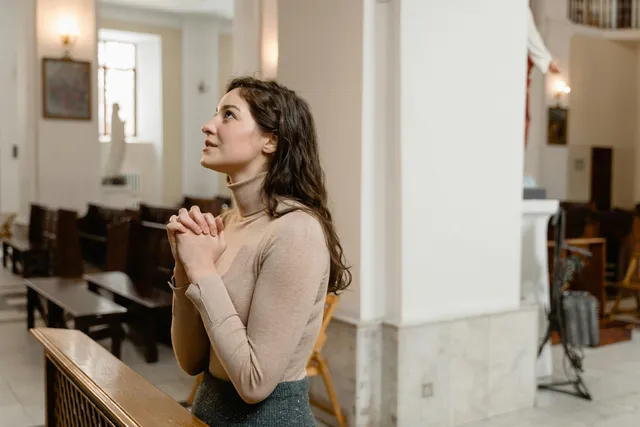
There are moments in life when worry creeps in uninvited-quietly at first, then all at once. Thoughts race, hearts pound, and peace seems to have slipped through our fingers. For the believer, anxiety can feel especially heavy, tangled with questions like, "Shouldn't I trust God more?" Yet Scripture never shames those who fear or struggle. Instead, it offers words of comfort, prayers of peace, and promises of divine presence. In these sacred reminders, we rediscover what it means to be held by the One who knows our every thought and still whispers, "Be still."
When the Heart Trembles
Even the strongest among us know the fragile quiver of a fearful heart. Anxiety is no respecter of status or spirituality-it visits pastors and parents, leaders and learners alike. King David himself wrote of fear pressing in on every side: "When I am afraid, I put my trust in You" (Psalms 56:3). That small phrase, "when I am afraid," acknowledges something profoundly human. David doesn't deny fear; he redirects it. Prayer becomes the bridge between our panic and God's peace.
So often, we try to talk ourselves out of anxiety, to reason our emotions into silence. But prayer invites us to do something different. It invites us to bring our trembling directly to God-not edited, not polished, just honest. In that surrender, the soul exhales.
Prayer as Breathing Room for the Soul
Imagine anxiety as a storm cloud hovering low, its weight pressing on the chest. Prayer doesn't always eliminate the storm immediately, but it opens a window; it lets hope in. Each prayer is a breath of faith, a reminder that we aren't alone in the tempest. Sometimes the first thing prayer changes is not the circumstance, but our posture within it.
Learning to Exhale
Many Christians find it comforting to begin prayers of calm with a deep, slow breath-symbolic of releasing control and inhaling grace. When Jesus appeared to His disciples after the resurrection, He breathed on them and said, "Receive the Holy Spirit" (John 20:22). That breath was both physical and spiritual-a sign that peace begins where presence is recognized.
In moments of anxiety, a simple prayer might sound like this:
"Lord, I am overwhelmed. I can't fix this, but You can hold me through it. Let me rest in Your peace until my mind is quiet again."
It doesn't need to be eloquent. God hears the cracked whisper as clearly as the beautiful Song of Songs.
The Power of Honest Prayer
There's an old misconception that prayer must always be filled with praise and positive declarations, but many biblical prayers are raw, unfiltered cries. Moses argued with fear. Elijah collapsed under exhaustion. Hannah wept bitterly in the temple. And God met them there-not in judgment, but in love.
Real prayer, especially in seasons of stress, often starts with honesty: "Lord, I'm scared. I don't understand. I feel like I'm drowning." Such words are not faithlessness; they are faith in action-the boldness to speak truth before a holy God who prizes authenticity over performance.
Jesus in Gethsemane
No one modeled this better than Jesus Himself. In the garden of Gethsemane, He prayed in anguish, asking if the cup of suffering could pass from Him. Yet even amid that anxiety, He surrendered: "Yet not My will, but Yours be done." (Luke 22:42). His surrender was not devoid of emotion; it was full of it. The point is not to eliminate feelings, but to anchor them in trust.
When we pray through anxiety, we participate in Christ's own prayerful pattern-honesty followed by surrender. Both are acts of love toward God and ourselves.
Turning Scripture into Prayer
When words fail, Scripture gives us language. Many find deep peace in praying through passages like Philippians 4:6-7: "Do not be anxious about anything, but in every situation, by prayer and petition, with thanksgiving, present your requests to God. And the peace of God... will guard your hearts and your minds in Christ Jesus."
Prayed slowly, thoughtfully, this verse becomes a spiritual rhythm: ask, release, trust. The beauty of praying Scripture is that it blends divine wisdom with human voice-it becomes both meditation and declaration.
Psalmic Prayers for Rest
The Psalms, more than any book, carry the emotional range of faith-joy, despair, awe, fear. To pray the Psalms is to find ourselves reflected in their ancient poetry. Consider Psalms 46:10: "Be still, and know that I am God." Those eight words, prayed again and again, can turn an anxious night into sacred quiet. Repeat them like a lullaby for the soul until peace begins to settle.
The Sanctuary of Stillness
We live in a world soaked with noise-notifications, deadlines, conversations always humming. Often, stress is amplified not by what happens to us, but by our inability to sit in stillness. Prayer draws us back to the sanctuary within-where silence itself becomes prayer.
Consider how Jesus "often withdrew to lonely places and prayed" (Luke 5:16). In solitude, He wasn't escaping the world; He was re-centering His soul. Our anxiety often diminishes when we learn to do the same-to carve out quiet space in our days where God has our full attention.
Begin each day with moments of still prayer. No agenda. No list. Just presence. Whisper to God, *I'm here, Lord.* And listen. That quiet awareness becomes holy ground where anxious thoughts begin to melt in the warmth of divine love.
Intercession in Community
While personal prayer is vital, community prayer strengthens faith in ways solitude cannot. When anxiety feels too heavy to carry, we may need others to hold our faith for us. There's something powerfully healing about being prayed for by a friend, a pastor, or even a small circle who simply listens and lifts your name heavenward.
The early church understood this well. In times of persecution and fear, they gathered not for strategy first, but for prayer. Together, they found courage. Together, they remembered who held their story. Shared prayer is a reminder that faith was never meant to survive in isolation.
Asking for Help Is Holy
Sometimes pride or shame makes us hesitate to admit anxiety to others, especially in the church. But Scripture teaches that humility precedes healing (James 5:16). When we confess our struggles and allow others to pray with us, we step into spiritual vulnerability-and in that space, grace flows freely. The very act of saying, "Please pray for me," is itself a powerful prayer of surrender.
The Rhythm of Gratitude
One of the most profound antidotes to stress lies hidden in thanksgiving. Gratitude transforms how we see our circumstances-not by denying difficulty, but by revealing God's faithful thread woven through it. Every thanks spoken in faith pushes back against fear's shadow.
When we thank God in the midst of anxiety, we proclaim that He is still good, still near, still sovereign. Gratitude recenters the heart on what is stable instead of what is shifting.
A Simple Practice of Thanksgiving
At the end of each day, take a few quiet minutes to name out loud three things you're thankful for, no matter how small. A sunrise glimpsed through clouds. A friend's kind word. A verse that lingered in your mind. Then, turn those into prayer: *"Thank You, Lord, for these glimpses of Your love."* This small daily rhythm quietly trains the soul toward peace.
The Miracle of Peace That Stays
Anxiety may never fully vanish from our human experience, but peace can become our abiding companion. The miracle of Christian faith is not that life becomes easy, but that the Prince of Peace lives within us, calming storms from the inside out. When we pray for relief, we are not begging for a distant rescue; we are acknowledging that peace Himself already dwells in our hearts.
Jesus said, "Peace I leave with you; My peace I give you. I do not give to you as the world gives. Do not let your hearts be troubled and do not be afraid" (John 14:27). His peace isn't fragile-it's fierce, steadfast, unbreakable. It is the kind of peace that walks with us through sleepless nights and uncertain tomorrows, whispering again and again, *I am here.*
Living the Prayer
Ultimately, the goal of prayer in anxious times isn't just to feel momentary relief; it's to shape a daily rhythm of trust. Prayer grows us into people who breathe grace in and release fear out. Over time, it forms a holy reflex-where the moment worry arrives, we turn instinctively toward God rather than inward into panic.
In this way, prayer stops being only a response and becomes a way of life. Every sigh, every whisper, every quiet act of surrender becomes part of an ongoing conversation with a Father who knows exactly what we need before we even speak (Matthew 6:8).
Held in Perfect Peace
When anxiety knocks at the door again-and it will-remember this: peace is not something you fight to earn or cling to by force; peace is a gift already given. The invitation of prayer is simply to open your hands to receive it anew each day. In every anxious night or busy morning, we can pray with assurance, *"You will keep in perfect peace those whose minds are steadfast, because they trust in You"* (Isaiah 26:3).
So breathe. Pray. Be still. God's love is not distant; it is nearer than heartbeat, deeper than fear. And in that holy nearness lies the gentle miracle we call peace.