An Invitation to the Incomprehensible
There are verses in Scripture that seem to shimmer with mystery-words we can recite easily yet never fully exhaust. Philippians 4:7 is one of them: "And the peace of God, which surpasses all understanding, will guard your hearts and your minds in Christ Jesus." It stands like a quiet sentinel in the letter Paul wrote from a Roman prison, inviting us to imagine a serenity that exists beyond logic. This peace is not conditional, not limited to calm days or answered prayers. It is a deeper river flowing under the surface of our lives, unshaken by the storms above.
When Worldly Tranquility Fails
We live in an age obsessed with peace-but mostly the kind that can be managed, purchased, or practiced. We search for it through mindfulness, digital detoxes, retreat centers, and the perfect playlist. Yet the world's version of peace is often fragile, dependent on the absence of conflict or discomfort. Once noise intrudes, harmony dissolves. The peace Paul describes, however, begins not with the absence of trouble but in the presence of Christ Himself.
Paul wrote of peace while chained, facing uncertainty and potential death. His circumstances screamed for anxiety. Yet, in that dark cell, he discovered a serenity that could not be shaken. Peace, for Paul, was not tied to situation but to Savior.
The Contrast: Outer Chaos, Inner Calm
What makes heavenly peace so distinct is its paradox. It coexists with hardship. It thrives where it logically shouldn't. While soldiers guarded Paul's body, Christ guarded his heart and mind. This divine protection didn't remove his trial-it redefined it. The Lord's peace acted as a spiritual fortress, protecting Paul from despair.
Many of us know the opposite experience: everything "fine" on the outside, yet turmoil within. Philippians 4:7 points to the sacred reversal-chaos without, calm within. That is the hallmark of supernatural peace.
The Path to Peace: Prayer and Surrender
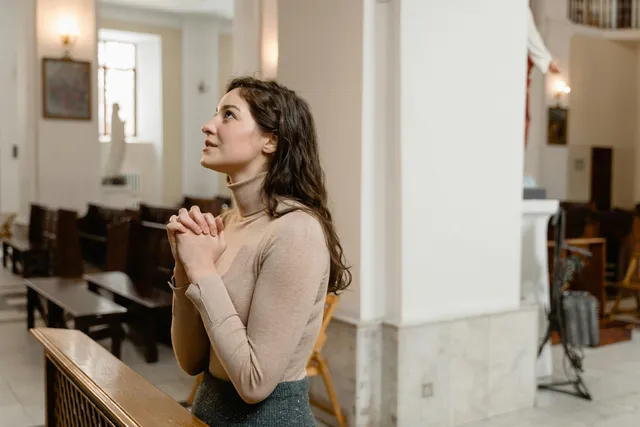
Just before Paul mentions peace in Philippians 4, he writes, "Do not be anxious about anything, but in every situation, by prayer and petition, with thanksgiving, present your requests to God." The peace of God is not conjured; it is received. And the doorway is full surrender through prayer.
We pray not to control outcomes but to yield them. Prayer reorients the soul, loosening our grip on what we fear we must manage and tightening our grip on the One who holds all things together. Thanksgiving-Paul's surprising addition-is not spiritual decoration; it's crucial. Gratitude interrupts anxiety's spiral. It anchors us in remembrance: God has been faithful before; He will be again.
Surrender Isn't Failure
For many, surrender sounds like giving up. Yet in the language of faith, surrender is the most powerful act a believer can make. It's saying to God, "You know more than I do. You see beyond what I see. I trust You." That trust births peace. When we loosen our hold on the illusion of control, we discover the stillness we've been chasing all along.
Peace That Doesn't Make Sense
The apostle doesn't just call it peace-he calls it peace beyond understanding. Why beyond understanding? Because this peace is not produced by reason. It cannot be diagrammed or fully explained. It transcends the formulas we use to comfort ourselves.
Imagine a believer standing by a hospital bed, whispering prayers through tears. The scan results are grim, the future uncertain. Yet, without any rational justification, a quiet confidence floods the heart: God is here. He holds me. That is peace beyond understanding.
This is the peace that blankets the heart when circumstances should unravel it. It is the calm that comes when faith whispers louder than fear, when eternity reorients the urgency of the present moment. It is a miracle, not a mindset.
Guarded Hearts, Guarded Minds
Paul uses the imagery of a guard-a Roman sentinel standing watch. "The peace of God will guard your hearts and minds in Christ Jesus." For those familiar with Roman might, the picture was vivid. Soldiers guarded cities, prisons, and empires. But Paul had discovered a different kind of sentry: divine peace standing watch over the tender places of the soul.
Our hearts need guarding because they are easily wounded. Our minds need guarding because they are easily swayed. Peace doesn't mean we stop thinking or feeling; it means those thoughts and feelings are shielded from destructive invasion. When anxiety tries to storm the gates, God's peace stands firm, refusing entry.
Peace as a Living Presence
This peace is not passive; it's active. Not a soft comforter, but a vigilant protector. Christ Himself is our peace (Ephesians 2:14). The peace of God flows from relationship with the God of peace. When we dwell in Christ, we dwell in security deeper than circumstance. That's why Paul adds the crucial phrase-"in Christ Jesus." The peace is not abstract; it's personal. It's rooted in communion with Him.
Jesus, the Perfect Picture of Peace
No one embodied peace better than Jesus. He slept through storms, walked calmly into betrayal, and stood silently before accusers. His equilibrium came from perfect union with the Father. He didn't need the world's approval or understanding because His identity was anchored in divine love and purpose. The peace He offers is the same one He lived in-unshakable, weatherproof, eternal.
When Jesus said to His disciples, "My peace I give to you; not as the world gives do I give to you," He distinguished it sharply from every human attempt at tranquility. The peace of Christ is not circumstantial-it's covenantal. It's the byproduct of belonging, not achieving.
When Peace Feels Distant
Even devoted believers sometimes find peace elusive. The Bible never pretends this is easy. There are seasons when anxiety clings stubbornly, when prayer feels mechanical, when peace feels like a memory rather than a promise. Yet even then, God's peace has not vanished-it waits patiently for our hearts to turn again toward Him.
The key is to lean into presence over performance. Don't rush to "fix" your peace; rest in the One who is peace. Sit quietly with Him. Whisper His name. Pour out your heart as David did in the Psalms. Peace is not a prize for spiritual achievement; it's the inheritance of those who simply stay near the Shepherd.
Peace in Motion: Living It Out
God's peace is meant to be lived, not just felt in rare moments of stillness. It impacts how we speak, work, parent, forgive, and dream. A heart guarded by peace becomes a safe place for others too. When the peace of God rules in us, it radiates through us.
In daily choices-how we respond to criticism, how we manage uncertainty, how we treat those who wrong us-peace becomes our quiet witness. A believer anchored in peace stands out in a restless world. It's not showy or noisy; it's steady, like a lighthouse. People notice serenity that cannot be staged.
Anchoring Peace Through Practice
Although peace is a gift, it flourishes in certain soils. Regular prayer, time in Scripture, and worship cultivate awareness of God's nearness. Community strengthens it; isolation often erodes it. We learn to choose peace moment by moment-to pause before reacting, to forgive rather than stew, to breathe before speaking haste.
The Holy Spirit becomes our gentle instructor, reminding us to set our minds on what is true, honorable, and praiseworthy (Philippians 4:8). Each time we redirect our thoughts toward truth, we invite peace to reign anew.
The Mystery That Comforts
Perhaps one of the greatest mercies in Philippians 4:7 is its very mystery. If peace could be fully explained, it could be lost when logic fails. But because it surpasses understanding, it remains far beyond the reach of our shifting emotions and partial knowledge. It endures not because we understand it, but because God Himself sustains it.
This mystery humbles us. It reminds us that faith is not about having all the answers; it's about belonging to the Answer. And sometimes, when understanding collapses, peace arrives precisely then-like the calm after surrender.
Living in Peace Today
The modern world makes peace seem almost impractical. Yet, every believer carries the possibility of divine serenity into each moment. Imagine daily life lived within Philippians 4:7-hearts calm under pressure, minds guarded against despair, speech seasoned with gentleness. The world does not need more arguments about faith; it needs more witnesses of peace.
That peace is not emotionless detachment. It is deep engagement with life from a place of divine security. It is saying: "I don't understand everything, but I know the One who does." It's trusting that even in unanswered questions, God is working for good. It's believing, even trembling, that nothing can separate us from the love of Christ.
The Unfailing Guard
Philippians 4:7 is not just a verse to embroider on a pillow; it's a promise to lean on when the night is long. The peace of God is not a theory-it's a Person keeping watch over our hearts and minds. When the storms rage, when prayers echo unanswered, when explanations fail, His peace remains the quiet heartbeat of faith, saying, "All is well, because I am with you."
Peace beyond understanding doesn't erase life's pain-it redeems it. It turns prisons into chapels, fears into prayers, and confusion into confidence. It is Christ Himself, steadfast and near. And for those who dare to trust Him in the dark, His peace still whispers through the ages: "Be still, and know that I am God."