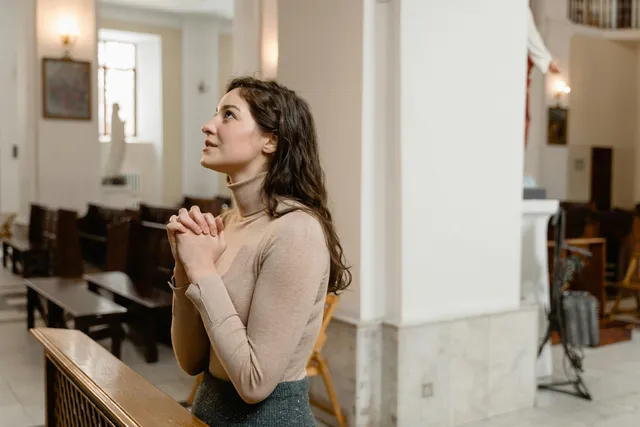
It's a verse that slips quietly into the heart and lingers there: "Be still, and know that I am God." (Psalms 46:10). It feels almost whisper-soft, yet carries the power to still storms - both within us and around us. Those seven words have brought calm to anxious hearts for generations, but their meaning unfolds deeper the more we sit with them. In a chaotic world that rewards hurry, this invitation to be still feels almost foreign. Yet it may be the very thing we're most desperate for.
The Noise That Never Stops
Our modern lives hum with relentless noise. Notifications, news, conversations, worries. Even in our quietest moments, the mind can race with lists of things to do or fears to manage. We crave peace but often chase it through distraction rather than devotion. Stillness has become something to avoid rather than embrace. Yet Psalms 46 doesn't present stillness as inactivity or passivity-it presents it as Revelation. "Be still" is not a command to do nothing; it's an invitation to become aware of the One who is already doing everything.
The psalmist writes in a time of turmoil. Psalms 46 opens with earthquakes, mountains falling into the sea, nations in uproar. It's a scene thick with chaos-and into that soundscape, God speaks: Be still and know that I am God. This isn't a verse for serene mornings with coffee and a candle. It's a declaration for the battlefield. Stillness, in this context, is not escape. It's trust.
What Does It Mean to Be Still?
To be still is not to be motionless-it's to rest your soul in God's sovereignty. The Hebrew word used here, raphah, translates as "to let go," "to release," or "to relax." It's as if God is pleading: "Loosen your grip. Stop striving to control what only I can command." Stillness, then, becomes not withdrawal but surrender. It is the quiet that comes after releasing our clenched fists into His open hands.
Surrender as Strength
We tend to associate surrender with weakness, but in the kingdom of God, it's the other way around. When Moses faced the Red Sea with Pharaoh closing in, God said, "The Lord will fight for you; you need only to be still" (Exodus 14:14). The people couldn't fight their way out-they had to trust their way through. Stillness didn't mean standing helplessly; it meant waiting for the miraculous movement of God. It was an act of faith in motionless form.
In the same way, our stillness today becomes a testimony of faith. We put down our weapons of overthinking, stop trying to manipulate outcomes, and dare to rest in His timing. And when we do, we often discover what Israel did: the sea parts when we stop striving to part it ourselves.
Knowing That He Is God
The second half of Psalms 46:10 is as vital as the first. Stillness without knowledge is emptiness. Stillness with knowledge becomes intimacy. "Know that I am God" calls us not only to believe in Him but to experience Him personally. Knowledge here is not intellectual acknowledgment-it is relational awareness. It's like recognizing the presence of a beloved friend even when they haven't yet spoken a word.
When we know God, stillness ceases to feel like silence and begins to feel like shelter. We rest because we are assured. We do not need to shout for His attention; we already live under His gaze. The quiet becomes a place of connection-the deep, wordless communion of the soul that's no longer trying to explain itself.
The God Who Holds Stillness
Throughout Scripture, the knowledge of God changes everything. Elijah, standing on the mountain after his flight from Jezebel, encounters wind, earthquake, and fire-but God is not in them. Then comes a gentle whisper (1 Kings 19:11-12), and Elijah knows. Job, after all his speeches and anguish, says, "My ears had heard of you, but now my eyes have seen you" (Job 42:5). Stillness does not mean absence of movement; it means awareness of Presence.
To know He is God is to rest in His unchanging nature. He is our refuge and strength, as the same Psalms declares at its opening (Psalms 46:1). Empires rise and fall, crises come and go, but God remains immovable. In stillness, we align our trembling hearts with His eternal steadiness.
When Stillness Feels Impossible
Of course, being still isn't easy. For many, stillness feels like the scariest space of all, because when we stop moving, we finally hear what's inside. The inner noise of regret, fear, loneliness. But perhaps that is exactly why God calls us there. Stillness isn't primarily a technique-it's a trust posture. When we enter it, He meets us, not to condemn but to calm.
Jesus Himself modeled this rhythm. He withdrew from the crowds, sometimes before dawn (Mark 1:35), not because He was tired of people but because He desired intimacy with the Father. The Son of God-the busiest person in history, if you think of His mission-kept choosing stillness. Not once in the Gospels do we find Jesus anxious. He moved purposefully, peacefully, always anchored in the Father's will. His calm was not personality-based; it was presence-based.
Creating Space for Sacred Stillness
How can we, in a world constantly vibrating with activity, practice being still before God? It won't happen accidentally. Stillness must be chosen and protected like treasure. It may begin with simple, deliberate pauses-morning moments before the day's rush, or quiet evenings surrendered instead of scrolled away.
Practical Pathways to Stillness
- Breathe and Acknowledge: Begin by taking a few slow breaths, physically reminding yourself you are present. Whisper a simple prayer: "You are God. I am here."
- Set Down the Noise: Silence isn't just absence of sound-it's absence of competing voices. Step away from your phone, computer, or ongoing obligations for a time to give God your undistracted attention.
- Read and Rest: Open Scripture slowly, without rush. Read to listen, not to accomplish. Let a single verse live in you until it breathes peace.
- Practice Gratitude: Stillness deepens when it turns to adoration. Gratitude transforms a pause into worship, making space for joy to fill the silence.
The point is not to master a method but to meet a Person. Stillness is relational, not ritual. The value of quiet time is not in how quiet it is, but in Who you encounter there.
The Strength That Flows from Stillness
When we truly become still before God, something shifts inside us. Anxiety loosens its grip. Perspective returns. In the stillness, we remember whose shoulders the world truly rests upon-and ours can finally drop. The psalmist's confidence is contagious: "The Lord Almighty is with us; the God of Jacob is our fortress" (Psalms 46:7). That declaration comes right before verse 10. It's as if the Psalms builds up to this crescendo of trust, and then God Himself speaks: "Be still."
Stillness, then, is not retreat from reality but empowerment for it. We emerge from the quiet differently-less hurried, more centered, steady in heart. Stillness is not an escape from responsibility; it's an encounter with reliability-God's.
Living Psalm 46:10 in the Everyday
Stillness isn't a one-time retreat; it's a rhythm of recognition. It whispers through our commutes, our kitchen chaos, our board meetings, our bedtime worries. It doesn't always mean sitting in silence-it can mean carrying peace in the noise. A heart that knows God becomes a still heart, even when the world swirls around it.
Next time you feel the wave of panic or pressure rise, pause. Remember who He is. Say it softly, perhaps even aloud: "Be still, and know that He is God." Those words can mark the threshold between panic and peace, between striving and surrender.
And perhaps, over time, you'll find that stillness is not the moment you meet God-it's the awareness that He's been there all along, waiting patiently in the quiet for you to notice.
The Quiet Confidence of Trust
Psalms 46:10 remains a timeless remedy for restless hearts. It teaches that real peace is not found in the absence of chaos, but in the presence of Christ. The stillness God calls us to is not empty-it's full of Him. In stillness we relearn the sacred truth that control was never ours to begin with, and contentment was never lost when we rest in His hands.
So be still, dear soul. Let go of the need to figure it all out. Sit in the quiet until your spirit remembers the sound of His voice. Know that He is God-and that this knowledge is enough. Enough to calm the storm outside, and even more, the one within.