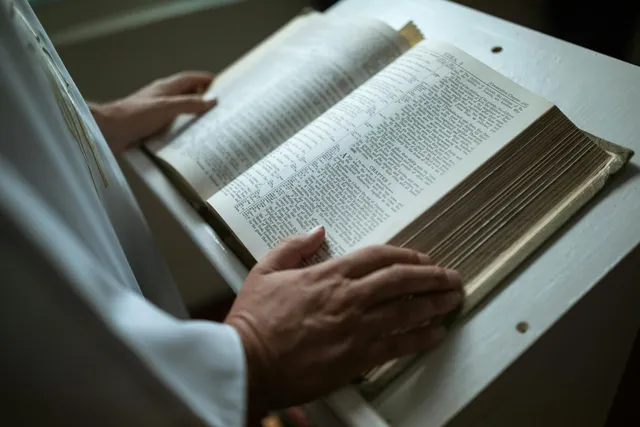
Few words in Scripture carry as much quiet weight as "parable" and "proverb." They appear small-short sayings or brief stories-but within them live worlds of truth. Both are beloved teaching tools in the Bible, vessels of divine wisdom for hearts that are listening. Yet though they seem similar, parables and Proverbs move in different ways. One tells a story; the other distills wisdom. One invites us to walk into a narrative; the other leaves us standing before a single sharpened sentence, asked to live it. Together, they show how God speaks to both the mind and the imagination.
Stories that Open the Heart
When Jesus spoke in parables, He wasn't just offering moral lessons. He was inviting His listeners into a world they could inhabit-a vineyard, a fig tree, a wedding feast. These familiar settings became mirrors for the soul. Parables awaken something deeper than analysis: they evoke recognition. You don't merely learn a parable; you enter it, and sooner or later, you discover yourself within it.
Consider the Parable of the Good Samaritan (Luke 10:25-37). It begins as a legal discussion-a scholar asking about eternal life-and unfolds into a story of compassion that erases social and religious boundaries. Jesus does not lecture about mercy; He paints mercy's face. We watch a man stop for a stranger on the road and realize, with conviction, that we too are called to cross over the lines of comfort and convenience for love's sake.
Parables work slowly, like seeds planted in soil. They are designed not only to teach but to test-to reveal the hearer's heart. Remember how Jesus often said, "Whoever has ears to hear, let them hear." A parable divides listeners: some walk away puzzled, others awakened. The story hides truth in plain sight, waiting for humility and hunger to unlock it.
Sayings that Shape the Mind
Proverbs, by contrast, speak with the swift clarity of distilled truth. The Book of Proverbs opens with a declaration of purpose: to teach wisdom, discipline, and understanding (Proverbs 1:2). Each short saying offers the reader a moral compass-guidance for daily choices, speech, relationships, and work.
While parables unfold like scenes from a play, Proverbs strike like the toll of a bell. They don't elaborate; they declare. "A gentle answer turns away wrath, but a harsh word stirs up anger" (Proverbs 15:1). In one breath, generations of relational experience are condensed into a single line. Proverbs are God's wisdom compacted into a phrase you can carry in your pocket.
The Poetry of Practice
Some Proverbs seem simple-maybe almost too simple-but their strength lies in repetition. To read them daily is to practice wisdom's rhythm. Proverbs become spiritual muscle memory; they train our instincts. When anger flares, when pride whispers, when greed tempts, the rhythm of holy counsel replays within us: "Better a little with righteousness than much gain with injustice."
While parables transform the imagination, Proverbs tune the conscience. They help us live faithfully within the ordinary moments where holiness is either strengthened or squandered.
Two Lenses, One Light
Though parables and Proverbs differ in form, both arise from the same divine heart. They are not rival tools but complementary instruments in the symphony of wisdom. Parables are the windows through which sunlight floods the room; Proverbs are the mirrors that reflect that light onto daily surfaces. Together they shape a faith that is both imaginative and practical.
Jesus Himself, interestingly, was a master of both forms. He told parables to invite disciples into the mysteries of the Kingdom. But He also spoke proverb-like sayings-short, pointed maxims such as "Where your treasure is, there your heart will be also" (Matthew 6:21). The Lord's teaching holds both rhythm and richness: a story that reaches your heart, a sentence that stays with your soul.
Why Jesus Chose the Parable Form
When asked why He used parables, Jesus quoted Isaiah: so that seeing, some might not perceive, and hearing, some might not understand. That answer sounds strange, even unsettling. But it reveals something essential. Parables require spiritual participation. They are not passive lessons but living invitations. You have to wrestle, reflect, and sometimes repent before the truth takes root.
When Jesus described a farmer sowing seed (Mark 4), He was speaking more than an agricultural truth. He was describing every listener's heart. The parable offered not simply information, but encounter-an opportunity for transformation. Each story was, in its own way, a door to the Kingdom, swinging open to those who came in humility.
A Living Story Still
That's why parables remain vivid centuries later. Their power doesn't fade with time or culture because they speak to the nature of being human: our fears, our hopes, our struggles with forgiveness, pride, grace, and trust. The story of the Prodigal Son still breaks through modern cynicism to reveal both the wound of sin and the wonder of mercy. In every age, the Father still runs down the road to meet us.
Wisdom for Everyday Walking
In contrast, the Book of Proverbs calls us to see holiness in the texture of daily life. Wisdom is not an abstract virtue but a practical lifestyle. It touches how we speak, plan, listen, and lead. Proverbs invites us to see that faith is not merely believing rightly but living rightly. And it begins with reverence: "The fear of the Lord is the beginning of knowledge."
To live by the Proverbs is to walk alert to God's presence in the mundane-commuting, budgeting, conversing, resting. These verses remind us that righteousness is rarely dramatic. It is made of countless small, steady choices toward goodness and away from folly. That quiet rhythm of obedience becomes a life of beauty in God's eyes.
Heart and Mind Together
If we imagine parables as stories that speak to the heart, and Proverbs as truths that train the mind, then we can see why God gives us both. The human person is not divided; what touches the heart shapes the mind, and what instructs the mind refines the heart. To be wise in Christ is to be whole-our feelings sanctified, our thoughts renewed.
Without parables, faith might grow too functional-focused on rules but not imagination. Without Proverbs, it might become too emotional-stirred but without structure. The beauty of Scripture is that it restores balance. The Lord teaches us both how to think and how to feel, how to live and how to love.
Bleeding Wisdom into Modern Life
We might wonder how these ancient forms of wisdom meet us today. After all, we live in an age of constant voices and quick opinions. Our world trades reflection for reaction. But here, again, parables and Proverbs act as a gracious counter-current. They slow us down. They make us ponder before we speak, observe before we assume, pray before we post.
Living the Parable
Every believer still walks through parables daily-some of our own making, others written by God. The struggle to forgive, the call to patience, the aching need for hope-these are the living narratives where Christ meets us. When we pause long enough to see His hand shaping the story, the ordinary scenes of our life become sacred lessons. We realize: our lives are not random; they are guided parables of grace.
Practicing the Proverb
Likewise, the Proverbs teach us that spiritual maturity is forged in the small things. A kind word, a patient delay, an honest act-these are the threads of wisdom. The book's short sayings can accompany you like quiet companions through your day. Keep one in your heart each morning; let it guide your steps. That's how wisdom grows-not in great leaps, but in faithful inches.
A Concluding Reflection: The Voice Beneath the Words
At their root, both parables and Proverbs share a single purpose: they reveal the God who longs to speak. Whether through a story that lands in your soul or a sentence that stills your mind, the same Voice whispers-calling us not just to listen, but to live differently. Truth is not for curiosity; it is for transformation.
Perhaps that's the greatest difference between parables and Proverbs, and the greatest similarity as well. Parables invite us into God's unfolding story; Proverbs invite God's wisdom into our unfolding days. One touches eternity through imagination; the other through daily obedience. But both remind us that hearing is holy. To attend to God's Word-whether in a tale of a lost sheep or a line about gentle speech-is to stand again in Eden, where His Word still gives life.
May we be a people who listen deeply-to the story that reveals our hearts and to the saying that anchors our walk. And in every hearing, may we find ourselves drawn closer to the One who remains the Author of both the story and the sentence: Jesus Christ, God's living Word, who speaks still.