There's a phrase that has made its way through theology lectures, apologetics debates, and even late-night conversations among thoughtful believers: "God of the gaps." It's the idea that when humanity cannot explain something scientifically, we plug the gap with God. Lightning? That was Zeus-or later, Yahweh-until we discovered electricity. Disease? A curse-until we learned about bacteria. And yet, many Christians still wrestle with the question: if science explains so much, what's left for God to do?
The Temptation to Shrink God
Throughout history, believers have faced the tension between faith and the ever-expanding boundaries of human understanding. Every generation has seen its share of believers who, fearing science might erase wonder, built their faith upon mystery instead of Revelation. But a God whose role is limited to the unexplained is far too small to be the Creator of all that is known and unknown.
It's worth remembering that the Bible never once calls us to believe because of ignorance. Psalms 19 declares, "The heavens declare the glory of God; the skies proclaim the work of his hands." Notice-the psalmist doesn't see the heavens and retreat in confusion. He sees them with awe, as a display of divine artistry. The pursuit of understanding does not threaten faith; it can deepen it.
When Faith and Curiosity Walk Together
Many early scientists-Kepler, Newton, Faraday, Mendel-saw no contradiction between their Christian faith and their scientific work. To them, exploring the natural world was an act of worship. Kepler wrote that in studying the cosmos he was "thinking God's thoughts after Him." In other words, discovery was not rebellion but reverence. It was peering into the architecture of creation and seeing the fingerprints of a Mind both infinite and intimate.
Science describes the mechanics of the universe, but theology aspires to tell us its meaning. The deeper we probe the "how," the more we may wonder at the "why." Faith and curiosity can walk hand in hand when each recognizes its lane-science asking how creation operates, faith asking who and why it exists at all.
The Myth of Conflict
The "war" between science and faith is largely a modern invention. For centuries, universities-often founded by believers-served as places where theology and natural philosophy coexisted fruitfully. The real conflict often arises not between faith and investigation, but between two kinds of certainty: the certainty that only the material is real, and the certainty that God must act only in ways we can't understand.
Faith in a World of Equations
We live in an age where telescopes see galaxies being born and microscopes reveal molecules dancing to life. A sense of smallness can creep in. Does our faith still make sense in such a vast, measured world?
The short answer: not only does it make sense, it becomes even more miraculous. Every new layer of discovery reveals not chaos, but breathtaking coherence. Patterns repeat across scales-from the swirl of galaxies to the spiral of seashells. Order abounds where randomness should reign. For believers, that order doesn't replace God-it reflects Him. The laws of nature are not barriers between us and the divine; they are the language God uses to sustain the world.
Job's Lesson in Awe
When Job questioned the mysteries of suffering and creation, God's response wasn't an explanation-it was an invitation to wonder: "Where were you when I laid the foundation of the earth?" (Job 38:4). The Revelation was not meant to belittle Job but to awaken awe. To understand that the world's vastness testifies not to our insignificance, but to the majesty of the One who holds it together.
The Trouble with the Gaps
Let's be honest: humans like answers, and sometimes we fear that too much knowledge will crowd God out of the picture. So we attempt to preserve faith by protecting mystery. Yet this mindset can backfire. If God lives only in the gaps of our understanding, then every scientific breakthrough pushes Him further away. That kind of God is doomed to shrink with each discovery.
But the God of Scripture is not a placeholder in our ignorance-He is the ground of all being. Colossians 1 paints a portrait of Jesus as the One "by whom all things were created... and in Him all things hold together." That's not a God hiding behind the unexplained; that's a God woven through the very fabric of reality.
Seeing Creation as Revelation
The Apostle Paul writes in Romans 1:20 that God's "invisible qualities-His eternal power and divine nature-have been clearly seen, being understood from what has been made." Nature itself is an ongoing Revelation. To study it is to participate in the continual unveiling of divine artistry. Faith does not retreat from discovery; it rejoices in it.
Worship through Understanding
Every act of understanding can become an act of worship. The physicist should be as capable of devotion as the poet, if both have eyes to see God at work. Think of a biologist studying the intricacy of cellular machinery. Every process-replication, repair, energy transfer-is a symphony of precision. When understood through faith, that intricacy does not make God distant. It proclaims Him nearer than we dared imagine.
God is not in the gaps of the cell. He is in the order of its structure, the beauty of its balance, the constancy of its laws. In every discovery, we are unveiling another layer of His intention.
Reclaiming Wonder
The modern world often confuses knowing with control. Yet true knowledge should lead not to arrogance but to humility-to stand before the vastness of creation and, like the Psalmist, whisper, "What is man that You are mindful of him?" (Psalms 8:4). Wonder is not the opposite of understanding; it is its proper result. The more we discover, the more reason we have to fall to our knees in awe.
Faith Beyond Mechanism
Some believers worry that a scientifically mapped universe leaves no room for miracles or divine action. But what if that's a misunderstanding of both? The same God who sustains natural law is not restricted by it. Miracles are not violations of God's consistency-they are expressions of His sovereignty. Just as an artist may depart from the norms of a painting to highlight beauty in a new way, so God sometimes chooses to hint at a reality beyond the pattern He established.
The Creator is not competing with creation; He is continuously upholding it. If God chose to cease sustaining the laws of physics even for a heartbeat, the cosmos itself would unravel. The laws we measure are the steady rhythms of His ongoing faithfulness. Miracles are not interruptions-they are signposts that point beyond the mechanism to the heart of the Maker.
The Humility of True Science-and True Faith
Both genuine science and genuine faith begin with humility. The scientist must be willing to observe before concluding. The believer must be willing to trust before seeing. And in both pursuits, pride is the great enemy. We err when we wield science to banish mystery or wield faith to reject inquiry. God is not threatened by the microscope or the telescope. Every lens that brings creation into focus can, if our hearts are tuned rightly, magnify Him.
Faith does not fear knowledge. It fears pride. The wisest Christians throughout history have been those who saw understanding as a means of worship. Augustine, Aquinas, Pascal-all saw no contradiction between faith and reason, because both were ultimately seeking the same thing: truth. And Christ Himself said, "I am the truth."
God of All-Not Only the Gaps
Perhaps it's time we stop defending a shrunken deity confined to the corners of our ignorance. The God who created quarks and quasars does not disappear when we map their patterns. He reigns through and beyond them. The more we comprehend of the universe, the more awe we should feel toward its Author.
Understanding does not push God out-it draws us closer. Each discovery can become a modern-day Psalms, a new verse in the ongoing Song of Songs of creation's praise. What if, instead of fearing the closing of the gaps, we celebrated the expanding Revelation of a God who continues to reveal Himself in every detail-from the deepest cell to the farthest star?
Living in the Tension, Living in the Wonder
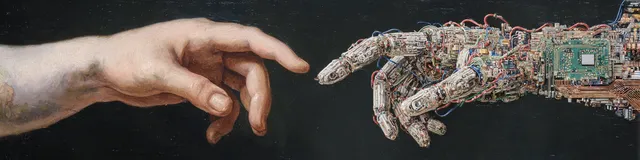
Faith and science, properly understood, are not rivals but dance partners. Each can point us back to the same mystery that lies at the heart of all things: a God who is both knowable and beyond knowing. In our daily lives, this truth invites us to approach the world not with suspicion, but with reverence.
The next time you witness a sunrise, or hold a child, or watch a storm roll over the mountains, resist the urge to reduce it to explanation alone. Let explanation and adoration mingle. Let science teach you how; let faith remind you who. Then, with a quiet heart, join Job, David, and every wondering soul before and after us in awe-filled worship.
Not the God of the gaps-but the God of all.