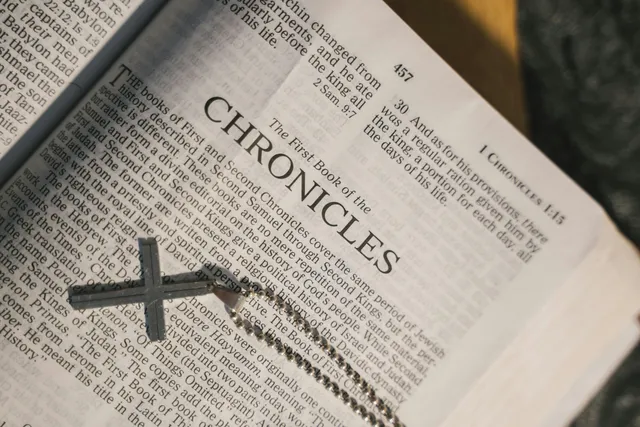
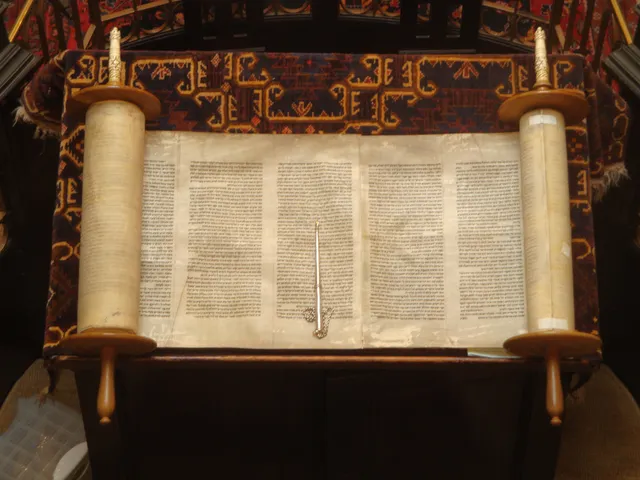
In the beginning, before translations, before printing presses and study Bibles, there were the sounds of human speech: earthy, resonant, alive. When God chose to reveal Himself through Scripture, He did so not in some heavenly dialect, but in the living languages of His people - first in Hebrew, later in Greek, and with brief but meaningful touches of Aramaic. Each carried the flavor of its world, the rhythm of its people, and the pulse of its time. To encounter the languages of the Bible is to glimpse how divine truth took root in human history - grain by grain, sound by sound.
The Ancient Tongue of Promise: Hebrew
The Hebrew language lays the foundation of our faith story. It is earthy, tactile, and deeply relational - a fitting vessel for a faith that describes God walking with His people and speaking directly into the texture of their daily lives.
Take, for example, the very name of God revealed to Moses: YHWH (often represented as "the LORD" in English Bibles). It's derived from a verb meaning *to be*, yet it carries more than static existence; it suggests the One who *is*, *was*, and *will be*. In Hebrew thought, words are not mere labels; they are alive, conveying essence and action. When God told Moses, "I AM WHO I AM" (Exodus 3:14), the language itself pulsed with the living being of the One speaking.
The Poetry of Hebrew
Hebrew poetry dances with parallel lines, not rhyme or rhythm, but with the surprising echo of meaning. Think of the Psalms: "The LORD is my shepherd; I shall not want." Every phrase deepens the other. When we read Hebrew, we see how the ancients crafted their speech to repeat and reinforce, as if circling sacred truth to show its every facet.
Hebrew is concrete and imaginative. Mountains shout for joy, waters roar, and righteousness shines like the dawn. Spiritual realities are revealed through senses and stories. Reading the Old Testament in Hebrew is to hear words that carry weather, heartbeat, dust - the pulse of lived faith.
The Everyday Voice of the People
By the time of Jesus, most Jews spoke Aramaic, a cousin of Hebrew. Fragments of Aramaic in Scripture, like "Talitha koum" (Mark 5:41) or "Eli, Eli, lema sabachthani?" (Matthew 27:46), are intimate moments preserved in Jesus' mother tongue. They remind us that even as the words of God reached us through sacred texts, they once passed through ordinary conversation - the same kind that might echo in our kitchens and marketplace corners. It's a tender thought: that the eternal Word once had an accent.
From Exile to Empire: The Shift to Greek
Languages rarely remain still. After the exile, as empires changed and new powers arose, so did new common languages. By the time of the New Testament, Koine Greek - literally "common Greek" - had become the shared tongue of the ancient Mediterranean world. Merchants used it. Travelers understood it. Philosophers debated in it. And when the time came for the Word made flesh to be proclaimed to the nations, Greek was the perfect vessel to carry this good news outward.
The Language of the World
Greek was precise and expressive, capable of philosophical depth and emotional nuance. The apostles could describe both the mystery of the Trinity and the tenderness of love in ways their readers could grasp.
It's no coincidence that when John opened his Gospel with, "In the beginning was the Word," the term he used - *Logos* - carried immense meaning. To Greek ears, *logos* spoke of reason, wisdom, and the organizing principle of all creation. To Jewish listeners, it resonated with God's creative word in Genesis. In a single phrase, John built a bridge across languages, cultures, and worldviews.
The New Testament's Dynamic Voice
Koine Greek was not lofty or elite. It was approachable - the tongue of shopkeepers and sailors, of letters dashed off and stories told in courtyards. That's the beauty of it: the gospel entered the *mainstream* of human communication.
Imagine reading Paul's letters not as theological essays, but as heartfelt correspondence to beloved friends. "Grace and peace to you," he writes again and again. The Greek word for grace, *charis*, glows with layers of generosity and joy - a gift freely given. Each word-choice mattered, shaped by a heart that longed to make divine truth accessible, not distant.
When Worlds Meet: The Translation Journey
The story of Scripture's languages is one of holy translation. As early as the third century before Christ, Jewish scholars in Alexandria began translating the Hebrew Scriptures into Greek, creating the Septuagint. This was more than a linguistic project - it was an act of faith: ensuring God's words could be understood by those who no longer spoke Hebrew.
The Septuagint shaped the world into which Jesus walked. Many of the Old Testament quotations in the New Testament come from this Greek translation. Even as languages shifted, God's truth remained firm, flowing through new forms to reach new hearts.
Words that Keep Crossing Borders
Every Bible translation that has ever followed - from Latin to English, from Luther's German to contemporary tongues - stands in this line of sacred continuity. Translation is itself a reflection of the Incarnation. Just as Christ took on flesh to dwell among us, so the Word of God continually takes on local language to dwell among believers everywhere.
And yet, something unmistakable remains in those first tongues. The interplay between Hebrew's earthy imagery and Greek's philosophical clarity gives the Bible its unique texture - fire and light, body and spirit, heart and mind. Together, they form a whole that no single language could hold alone.
Hebrew Roots, Greek Wings
The Hebrew Scriptures ground us - they tell of a God who forms humble dust and breathes it alive, who calls a people, who keeps covenant. The Greek writings lift us outward - they proclaim that the same God has walked among us, redeeming not just a nation, but all nations. Hebrew faith planted the seed; Greek expression gave it wings.
Even today, when we open our Bibles, we participate in that same movement: from rootedness to outreach. The Old Testament reminds us who God is; the New Testament sends us into the world with His message.
Hearing the Word Anew
There's something humbling in remembering that our daily reading - the comfortable words printed on our shelves - once existed in strange syllables we would struggle to pronounce. Yet behind those syllables lies the same Spirit who breathed them out.
When believers study Hebrew or Greek, even at a basic level, they often describe a kind of awakening. Words that seemed familiar suddenly sparkle with new dimensions. "Peace," for example, becomes *shalom* - not just the absence of strife, but a wholeness, a harmony between God, humanity, and creation. "Love" expands into several Greek words: *agape*, *philia*, *eros* - each illuminating a different hue of God's nature and our call to live it out.
But you don't have to master biblical languages to be moved by them. Simply knowing that our faith has been spoken through many tongues teaches us something profound: God's message is endlessly adaptable, yet never diluted. The words change, but the meaning remains - living, active, and sharp as ever (Hebrews 4:12).
When We Pray in Our Own Language
Every believer, wherever they are, carries this heritage. When we pray, we add our words - English, Spanish, Yoruba, Korean - to the great chorus of languages through which God has been praised for millennia. The God who once spoke to Abraham in Hebrew and to Paul in Greek hears us just as clearly in our modern speech.
Our prayers, like Scripture itself, are living translations: faith expressed through the idioms, imaginations, and hearts of today. When we say "Lord," when we whisper "Jesus," we join the ancient cry that has crossed oceans and centuries. The Word continues to become flesh - in us.
A Living Word for a Living World
From Hebrew to Greek, from papyrus scrolls to digital screens, the journey of Scripture's languages reminds us that God meets us where we are. He speaks, and His voice finds its home in whatever language our hearts understand best.
So when you next open your Bible, pause for a moment. Behind those English words stand countless generations of faithful translators and scribes, echoes of prophets and apostles, whispers of Hebrew Psalms and Greek letters written long ago. And threading through them all is one unbroken melody: the Word of God, still living, still speaking, still transforming hearts across every tongue.
May that Word - ancient, multilingual, ever new - continue to reach us and reshape us, until every language on earth joins in one eternal praise: "Holy, holy, holy is the Lord God Almighty."