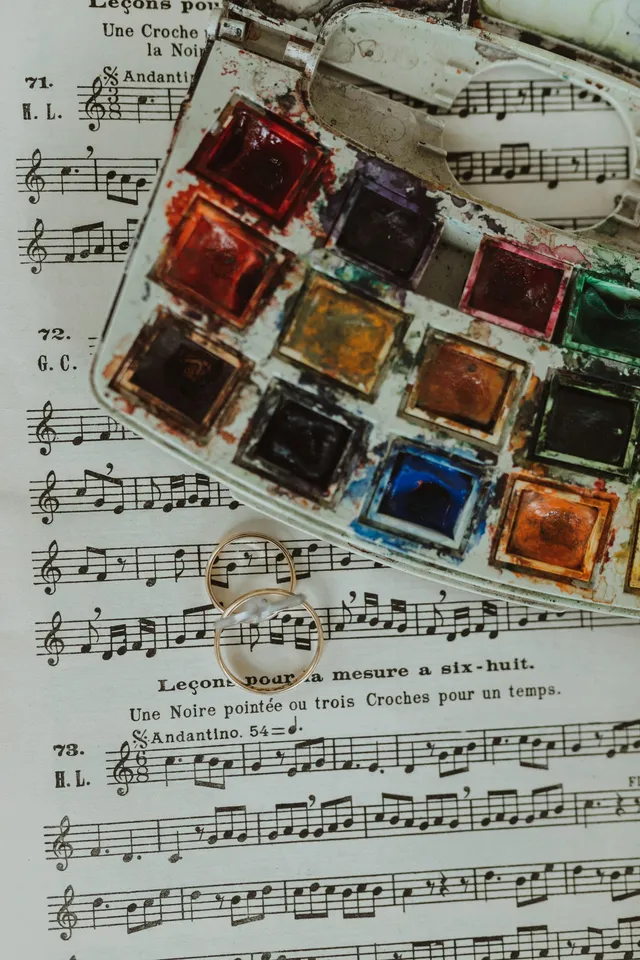
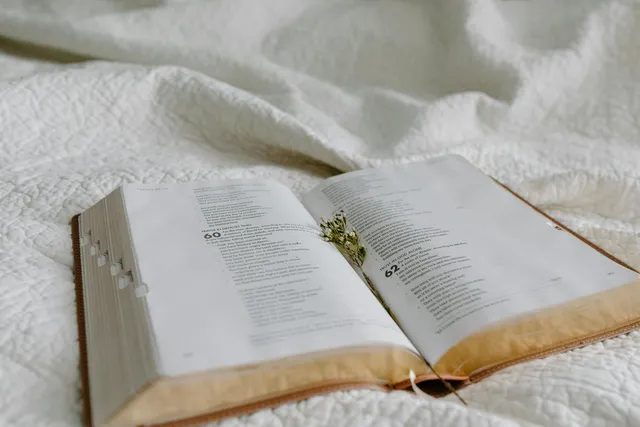
There's something divine about the moment inspiration strikes - when a poet finds the perfect words, a painter catches the right light, or a musician breathes soul into a melody. For the Christian artist, that spark isn't just talent. It's a moment of communion. A whisper from the Creator to the created, inviting participation in His ongoing act of beauty. Can creativity glorify God? Absolutely - but the deeper question is how.
The Image of the Creator
In Genesis 1:27 we read that humankind was made in the image of God. That isn't merely a theological statement; it's an artistic one. The very first thing we learn about God in Scripture is that He creates. Before He rules, instructs, or Judges, He forms - light, water, land, life. To be made in His likeness, then, is to share something of that creative impulse. It's woven into our spiritual DNA. When we build, design, write, or sing, we reflect the One whose imagination birthed galaxies.
Art is not an optional extra of the spiritual life. It's an echo of our origin story. Every brushstroke, every chord, every line of verse is a small declaration: we were made to make.
When Beauty Mirrors Glory
Art, in its truest form, points beyond itself. The golden tones of a sunset, the majesty of a cathedral, the ache within a hymn - each one, if we allow it, becomes a window into God's character. Psalms 19:1 declares, "The heavens declare the glory of God; the skies proclaim the work of his hands." In a similar way, human-created beauty can become a kind of sacred echo, reverberating His eternal creativity.
But this requires intentionality. Not all art glorifies God simply by existing. A Song of Songs or sculpture can just as easily celebrate pride, despair, or idolatry. The difference lies in the heart and purpose of the maker. When a believer creates not merely to be seen or admired, but to love, to serve, to testify, their work becomes an altar, and the act itself becomes worship.
Art as Worship
Worship isn't confined to hymns and church pews. When an artist paints with gratitude in their spirit, when a dancer's movements become a prayer, when a writer's words seek to uncover God's truth - that's worship. Romans 12:1 urges us to present our bodies as living sacrifices, holy and pleasing to God, for "this is your true and proper worship." Our creative gifts, surrendered to Him, can do exactly that.
Biblical Artists and Divine Inspiration
The Bible gives us more examples of artists than we might expect. In Exodus 31, God appoints Bezalel and Oholiab to design the Tabernacle. The text states that they were "filled with the Spirit of God, with wisdom, understanding and knowledge in all kinds of crafts." The Holy Spirit didn't just inspire prophets and kings - He inspired artisans, woodworkers, and metal engravers. Their craftsmanship had a sacred purpose: to create dwelling spaces for the divine presence.
God values beauty. He could've told Moses to build a functional tent, plain and utilitarian. Instead, He gave precise instructions for gold, precious stones, embroidered curtains, and artistic detail. Beauty mattered to God because beauty reveals something about Him. It stirs awe, reflection, and reverence - the same emotions that lead us toward worship.
The Prophets as Poets
Consider also the prophets and psalmists. Much of Scripture is art - poetry, Song of Songs, metaphor. Isaiah's visions burst with imagery, David's Psalms blend emotion and melody, and Jesus Himself taught in parables - short stories brimming with meaning. The Bible doesn't treat creativity as ornamental but as a vessel for truth. God's Revelation often arrives through images and symbols that stir the heart as much as the mind.
When Creativity Strays
There's a sobering side to this conversation. The same creative energy that can glorify God can also distract from Him. In the story of Babel, humanity pooled its creativity to build a tower "that reaches to the heavens," not to honor God, but to make a name for themselves. Their architecture became a monument to self-importance rather than divine glory. The result? Chaos and scattering.
Modern creativity can fall into the same temptation. When inspiration becomes self-promotion, when art becomes idol rather than offering, something precious is lost. The difference between art that glorifies God and art that centers man is humility. A humble artist serves something greater than their own reputation.
The Struggle and the Sacred
Creativity often feels fragile. Artists wrestle with self-doubt, comparison, and the yearning to be seen. Many Christians wonder: Is it selfish to create when the world is hurting? Should I pour hours into painting or writing when there are missions to fund and people to serve?
But God doesn't measure faithfulness only by productivity. He measures it by obedience. When He prompts you to create, that call is as holy as any other. The beauty you make might not feed the hungry directly - but it can nourish weary hearts, awaken gratitude, and inspire acts of compassion. Beauty is ministry, too.
Art in the Valleys
There are also times when art is born out of pain. Many believers have crafted their most meaningful pieces from seasons of loss or waiting. Like David's laments or Job's words from the ashes, creativity can transform sorrow into testimony. In this sense, art doesn't just glorify God in triumph, but also in vulnerability. It testifies that even in darkness, the Creator still breathes through His creation.
Everyday Creativity
It's easy to think of art as something for the gifted few - those who can paint, compose, or sculpt. But creativity shows up in countless forms: how a teacher designs a classroom, how a parent makes bedtime storytime colorful, how a gardener tends to a patch of ordinary ground until it bursts with life. Creativity is simply the habit of seeing possibility where there was none before.
When we use that very human impulse to bring joy, order, and beauty into the world, we join God in His ongoing work of renewal. Whether your canvas is a business meeting, a family dinner, or a block of clay, you can approach it as holy ground.
The Hidden Artists
In the Kingdom of God, even unnoticed creativity counts. The crocheted blanket given to a neighbor. The meal arranged with care. The handwritten encouragement tucked into a lunchbox. These small acts of artistry whisper the language of grace. Jesus said, "Whatever you did for one of the least of these... you did for me" (Matthew 25:40). In that way, every loving act is a creative echo of divine love.
Collaboration with the Holy Spirit
If God is the ultimate Artist, then the Holy Spirit is the breath that animates our creativity. Throughout Scripture, the Spirit moves upon chaos to bring forth form - from Genesis' void to Pentecost's flame. In the same way, the Spirit hovers over our unfinished sketches and tangled ideas, whispering direction and life.
To create as a Christian is to collaborate with that Spirit. This partnership doesn't mean every painting must have a cross in it or every story an explicit moral. Rather, it means that whatever the medium, the Motive is worship and the Message is goodness. The Spirit can move through quiet beauty just as powerfully as through overt proclamation.
Many Christian artists speak of moments when their work seems to take on a life of its own - words flowing faster than they can type, melodies arriving unbidden. Those glimpses of "flow" are sacred exchanges. When we yield control, we give space for the divine to infuse the human.
The Church and the Artist
Historically, the Church has been both patron and critic of the arts. Beyond cathedrals and stained glass, the early Church saw creativity as a form of catechism - a way to teach mystery through symbol. Yet in modern times, Christians have often wrestled with the role of art that doesn't fit neatly into an evangelistic mold.
But we need artists in the body of Christ more than ever. The world is saturated with noise, distraction, cynicism. The artist's job - like that of the prophet - is to awaken wonder. The Church's calling is to make space for that wonder. To value beauty not as decoration but as Revelation. When churches nurture creatives, they nurture visionaries. And visionaries help all of us see God more vividly.
Creating for an Audience of One
In a culture obsessed with followers, likes, and public recognition, it can be liberating - even radical - to create for an unseen Audience. When our art becomes a conversation between the soul and the Savior, it's purified. Success no longer depends on applause, but on faithfulness. Colossians 3:23 reminds us, "Whatever you do, work at it with all your heart, as working for the Lord, not for human masters."
Creating for God alone brings freedom. It frees the writer to speak truth without fear, the dancer to move without comparison, the painter to risk imperfection. When the work is offered to Him, it becomes holy regardless of skill or scale. God delights more in a humble attempt than in polished pride.
The Eternal Thread
At the end of the Bible - after wars, judgments, and resurrections - we find Revelation describing heaven with aesthetic detail: jewels, colors, music, gardens. The story that began with divine creation ends with divine re-creation. The New Jerusalem overflows with beauty because beauty belongs to eternity. Every work of faith-filled art, every brushstroke of grace, is a faint preview of that world to come.
Until then, our part is to keep creating. To let our art become a language of hope, to mirror His light in our limited ways, and to offer the world glimpses of the Kingdom. Whether through notes or narratives, murals or melodies, Christians are called to make beauty that tells the truth about God.
The Sacred Spark
When Christians create, they do more than entertain or express - they participate in God's heartbeat. Art born from prayer becomes a kind of sacrament, a visible sign of invisible grace. It reminds the world that light still shines, that truth still matters, and that love still has a face.
So paint. Sing. Write. Build. Design. Do it with humility, with courage, and with joy. Do it as a response to the One who shaped you from dust and breathed into you imagination. And when your work reflects even a shimmer of His beauty, take a step back and whisper what every artist of faith eventually learns:
"All glory to the One from whom all beauty flows."