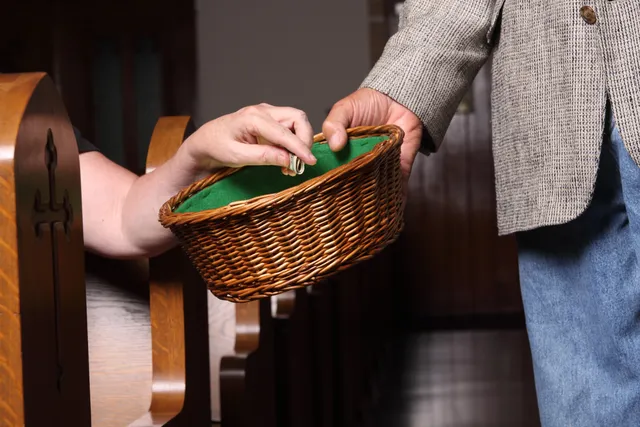
From the moment believers begin gathering in the name of Christ, traditions begin to form-habits of heart and practice that help express what words cannot. For generations, the church has returned again and again to tangible symbols of faith: a loaf of bread broken, a cup shared, feet washed, candles lit, songs lifted up together. These practices are more than rituals; they are living testimonies that tie today's church to the earliest followers of Jesus. They remind us that faith, though deeply personal, is also profoundly communal.
The Table of Remembrance: Communion
It began in an upper room, with a gathered group of confused and weary disciples. Jesus, breaking bread and passing a cup, redefined an ancient Passover tradition. What was once a reminder of Israel's deliverance from Egypt became the sign of a new covenant-the deliverance from sin and death itself. When Christians partake of Communion today, we step into that same story, aware that the bread and the cup proclaim something eternal: Christ's life poured out for the redemption of the world.
More Than a Symbol
Across Christian traditions, the meaning of Communion is expressed in many ways-some emphasize remembrance, others emphasize divine presence. Yet behind every interpretation lies the same heart: gratitude. Each time we approach the table, we confess our need and receive what we could never earn. We are reminded that grace is not a concept but a meal-a place where hunger meets mercy.
In the early church, believers often shared Communion in the context of a full meal, a feast of love known as the agape meal. The table was open to rich and poor, free and slave, Jew and Gentile. This act broke down barriers in ways the Roman world could hardly fathom. As Paul reminded the church in Corinth, communion was not to be eaten "in an unworthy manner" (1 Corinthians 11:27); to do so was to forget the unity that Christ's sacrifice created. At the table, hierarchy dissolves, and only grace remains.
A Meal That Sends
Communion is not only about remembrance but also commission. Jesus told His disciples, "Do this in remembrance of me," not as the end of worship but as its beginning. The bread and cup become fuel for service, courage, and compassion. Each sip and bite send the believer back into the world as a living reflection of Christ's self-giving love. In this way, the Lord's Supper stretches time-it reaches back to the cross and forward into eternity, all while rooting us firmly in the present moment.
The Candle and the Cross: Traditions That Teach
While Communion might be the most universal Christian practice, other traditions have grown up through the centuries, each shedding its own light on the mystery of faith. Lighting candles at Advent, tracing the sign of the cross, singing a doxology-all serve as embodied prayers. They are a language beyond words, passing from one generation to the next.
Throughout Scripture, God often taught through symbols: the rainbow after the flood, stones stacked beside the Jordan, a manger filled with straw. In the same way, the church uses tangible acts to remember and proclaim what God has done. Tradition, at its best, safeguards the wonder of faith. It slows us down, invites reflection, and keeps the heart from forgetting.
The Humble Basin: Foot Washing and Servant Leadership
Among the most startling acts in all the Gospels is Jesus kneeling with a towel around His waist, washing His disciples' feet. In John 13:14-15, He gives His followers a direct command: "Now that I, your Lord and Teacher, have washed your feet, you also should wash one another's feet." For many churches today, foot washing remains a sacred tradition-an embodiment of love that stoops low.
The Inverted Kingdom
In the ancient world, foot washing was the task of servants. To choose such an act voluntarily was shocking. Yet Jesus used it to reveal the essence of His kingdom: leadership expressed in humility, power expressed in love. When churches reenact this practice-often during Holy Week-they do more than recall an event; they participate in a divine paradox. Greatness in God's eyes is found not on a throne but on the floor, with a towel and a basin.
Some believers find this tradition uncomfortable. And perhaps that discomfort is the point. The act exposes our pride and offers a living parable that service is not supplemental to faith-it is its heartbeat. When feet are washed within a congregation, divisions soften. Resentments dissolve. For a moment, the church becomes what it was meant to be: a community that loves one another without condition.
Seasons and Symbols: The Rhythm of the Church Year
Beyond Communion and foot washing, the church has long lived by a sacred calendar-a rhythm that moves from Advent's expectation to Lent's repentance, from Easter's joy to Pentecost's fire. This cycle invites believers to relive the story of salvation again and again until it sinks deep into the bones.
Such seasons are not about empty repetition. They are spiritual reorientation points, reminding the faithful that time itself belongs to God. When we mark these days, we reclaim time from anxiety and busyness. The lighting of an Advent wreath or the ashes placed gently on a forehead say something profound: life is holy from beginning to end, and every year is another canvas for grace.
Why Tradition Still Matters
In an age that prizes originality and speed, tradition can feel outdated. Yet, paradoxically, many young believers are rediscovering ancient practices, finding in them a depth that modern spirituality sometimes lacks. These old rhythms offer structure and story-a way to dwell not just in belief, but in belonging. Tradition forms us slowly, like water wearing smooth a stone.
Jesus did not abolish sacred customs but fulfilled them. The same God who commanded festivals in Israel's history understands our human need for reminders. When practiced with sincerity, the church's rituals still have the power to awaken awe.
When Form Meets Spirit
Of course, there is always the danger that tradition can grow stale or mechanical. Jesus Himself warned against honoring God with lips while hearts remain far away (Matthew 15:8). The goal of every practice-be it Communion, foot washing, or any other-is intimacy with Christ. Without love, even the holiest symbol becomes noise.
The beauty of Christian tradition lies in its ability to connect external action with inner renewal. A cup lifted in faith becomes an offering of thanksgiving. Hands placing bread upon another's palm become channels of grace. The same Spirit who hovered over the waters at creation now hovers over these moments, transforming simple acts into sacred encounters.
Bringing the Traditions Home
Church practices were never meant to be confined within sanctuary walls. Their meaning spills into daily life. When we receive Communion, we learn to live eucharistically-to give thanks even in hardship. When we wash another's feet, we learn to serve in unseen ways: cooking a meal for a neighbor, sitting with someone in grief, forgiving without recognition. When we honor the church year, we begin to perceive our ordinary days as chapters in God's unfolding story.
In the simplicity of baked bread, poured water, and flickering light, heaven and earth meet. The church's traditions teach that God is not distant but profoundly near, dwelling within the humblest gestures. Every holy habit whispers the same truth: Christ still serves, Christ still feeds, Christ still invites.
Living the Legacy
To participate in these sacred practices is to join a testimony older than cathedrals and deeper than creeds. You become part of a living stream that began with fishermen on Galilean shores and continues wherever hearts bend low before the Savior. Whether your congregation shares bread weekly or only on special occasions, whether foot washing is part of your Holy Week or a private act of service, each tradition points in the same direction-toward the self-giving love of God.
Let them never become mere performance. Let them become prayer. Let them lead you to mercy, humility, and communion not only with Christ but with one another. These are not empty customs but touchpoints between heaven and earth, sacred bridges linking memory with mission.
So the next time you find yourself kneeling, reaching, or receiving-remember: you are stepping into a story that does not end. The same hands that broke bread in the upper room are still blessing you, still calling you to serve, still washing the dust of the world from your feet.
In those simple, sacred acts, the love of Christ becomes visible again. And in seeing it, we are changed.