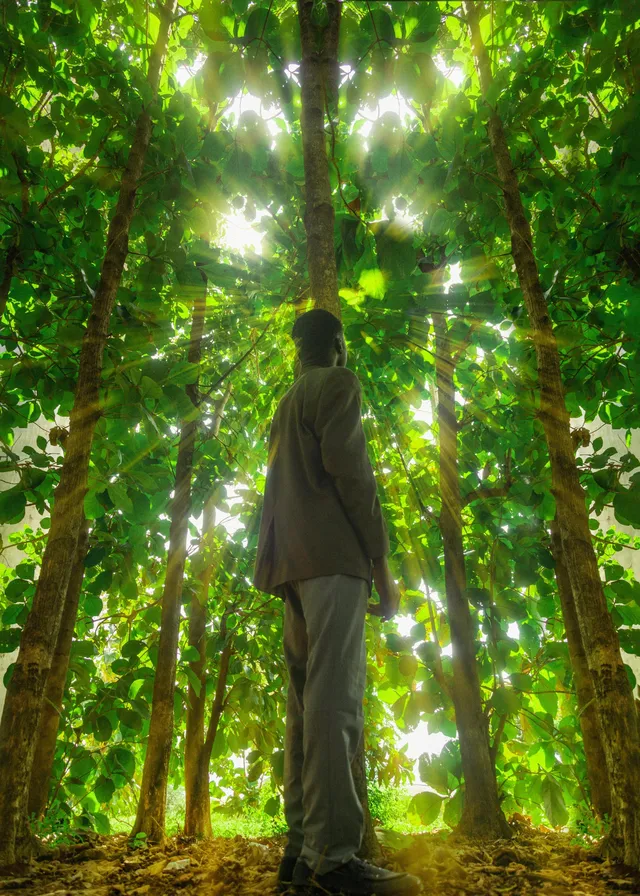
There's a quiet stirring in the hearts of Christians around the world, one that asks a simple but deeply challenging question: What does it mean to love God in a time of ecological crisis? The answers are not simple, but they are holy. As the world groans under the weight of pollution, deforestation, and climate instability, many believers are rediscovering that care for the earth is not a distraction from faith-it is an expression of it.
The Earth Is the Lord's
Psalms 24:1 declares, "The earth is the Lord's, and everything in it." That verse alone could shape a theology of stewardship for a lifetime. The earth does not belong to us-it never has. We are tenants, caretakers, sojourners entrusted with the tending of sacred soil and the protection of what God called "very good."
When we begin from this posture of reverence rather than ownership, environmental care ceases to be a political act and becomes a spiritual one. To care for the earth is to honor its Creator. The trees outside your window, the oceans that shimmer under the sun, the breath of wind that cools your face-all of it sings of God's glory. Creation is not separate from our spiritual story; it is stage, symbol, and testimony all at once.
Back to the Garden
Genesis begins not in a palace or a battlefield but in a garden-lush, abundant, alive with birdsong and rivers. Humanity's first breath was drawn in that space. And the first job description ever given was not ruler, conqueror, or consumer-but gardener: "The Lord God took the man and put him in the Garden of Eden to work it and take care of it" (Genesis 2:15).
This charge, ancient yet profoundly current, remains the same for us today. Stewardship is not a trendy environmental ideal-it is the original vocation of humanity. When we withdraw from the care of creation, we step away from something deeply inherent to our identity as image-bearers of a creative God.
Dominion or Destruction?
Some traditions have misunderstood the word "dominion" in Genesis 1:28, interpreting it as permission to exploit. But biblical dominion is sacred responsibility, not tyranny. It reflects God's rule-wise, loving, just, and self-giving. Dominion without care becomes domination. But dominion shaped by divine love becomes stewardship-a partnership between Creator and creation.
The prophet Isaiah envisioned a day when the wolf would dwell with the lamb and the earth would be "full of the knowledge of the Lord." That harmony is not only future hope-it is present calling.
Jesus and the World He Loved
Jesus spent much of His ministry outdoors. He taught from boats, prayed on mountains, walked dusty roads, and used the lilies of the field and the birds of the air as illustrations of divine truth. His parables are rooted in soil and seed. In this way, He taught us that spiritual life is not detached from the physical world-it is woven through it.
When Jesus calmed the storm, He demonstrated authority over creation. When He multiplied loaves and fishes, He displayed abundance in partnership with nature's elements. He moved through the world with a tangible awareness that creation was not incidental-it was integral to His mission, as all creation awaited redemption (Romans 8:19-22).
The Cross and the Cosmos
It's striking that even the moment of Christ's death reverberated through creation. The Gospels note that when Jesus breathed His last, the earth quaked, darkness covered the land, and the temple curtain tore in two. Creation itself seemed to groan and gasp alongside its Savior. In that moment, heaven and earth were reconciled once again through the blood of Christ-a cosmic redemption that extends not just to souls, but to soil.
The cross is not only the restoration of humanity's relationship with God; it is the beginning of creation's healing too. To follow Jesus, then, is to live as a reconciler, extending that healing to every part of life-including the environment we share.
Why the Church Sometimes Hesitates
Despite these deep biblical roots, many Christians have been slow to embrace environmentalism, often seeing it as aligned with secular or political movements rather than spiritual conviction. Some fear that focusing on the planet distracts from evangelism or eternity. Yet this view creates a false divide. The gospel is not just about souls escaping the world-it's about God's kingdom coming to earth, remaking and renewing all things (Revelation 21:1-5).
Caring for creation does not compete with our mission-it fulfills it. When we meet physical needs, respect resources, and participate in restoration, we bear witness to the character of a God who does not waste or abandon what He has made.
The Witness of Simplicity
In an age of consumerism and convenience, choosing an intentional, sustainable life can be one of the most visibly countercultural ways to express discipleship. Reducing waste, planting a garden, conserving energy, or supporting fair trade might seem small, but they signal allegiance to a kingdom that values life over profit. These daily choices become acts of worship-sacred habits that remind us we belong to a Creator, not a marketplace.
Creation as a Place of Communion
Anyone who's ever watched a sunset in silence or heard waves crash in rhythmic praise knows that nature has a way of preaching. The book of Psalms says, "The heavens declare the glory of God; the skies proclaim the work of His hands" (Psalms 19:1). When we care for the world, we preserve that Song of Songs of praise. When we neglect or destroy it, we quiet voices meant to declare His majesty.
Many believers find their most intimate moments with God while walking, gardening, or simply sitting under a tree. Creation grounds us, slows us, and reminds us that our lives are part of something far greater. Protecting creation is not only about saving the planet-it's about preserving sacred spaces where our hearts remember their Maker.
Environmentalism as an Act of Love
Consider the biblical commandment to love our neighbors. Today, environmental care is one of the most tangible ways to show that love. Pollution, climate change, and deforestation disproportionately affect the world's poor-those who contribute least to the problem often suffer most from its consequences. The prophet Micah reminds us to "act justly, love mercy, and walk humbly with your God." Environmental action becomes a form of justice-a way to love both present and future generations.
When churches install solar panels, plant community gardens, or reduce waste at events, they don't just go green-they embody the gospel's compassion. Creation care becomes a mission field where stewardship becomes testimony and environmental hope becomes evangelism.
The Power of Small Acts
Faithfulness rarely begins with grand gestures. It starts with attention-with the willingness to notice. The Christian environmentalist doesn't need to be an activist on a world stage. They can begin by recycling, reducing meat consumption, supporting regenerative farms, or teaching children to see the wonder in a caterpillar. Small steps, rooted in love, ripple outward in surprising ways.
The Theology of Renewal
One of Christianity's most beautiful truths is that God makes all things new. From Genesis to Revelation, the story arcs toward restoration-not escape. The covenant with Noah, the promise of a Spirit-filled creation, the vision of a new heaven and new earth-all point to God's redemptive intention for every element of existence.
Romans 8 describes creation "groaning," awaiting liberation from decay. That groaning mirrors human longing for God's final redemption. Our environmental care, though partial, participates in that coming renewal. Each tree planted, each river cleaned, each resource protected is a prophetic act-a signpost of the redemption still unfolding.
Is There Room for Hope?
Yes-because the same Spirit who hovered over the waters of creation now lives within the people of God. We are not tasked with saving the world through our strength alone. Rather, we join God's ongoing work, empowered by grace and sustained by hope. In communities everywhere, churches are reclaiming lost ground-literally and spiritually-through gardens, renewable energy projects, and creation-themed worship.
When a congregation starts composting or hosts a river cleanup, it sends a quiet, radiant message: God still cares for this earth, and so do His people. Hope is not naïve; it is resurrection-shaped. Every seed in the dark soil whispers of Easter.
Living Green, Living Faithfully
So can Christians be environmentalists? The truer question may be: Can we afford not to be? The call to follow Christ will always lead us to love what He loves-and He loves all that He made. The Christian environmentalist does not serve a political cause but a sacred trust, walking gently on a world entrusted to divine care.
In practice, that looks different for every believer. It might mean reducing plastic use, planting a pollinator garden, or choosing public transportation when possible. It might mean advocating for policies that protect the vulnerable from environmental harm or teaching children that God's creativity still shines in rivers and rainstorms. The goal is not perfection but participation-joining God's renewing work in whatever measure we can.
Worship through Wonder
At its heart, environmental care is not just about dirt and water and carbon-it's about worship. When we kneel to plant a seed, when we pause to watch light filter through leaves, when we choose kindness over convenience, we honor the Creator who made it all. The Christian environmentalist is not simply "going green." They are joining a divine symphony of restoration, singing with creation its oldest Song of Songs: "The earth is the Lord's."
May our faith be as rooted as the oaks, as flowing as the rivers, and as radiant as the morning sun. And may our lives bear witness that discipleship and creation care are not separate songs, but harmony in the same hymn of praise.