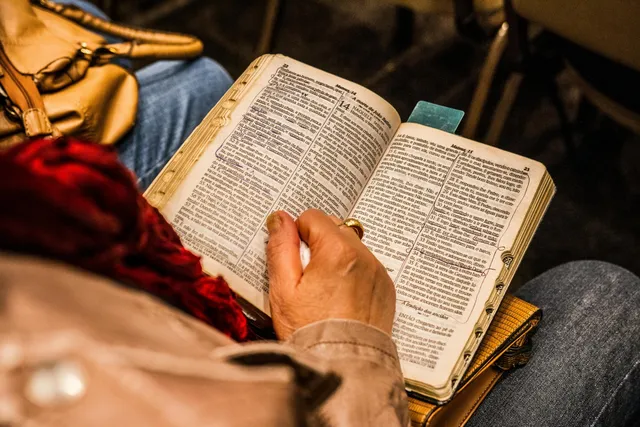
Knowledge and wisdom are among the most treasured qualities the Bible encourages believers to seek-but they are not the same thing. One fills the mind; the other transforms the heart. In a world overflowing with information but starving for understanding, the ancient words of Scripture invite us to pause, listen, and learn what it truly means to know and to be wise in the sight of God.
The Beginning of Knowledge
The book of Proverbs opens with a simple but stunning declaration: "The fear of the Lord is the beginning of knowledge" (Proverbs 1:7). In those few words lies a depth of meaning that challenges both the intellect and the soul. Knowledge, according to Scripture, begins not in the classroom, not in the library, and not in the pursuit of curiosity for its own sake-it begins in reverence.
To fear the Lord is not to cower in terror, but to stand in awe, to acknowledge His holiness and sovereignty. It is a posture of humility that says, "You are God, and I am not." This humility is the soil where true knowledge grows. Without it, learning can become prideful, detached, or dangerously self-assured.
Our modern age, fascinated by the accumulation of data, often mistakes information for wisdom. But the Bible gently reorients us. Knowledge apart from God is incomplete-like a map without a destination. The getting of knowledge is good, but it must lead us back to the Giver of all truth.
Wisdom: The Art of Living Rightly
If knowledge is the awareness of truth, wisdom is the skillful application of that truth. Scripture presents wisdom not as an abstract idea, but as a living, breathing way of life-something to be walked in, practiced, refined. In Proverbs and Ecclesiastes, wisdom is portrayed as more precious than jewels, something to be pursued with all the energy and delight of one seeking treasure.
Wisdom as God's Gift
The Bible reminds us repeatedly that wisdom is not self-made; it is a gift. James writes, "If any of you lacks wisdom, let him ask of God, who gives generously to all without finding fault, and it will be given to him" (James 1:5). What a promise! The Creator of the universe is willing to share His perspective, His discernment, His insight into our daily choices and challenges.
When Solomon asked for wisdom rather than riches or long life, God was pleased. Solomon's request revealed a heart that valued obedience and justice more than power or pleasure. This story reminds us that how we value wisdom mirrors how we value God Himself. When we seek His wisdom above all else, we reflect trust in His sovereignty over our lives.
The Contrast: Human Understanding vs. Divine Wisdom
The Bible draws sharp distinctions between human intellect and divine wisdom. Paul writes in 1 Corinthians 1 that God chose what is foolish in the world to shame the wise, and what is weak to shame the strong. The message of the cross-so simple, so apparently foolish-is, to those who believe, the very power and wisdom of God.
This truth unsettles our usual categories. It means that faith, submission, and love often reveal more true wisdom than debate or analysis ever could. It means wisdom sometimes looks like silence when the world demands noise, or forgiveness when pride demands revenge. It means seeing through the lens of eternity, not just the urgency of now.
Jesus Himself embodied divine wisdom. He confounded the learned scholars of His time not by offering complex theories, but by speaking with divine authority and compassion. When He said that those who wish to be great must be servants, He overturned human calculations of success and honor. The world seeks mastery; Christ calls us to humility. That, too, is wisdom from above.
The Friendship Between Knowledge and Love
In 1 Corinthians 8, Paul offers a sober warning: "Knowledge puffs up, but love builds up." Knowledge, when isolated from love, can make us arrogant and cold. We can become more interested in being right than being kind, more focused on winning arguments than winning souls. But when love joins knowledge, knowledge finds its rightful purpose.
Love disciplines knowledge. It humbles it, gives it patience, and transforms it into something life-giving. To know truth is beautiful; to live it with love is holy. The more deeply we know God, the more deeply we love people, because God's knowledge never leads to pride-it leads to mercy.
Knowing God Personally
In Scripture, the highest form of knowledge is not intellectual but relational. The prophet Hosea cries, "Let us press on to know the Lord." To know God is to walk with Him, to share in His heart, to listen and obey. It is experiential knowledge-the intimacy of daily communion. The more we know Him, the more we discover that wisdom is not simply about problem-solving; it is about becoming more like Christ.
The Hidden Treasure of Wisdom
Proverbs 2 paints wisdom as a treasure buried deep, waiting for those who are willing to dig. But the digging takes effort: curiosity, prayer, perseverance. Wisdom rarely shouts; it whispers. It invites us to slow down, to seek, to meditate on God's Word. The person who longs for wisdom is not content with easy answers. They wrestle with complexity but remain anchored in trust.
Far from being impractical, wisdom is deeply grounded in the rhythms of daily life-how we handle money, relationships, time, conflict. Wisdom teaches us to live justly, speak gently, and walk humbly. It shapes how we see others and ourselves. Every decision-whether about integrity at work or patience at home-becomes an opportunity to apply divine wisdom in ordinary moments.
The Cross and the Wisdom of the Kingdom
At the center of Christian understanding stands the cross. To worldly minds, it looks like failure, tragedy, defeat. Yet to believers, it is the clearest display of God's wisdom and power. Through what appeared weak, God conquered death; through what seemed foolish, He revealed love.
The cross redefines wisdom altogether. It invites us to rethink what success, honor, and victory mean. It teaches us that surrender can be stronger than control, that compassion can be mightier than force, and that eternal life is found not through self-exaltation but through self-giving. The cross shows that wisdom is not about self-preservation-it's about love poured out.
Walking in Wisdom Today
So what does it mean to live wisely in our generation-an era saturated with information but starved for meaning? It begins, as it always has, with the fear of the Lord: choosing reverence over cynicism, faith over self-sufficiency. It grows through Scripture, prayer, and the guidance of the Holy Spirit. And it ripens through experience-through obedience in the unseen, through faithfulness in little things.
Wisdom is profoundly practical. It shapes how we treat others when no one is watching, how we speak in moments of anger or stress, how we discern what is good and right amid noise and confusion. The wise person is not perfect, but teachable. They do not claim to know everything, but they continually seek the One who does.
Listening and Doing
Jesus ends His Sermon on the Mount by describing two builders-one wise, one foolish. The wise man builds upon the rock by hearing and doing the Word; the foolish one hears but never acts. That distinction remains powerful today. Wisdom is action grounded in truth. To know God's principles is only the first step; living them transforms us and those around us.
In our pursuit of insight and understanding, we must never lose sight of the voice that calls us to obedience. Wisdom is not found in noise but in nearness to God.
The Beauty of a Wise Heart
Knowledge can fill our minds; wisdom fills our lives. The Bible's vision of both leads us into wholeness-mind renewed, heart transformed, spirit aligned with the living God. To pursue knowledge without wisdom is to gather seashells when the ocean itself is before us. But to seek wisdom in the fear of the Lord is to find everything we were made for: truth, peace, joy, and fellowship with the One who knows all things.
Every day offers a new opportunity to ask, to learn, to apply, to grow. The Spirit of God still gives light to those who ask sincerely, "Teach me Your ways." And when He does, we discover that the deepest wisdom is not complex or hidden-it is the life of Christ shining through us, teaching us to love what is right, to walk humbly, and to see the world through the eyes of grace.
In the end, true wisdom is not something we master. It is Someone we follow.