For generations, believers have wrestled with the question: How should Christians think about evolution? It's not just a scientific or philosophical issue-it's deeply spiritual. At the heart of the discussion lies our understanding of God as Creator, the authority of Scripture, and the wonder of His design.
Creation's Majesty: The Story Begins
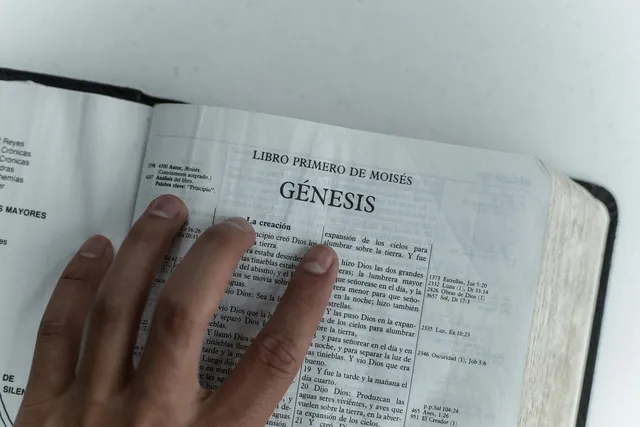
In the beginning, the Bible paints a staggering picture. "In the beginning, God created the heavens and the earth" (Genesis 1:1). Those first words have fueled imaginations and worship for thousands of years. Whether you read Genesis in candlelight or across the glow of a digital screen, the sense of divine intentionality leaps from the page. The world is not random, nor the product of blind forces-it is filled with purpose, beauty, and design.
The creation story isn't only about the how. It's about the who. God spoke, and life happened. It's a poetic unveiling of order and goodness, where light and land, birds and beasts, humankind and rest all take their appointed place. For believers, that rhythm of divine command and creation carries theological truth: God is the source of everything, and He calls His creation "good."
The Tension Between Faith and Science
When the topic of evolution enters the conversation, tension often rises. Evolutionary theory-especially in its naturalistic form-suggests life developed through gradual processes over millions of years without divine guidance. For some Christians, that idea feels like an outright contradiction to Genesis; for others, it's a scientific description of how God may have chosen to work through time.
It's important to recognize that the Bible and science are not adversaries locked in eternal conflict. The Bible is not a biology textbook, and science cannot answer the deepest questions of identity, sin, salvation, and hope. They speak in different languages-one of meaning, the other of mechanism. Problems arise when either side tries to replace the other's role.
Faith Seeking Understanding
Throughout Christian history, believers have sought to harmonize observation with Revelation. Augustine of Hippo, writing long before Darwin, warned against reading Scripture in ways that contradict known facts, suggesting that the interpretation of Genesis must honor both faith and reason. The heart of this balance is humility-admitting we might not yet understand all that God has done, but we trust Him as Creator nonetheless.
What Scripture Emphasizes About Creation
The Bible's voice on creation is consistent from Genesis to Revelation: God is the Author of life. The psalmist stands in awe: "The heavens declare the glory of God; the skies proclaim the work of his hands" (Psalms 19:1). Paul echoes this idea in Romans 1:20, teaching that God's invisible qualities are clearly seen through what He has made. Whether we observe a galaxy or a grain of sand, every detail points back to Him.
From the intricate structure of DNA to the vast sweep of the Milky Way, creation testifies to a Maker of incomparable wisdom. Science can study the patterns, but only faith can name the Artist.
The Image of God
One particular challenge in the evolution discussion concerns humanity's origin. Genesis declares that humans are made in God's image-unique, spiritual, relational beings. Whether someone believes God created Adam from the dust in an instant or guided a long biological process, this truth stands firm: humanity's worth and dignity come from being God's image-bearers, not from the mechanism of our formation.
That conviction runs deep. It's why Christians champion the sanctity of life, the value of every person, and the purpose behind creation. We are not accidents of time; we are willed into existence by a loving Creator who desires relationship with us.
Reading Genesis With Fresh Eyes
How, then, should we approach Genesis? Some believers read the creation account as a straightforward historical timeline-six literal days of divine artistry. Others interpret it as poetic structure, a majestic hymn revealing theological truths rather than scientific detail. Still others see in it an ancient cosmology-a view of the world shaped for that time but carrying timeless spiritual meaning.
However one reads Genesis, the most critical takeaway is this: God made everything, and He made it with purpose and order. The emphasis isn't on scientific sequence but on God's sovereignty, the goodness of creation, and humanity's calling to steward it. It's a narrative of origin and belonging, of a world that exists not by chance but by love.
Is Evolution Compatible With Christian Faith?
This is perhaps the most debated question in modern faith circles. Some believers embrace the idea of theistic evolution-the view that God used evolutionary processes as His creative tool. Others reject it, holding that evolution undermines the literal reading of Genesis, the historical Adam and Eve, and the reality of the Fall.
But amid the debate, Scripture calls us to unity of heart, not uniformity of opinion. Romans 14 encourages believers not to let disputable matters divide the body. As we wrestle with difficult questions, we must do so with grace, patience, and humility, remembering that truth and love belong together.
Faith in the Creator, Not in a Process
Whether one believes God spoke life into existence in a moment or guided it over ages, the center of faith remains unchanged: "In Him we live and move and have our being" (Acts 17:28). The Christian's hope is not anchored to the process of creation but to the Person of the Creator. Our faith rests in Christ, through whom all things were made (John 1:3), and through whom all things are redeemed.
Lessons From Job: Awe Before Mystery
When Job demanded answers for life's mysteries, God did not offer a scientific explanation. Instead, He painted a breathtaking picture of creation's complexity-light and storm, constellations and oceans, the wild freedom of animals. The message was clear: Creation's wonder exceeds human understanding. Job was silenced, not by confusion, but by worship. "Surely I spoke of things I did not understand, things too wonderful for me to know" (Job 42:3).
That posture of awe may be the right place for us too. When we encounter the mysteries of biology, astronomy, or the deep past, perhaps the proper response is not fear but reverence. The more we learn, the more intricate the world appears-each discovery echoing back to God's grandeur.
Living in the Light of Creation's Story
Regardless of how one interprets the mechanics of creation, Scripture calls us to live as caretakers and worshippers. Genesis 2 describes humanity placed in a garden "to work it and take care of it." That calling continues today: to honor the Creator by caring for His world and for one another. Understanding the natural order isn't about winning debates-it's about loving what God has made and reflecting His character through stewardship.
When we see a sunrise, explore a forest, or hold a newborn child, we touch the edge of divine artistry. Science may explain the processes, but worship recognizes the purpose. The heart of a believer doesn't stop at mechanism-it bows before Majesty.
Faith, Wonder, and the Ongoing Story
In the end, the Bible does not speak of evolution as a theory to be proven or rejected-it speaks of a Creator to be known, loved, and trusted. Genesis, Psalms, Job, and John all point us to a world that began in the mind of God and continues to exist by His sustaining word. Whatever processes He may have used, creation whispers His name.
Our task is not to reduce God's handiwork to a set of competing explanations but to respond with awe. The more deeply we dive into both Scripture and creation, the more fully we realize that both sing the same refrain: "Worthy are You, our Lord and God, to receive glory and honor and power, for You created all things."
So as we ponder the vastness of evolution or the intimacy of Eden, we stand in wonder at the same truth: We are creatures of a Creator who calls us by name. And in that mystery, faith finds not a threat, but an invitation-to trust, to worship, and to be amazed.