When the early Christians declared, "Jesus is Lord," they were saying something revolutionary. It was more than a personal statement of faith; it was a confession that carried cosmic weight. Those three words shook empires and spread hope through hearts once held captive by fear. To say that Jesus is Lord over all means that His authority, love, and power extend into every corner of existence-over kingdoms and families, galaxies and hearts. But what does that really mean for us today? How do we live under the lordship of Christ in a world that seems untamed and uncertain?
The Ancient Cry: A Dangerous Declaration
In the first century, declaring "Jesus is Lord" was a bold defiance of Rome's claim that Caesar was lord. The Roman Empire demanded allegiance, insisting that the emperor was divine. Yet Christians across cities and villages whispered-and often shouted-another allegiance. Their confession was both simple and subversive: Jesus Christ reigns supreme. He alone is worthy of worship, obedience, and ultimate trust.
This was not a political rebellion in the ordinary sense. It was a spiritual uprising against the tyranny of false gods and oppressive powers. To say "Jesus is Lord" was to dethrone idols, both visible and invisible. It was to say that no human authority, no cultural trend, and no dark power has the final word. Christ does.
What Kind of Lord?
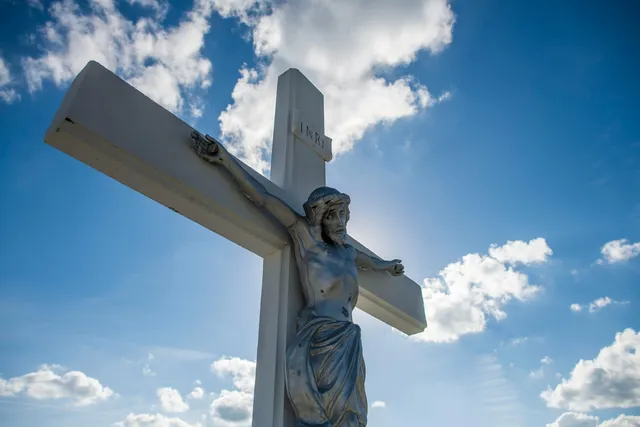
When we hear the word "lord," it may sound distant, even intimidating. We might picture a stern ruler seated on a high throne, issuing decrees from afar. But Jesus redefines lordship. He is not a tyrant; He is the Servant-King who washed His disciples' feet. His reign is not marked by domination but by redemption. The cross became His throne. The crown He wore was one of thorns. The power He exercised was the power of sacrificial love.
As Philippians 2 reminds us, "He humbled Himself by becoming obedient to death-even death on a cross. Therefore God exalted Him to the highest place." His glory rises from His humility. Christ's lordship is the paradox of majesty wrapped in mercy. He rules not by crushing others beneath Him, but by lifting others up to life in Him.
Lord Over Creation
Before Jesus ever came in flesh, He already ruled as the eternal Word through whom all things were made (John 1:3). His voice spoke light into darkness, shaped mountains, and stirred oceans into motion. Every leaf that trembles in the wind, every bird that soars, bears witness to His artistry and authority. When storms obeyed His command on the Sea of Galilee, it was not a magic trick-it was creation recognizing its Maker's voice.
When we look at the world around us, we see both beauty and brokenness. The same earth that blooms with wildflowers also quakes with destruction. But Christ's lordship assures us that the story is not over. He remains sovereign even over chaos. Every sunrise whispers that redemption is still unfolding. Every healing, every act of mercy, every tear wiped away is a sign that the King is making all things new.
Lord Over History
Empires rise and fall, cultures shift and crumble, yet Christ's kingdom remains. He is not merely a character within history-He is the Lord of history itself. Every ruler, every nation, every event ultimately moves beneath His sovereign hand. This reality brings both comfort and accountability. Comfort, because nothing escapes His care; accountability, because everything will one day answer to Him.
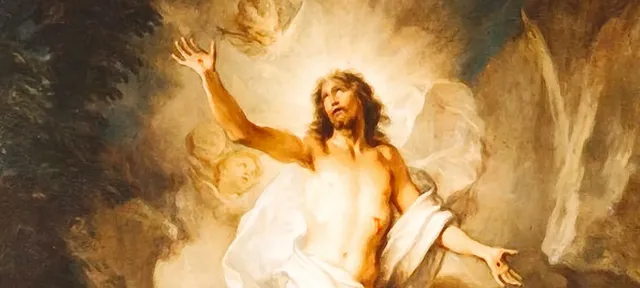
The Book of Revelation paints this vivid picture. In the midst of persecution and uncertainty, John saw the risen Christ-eyes blazing, voice like rushing waters-declaring, "I am the First and the Last." The Alpha and Omega reigns from beginning to end, weaving purpose through what seems purposeless. The hands that hold history are the same hands once pierced for love.
Lord Over the Human Heart
The lordship of Jesus is not an abstract doctrine; it is profoundly personal. To say "Jesus is Lord" is to surrender ownership of one's life. It means letting go of the illusion that we are in control. This surrender is not defeat-it is freedom. For when Christ reigns, the heart finds rest. The same power that raised Him from the dead begins to reshape our desires, our priorities, and our hopes.
Many resist calling Jesus Lord because they fear control or constraint. Yet those who have bowed to His authority discover something astonishing: His rule brings life. In yielding, we are made whole. Paul describes it beautifully: "For the love of Christ compels us." The love that rules over heaven also reigns within the willing heart, turning burdens into blessings and obedience into joy.
When the Lord Speaks into Our Chaos
Every believer knows seasons when life feels out of control-when plans crumble, relationships strain, or grief feels unbearable. In such moments, to affirm that "Jesus is Lord" is not denial of pain; it is defiance against despair. It is a declaration that there is still order within the storm, a purpose beneath the confusion. When Jesus commanded the waves to be still, He demonstrated not only His power but His peace. That same peace is offered to us even when the waves keep crashing. Christ's lordship means we are never abandoned in the storm; He stands within it with us.
Lord Over the Church
Christ is not one leader among many within the Church-He is the Head, the Shepherd, the cornerstone. Every ministry, every act of service, every gathering finds its meaning in Him. When the Church forgets who truly leads it, it drifts into confusion or pride. But when the Church bows again to the authority of its Lord, it becomes radiant with His presence.
This Lordship shapes the Church's mission. We do not serve to earn His approval; we serve because we belong to Him. Every outreach, every act of compassion, every prayer is a continuation of His own work. The early believers in Acts lived with unshakable boldness because they knew the One seated at God's right hand ruled both heaven and earth. Their courage flowed from confidence in His authority.
Unity Under One Lord
Divisions often fracture the people of God-over doctrine, politics, personality. Yet Paul's letter to the Ephesians calls believers to remember the foundation: "There is one Lord, one faith, one baptism." Under His lordship, differences lose their power to divide. The Church becomes not a collection of competing voices, but a symphony of grace conducted by the same Holy Spirit. To confess Jesus as Lord together is to find unity stronger than any disagreement.
When His Lordship Confronts Our Daily Lives
It's easy to affirm Christ's lordship in worship or prayer. But what about Monday morning? What about decisions at work, in our homes, in the private corners of conscience? The truth is, if Jesus is Lord over all, then there is no part of life that lies outside His claim. Our finances, relationships, politics, creativity-all belong to Him. The question becomes not, "Will I make Him Lord?" but rather, "Will I recognize and live under His lordship that already exists?"
This recognition transforms the ordinary. Washing dishes for the sake of love becomes worship. Honesty in business becomes kingdom work. Forgiving an enemy becomes participation in divine grace. Every act done in submission to Christ's reign becomes sacred ground.
The Ultimate Lordship to Come
One day, Scripture promises, "Every knee will bow, and every tongue confess that Jesus Christ is Lord." This is not a threat but a hope. The world, with all its pain and rebellion, will finally see what faith has long confessed-that the crucified and risen One is truly Lord over all. Justice will roll down like rivers. Tears will be wiped away. The curse will be broken, and creation will sing.
Until that day, we live as witnesses of His reign. Every act of kindness, every choice to love, every word of faithfulness points to the reality that the Lord of all is still at work among us. In a fractured world, His lordship is our anchor and our anthem.
Living the Confession
To say "Jesus is Lord" today is to step into a story that began before time and will continue forever. It means trusting that our past is forgiven, our present is guided, and our future is secure. It means that no part of life is beyond redemption, and no darkness can extinguish His light. It means that every follower of Christ lives in the daily rhythm of surrender and freedom.
So we pray, not as subjects who fear a ruler, but as children loved by a King. We serve, not to earn favor, but to reflect His heart. We worship, not merely in words, but in every choice that says, "Christ, You are Lord here, too-in my home, my work, my fears, and my dreams."
Jesus is Lord over all. That is the truth that steadies us in the storm, humbles us in success, and holds us in love. It is the bedrock of hope and the banner of the Church. And as long as heaven and earth endure, that confession will remain the heartbeat of faith: our Lord reigns-and His kingdom shall have no end.