For thousands of years, humanity has peered into the mystery of life, wondering what makes us human-what makes us who we are. In recent decades, science has cracked open the code that writes life itself: the human genome. Within each of the trillions of cells in our bodies lies a library of over three billion letters, the instructions that shape our bodies, influence our behavior, and even trace the lineage of those who came before us. Yet as remarkable as this discovery is, it begs a far deeper question: Can the code of life tell us anything about the image of God-the divine fingerprint upon humankind?
Fearfully and Wonderfully Made
When the psalmist writes, "I praise you because I am fearfully and wonderfully made" (Psalms 139:14), it is not poetry alone-it is prophecy fulfilled in biology. Each microscopic thread of DNA bears testimony to divine craftsmanship. It is as though God has woven His wisdom into the very structure of our being. Science gives us the language to describe the pattern, but Scripture gives us the reason behind the pattern.
The genome is not our soul-but it is sacred material. It is the language God spoke into being when He said, "Let us make mankind in our image" (Genesis 1:26). To study it is not to diminish mystery, but to glorify its Maker. The interplay between spiritual truth and scientific discovery doesn't compete; it harmonizes. The more deeply we explore the blueprint of life, the more deeply we are drawn into awe.
What Does It Mean to Bear God's Image?
From the beginning, being made in the image of God wasn't about physical resemblance. God is spirit. It was about likeness in essence and purpose-the ability to reason, to create, to love, to choose, to reflect divine character. While DNA shapes our physical existence, our image-bearing flows from capacities that transcend biology. These are not encoded on chromosomes, but etched on the heart.
Even so, the biological and spiritual are not separate spheres. The incarnation itself-God made flesh-declares their unity. When Christ took on a human genome, He sanctified not only our souls but our biology. Every cell of Jesus' body was fully human, yet indwelt by the fullness of God. In that miracle, the genome and divinity met.
The Divine Signature in Our Design
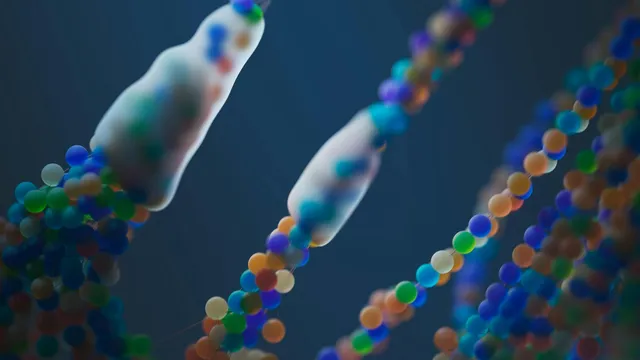
Some geneticists describe the genome as a kind of language-four letters endlessly repeating in varied sequences, carrying meaning through patterns and order. Doesn't that sound familiar? John opens his Gospel with: "In the beginning was the Word." The same living Word who spoke galaxies into being now echoes through the very molecules that sustain our lives. The genetic code becomes a whisper of His creative voice, a molecular parable pointing toward divine intention.
The Limits of the Double Helix
Still, we must be careful not to look for the image of God under a microscope. We cannot gene-sequence divinity. The genome may explain how we are human, but never why we are. It tells us how our bodies form and function, but not the source of love, the call of conscience, or the reach of mercy. No laboratory can analyze compassion or encode forgiveness.
In an age fascinated by DNA ancestry tests and genetic editing, such boundaries are vital reminders. We live in a world searching for identity by tracing letters on a chart-where do I come from? What tribe am I part of? But the deeper identity question is eternal: Who made me, and for what purpose? The genome reveals our physical story, but the Word of God reveals our spiritual destiny.
Broken Genes and Fallen Creation
Every scientist knows our DNA is not perfect. It is marked by mutations, fragile sequences, and inherited flaws. Disease and disorder often begin in those tiny letters. Yet even here, the Gospel breathes hope. The brokenness in our genetic code mirrors the brokenness in all creation-a world once perfect, now fractured by sin. But there is redemption, even for the cells of our bodies.
Christ entered that brokenness. He carried in His flesh the vulnerability of humanity-cells that could bleed, DNA that could suffer, a mortal frame susceptible to death. And through His resurrection, He redeemed not only our souls but promised renewal for our bodies. As Paul writes in 1 Corinthians 15, "The perishable must clothe itself with the imperishable." Even the corrupted genome will one day be made new.
Healing at the Molecular Level
Medicine and science work toward healing what is broken in our bodies-repairing DNA, curing disease, preventing genetic disorders. These advances are breathtaking, but they are also a reflection of God's own healing heart. When a researcher strives to fix a genetic flaw, they echo the Great Physician's work of restoration. The laboratory can point to the Kingdom, where no sickness or defect remains. Science becomes one of the tools through which common grace flows.
Genes, Freedom, and the Soul
One of the most profound questions raised by the study of genetics is whether we are simply the sum of our code. Do our genes dictate our destinies? Modern research shows that while our DNA influences our dispositions, it does not determine our choices. Here lies the intersection of freedom and faith.
God created us as beings of will, not mere biological machines. The image of God means we possess moral agency-the ability to choose love over hate, forgiveness over revenge, obedience over rebellion. No genome can compel righteousness or condemn us to sin; those decisions are made in a realm untouched by sequencing machines. There is a sacred margin between nature and grace.
And within that margin, the Spirit moves. As Paul reminds us, "Where the Spirit of the Lord is, there is freedom" (2 Corinthians 3:17). Freedom is not found in defying biology, but in fulfilling what God intended through it-to be His image bearers in the world, cooperating with the Creator's design through wisdom, love, and surrender.
The Human Genome as a Testament of Glory
Think of it: three billion letters, yet every person unique. Every strand of DNA carries echoes of ancestry while speaking new creation into existence. It may seem like cold data, but look closer-it sings of diversity, resilience, and wonder. The genome is not the script of fate but the canvas of divine artistry.
In the same way, Scripture reminds us that creation itself declares the glory of God. The stars and seas do it in sweeping grandeur, but our cells do it in silent rhythm. The double helix turns like a microscopic dance of praise. Every heartbeat, every neuron firing, every healing wound testifies to a living God who sustains His creation in intricate beauty.
When Knowing Becomes Worship
The danger of discovery is pride-the temptation to believe that knowing the mechanism equates to owning the mystery. But when approached with humility, knowledge becomes worship. To map the genome is to trace the architecture of divine thought. Every Revelation about how life works should lead not to human boasting but to holy reverence. The more we know about ourselves, the more we realize how small-and how loved-we are.
Bearing the Divine Image in a Genetic Age
We live in a time when the boundaries of life itself are being redrawn. Artificial intelligence, genetic modification, and bioengineering promise to reshape what it means to be human. As followers of Christ, we are called not to fear discovery but to discern its meaning-to ask continually, Does this honor the image of God in humankind?
To bear that image today means affirming the sacredness of every human life, regardless of genetic condition, origin, or flaw. It means guarding against any ideology that reduces people to their data or DNA. It means standing firm in the truth that worth is not inherited, engineered, or earned-it is bestowed by God Himself.
To believe in the image of God is to look at every person and see heaven's reflection, however faintly it glimmers. Whether in the lab, the hospital, or the home, our response is the same: reverence, compassion, and wonder.
The Promise of Renewal
Science can reveal our complexity; faith reveals our destiny. One day, the corrupted code of creation will be rewritten. The book of Revelation speaks of a new heaven and a new earth-a redeemed cosmos where suffering and death are no more. In that promised world, the divine image will shine without distortion. Every scar will be healed, every flaw transformed, every molecule aligned with the perfection of God's will.
Until then, we live as stewards of this magnificent system-caretakers of bodies, minds, and souls that together reflect divine artistry. Every breath we draw is a reminder of design. Every act of love, a glimpse of the Creator's heart. The human genome is not an endpoint of discovery; it is the threshold of worship.
The Word Written Within
In the end, the human genome tells a story far older than science. It whispers of dust shaped by divine hands, of breath that brought life, of a Savior who entered our frame to redeem its frailty. It declares that we are not random, not accidental, but intentionally formed-each strand a sentence in God's poem of life.
When we gaze at the wonder of genetic code, let our response not be merely intellectual fascination, but heartfelt worship. Let it remind us that we bear His likeness-not only in mind and spirit, but in every cell knit together by His purpose. To know the genome is to glimpse the artistry of the One who calls Himself the Alpha and the Omega-the first and last letter of all creation's code.
We are fearfully and wonderfully made, and more than that-we are lovingly made. In the language of life itself, God has written His image upon us. May we live each day as those who carry that sacred imprint into a world still learning to see.