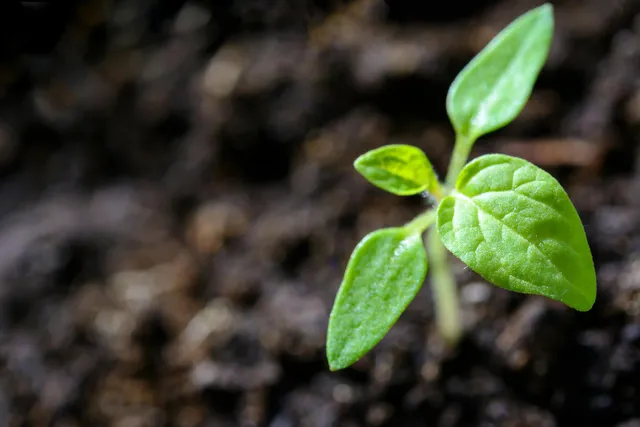
In the Beginning: A Sacred Trust
When Scripture opens with the words, "In the beginning God created the heavens and the earth," we are not simply witnessing the start of a story-we are being handed a calling. The act of creation is not just divine artistry; it is a commissioning, an invitation into a relationship of care, love, and responsibility. Humanity's first role was not warrior, builder, or inventor, but steward. Adam's earliest task in Eden was to tend and keep what God had made (Genesis 2:15). This gentle command, often overlooked in a world obsessed with production and consumption, holds vast significance for us today.
To "tend and keep" the garden was to nurture life, not control it; to protect beauty, not exploit it. The soil of Eden was not raw material for human ambition but a living partner in divine purpose. In this, stewardship became an act of worship-a way of saying with every action, "This world belongs to God."
The Meaning of Stewardship in God's Story
Stewardship, at its heart, is the intersection of gratitude and responsibility. It acknowledges that all we have is gift, and that gifts come with purpose. The psalmist declares, "The earth is the Lord's, and everything in it" (Psalms 24:1). Our ownership, therefore, is never absolute; it is participation. We are not possessors but partners-holding creation in trust for the Creator and for generations yet to come.
In our modern context, stewardship might conjure images of budget meetings or church offertories, but its biblical scope is far wider. It includes how we handle our resources, our communities, and the earth itself. God's call to steward the planet is as sacred as His call to love our neighbor. In fact, the two are inseparable, for the well-being of creation directly affects the well-being of people. When the land suffers, the poor suffer first. When waters are poisoned, families thirst. Creation care is not a peripheral duty-it is bound up in the command to love.
Stewardship as Relationship
True stewardship reflects the character of God Himself. In every blade of grass, every stretch of sky, every creature that breathes, the Lord's faithfulness is revealed. To care for creation, therefore, is to echo His love, to mirror His constancy. It is an act of communion-a spiritual partnership between Creator, creation, and humanity. The biblical vision of dominion (Genesis 1:26-28) is often misread as domination, but the Hebrew roots point toward servant-leadership and care. Dominion without compassion becomes destruction; dominion guided by love becomes worship.
Listening to Creation's Groan
The Apostle Paul writes that "the whole creation has been groaning as in the pains of childbirth" (Romans 8:22). We can feel that groaning in the cry of forests stripped bare, in the coral reefs fading from brilliant blues to deathly whites, in species vanishing before we even learn their names. These are not just environmental issues-they are spiritual cries reminding humanity of our broken covenant with creation.
Yet the same passage in Romans assures us that creation waits in hope, anticipating renewal. God's redemption plan extends beyond human souls; it encompasses the cosmos itself. Our work of care-our recycling, our replanting, our restraint-is part of God's larger redemption story. Each act of creation care, no matter how small, whispers back to the Creator, "We remember what You said in the beginning."
Jesus and the Earth He Loved
Jesus' ministry was embodied and earthy. He taught from mountaintops, preached from boats, and prayed in gardens. His parables were rooted in the rhythms of soil and seed, fig trees and mustard plants. When He said, "Consider the lilies," it wasn't poetic flourish-it was instruction. He invited us to see, to truly see, the divine fingerprints in nature around us. Creation was never a stage set for divine acts but a beloved participant in God's drama of redemption.
In Christ, we also glimpse the future restoration of creation. His resurrection took place in a garden-a subtle yet profound symbol. The curse that began in one garden began to unravel in another. The resurrected Christ stood as the Gardener of New Creation, inviting us into the ongoing cultivation of renewed life. To follow Jesus is, in part, to join Him in that sacred gardening.
The Sacrament of the Everyday
Each time we pause to notice the beauty of a sunrise, or thank God before a meal drawn from the soil, we participate in what could be called the "sacrament of the everyday." These moments remind us that physical things-water, fruit, bread-are not profane but holy. Stewardship begins not with grand environmental policies (though those matter), but with a posture of reverence toward what is already in our hands. The way we drive, shop, discard, and plant are all expressions of either faithfulness or forgetfulness.
Modern Challenges, Ancient Wisdom
We live in a time when creation care can feel overwhelming. Climate change, deforestation, pollution-the scale is staggering. Yet Scripture offers a different kind of encouragement: we are not called to fix the world alone; we are called to be faithful. The prophet Micah's words still clarify our duty: "To act justly, love mercy, and walk humbly with your God" (Micah 6:8). Walking humbly means recognizing that the earth is not ours to dominate, but ours to serve. Acting justly means standing for the voiceless-human and nonhuman alike. Loving mercy means learning to live gently.
Faithfulness here also means attention to the local-our neighborhoods, our watersheds, our own backyards. It might look like planting trees, supporting ethical agriculture, reducing waste, or educating others. Every faithful act-humble though it may seem-contributes to a mosaic of hope. As Jesus taught through the image of a mustard seed, small beginnings can yield unexpectedly vast results.
Community as the Context of Care
Stewardship was never meant to be a solitary endeavor. God's call comes to humanity, not just to individuals. Churches and communities have the potential to model creation care in deeply transformative ways. Imagine congregations planting community gardens, reducing their waste, or hosting educational gatherings about sustainable living as acts of worship. Such efforts preach a sermon louder than words-a sermon of hope, humility, and shared purpose.
Hope Rooted in the Creator
One of the most striking features of biblical stewardship is that it is rooted in hope, not despair. The future of creation does not hinge solely on human effort but on divine faithfulness. In Revelation's vision of the restored world, the river of life flows from the throne of God, and the tree of life bears fruit for the healing of nations (Revelation 22:1-2). God's purposes for creation will prevail, yet our role remains vital. The Creator invites us into His restorative work, letting our hands become instruments of renewal.
This hope shifts our mindset from anxiety to worship. It reminds us that caring for the planet is not about saving something doomed but about cooperating with God in His ongoing act of making all things new. We are gardeners of resurrection, not caretakers of decline.
Spiritual Renewal Through Earthly Care
Interestingly, as we renew the earth, we often find ourselves renewed. Digging soil, breathing clean air, and noticing the intricacy of creation connect us back to dependence, to humility. In a culture conditioned toward speed and consumption, environmental stewardship becomes a spiritual discipline-a way to slow down, to listen, to return to creatureliness. Many believers rediscover joy and gratitude when they reconnect with the created world. The more we understand the gift, the more deeply we praise the Giver.
Practical Steps Toward Faithful Stewardship
Faith without action drifts into sentimentality. But faithful stewardship doesn't demand perfection; it asks for direction. A few simple practices can transform intention into worshipful participation:
- Practice gratitude daily. Give thanks for the ground beneath your feet and the food on your table. Gratitude awakens responsibility.
- Live with less waste. From reducing plastic use to conserving energy, simplicity mirrors divine wisdom.
- Support what gives life. Choose products, farms, and companies that respect workers and creation alike.
- Teach the next generation. Instill wonder in children about the created world; wonder grows into care.
- Pray for creation. Our prayers shape our priorities. Lift both gratitude and lament to God for the earth He so loves.
Every small act is a seed. We may not see its full harvest, but God will.
The Sacred Pattern of Renewal
Throughout Scripture, God calls His people to remember the holiness of rhythm-Sabbath days, jubilee years, rest for the land (Leviticus 25). These ancient laws were not arbitrary; they reflected divine compassion for both people and soil. The land itself needed to breathe. How might our society change if we honored that truth again? The Sabbath rhythm invites us to trust God's provision rather than endless productivity. When we rest, we declare that the world is sustained not by our effort but by His grace.
Renewal, both personal and planetary, flows out of resting in God. When we live from that rest, our stewardship ceases to be a frantic duty and becomes a peaceful offering.
Living as Faithful Gardeners
At the heart of it all is invitation: God calling humanity back to the garden-not to the innocence of Eden, but to the maturity of stewardship. To follow Christ is to take the hands that once grasped and turn them toward generosity, to let the Spirit teach us again how to tend and keep. Every sunrise is a new beginning in our partnership with the Creator of heaven and earth.
So today, breathe deeply. Feel the wind that carries God's whisper. Look at the world around you-not with ownership, but with awe. The call remains: Love Me. Tend My world. Care for what I've entrusted to you. To live this way is to walk in harmony with the original Song of Songs of creation, where every act of care becomes an echo of praise.
In this sacred calling, humanity finds its truest vocation-not as conqueror, but as caretaker of wonder, co-laborer with Christ in the renewal of all things. May we rise to that calling with humble hearts, worshiping through the work of our hands and the work of our love.