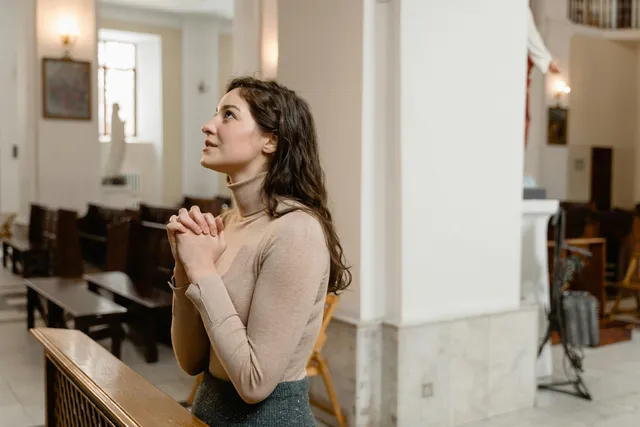
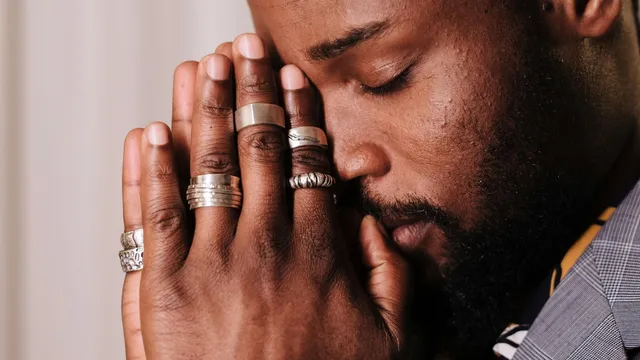
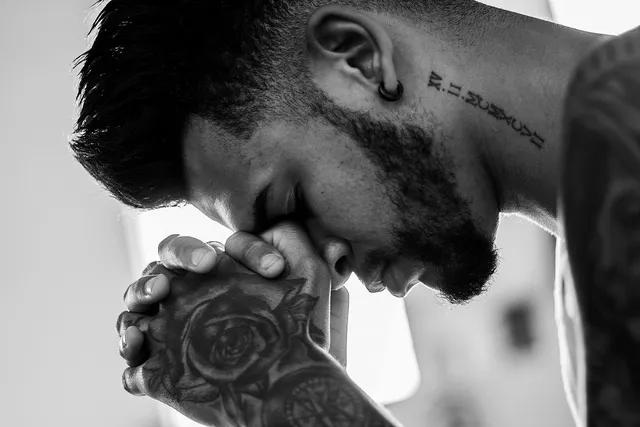
There's a moment familiar to many believers-sitting quietly in a pew, walking alone on a forest path, or waking in the middle of the night-and a prayer rises in the heart but never reaches the lips. No words spoken, no whisper or sound. Just a thought, or a yearning, sent heavenward. And then the question comes: Does it count?
When the Heart Speaks Without Words
Prayer, in its truest essence, has never been about eloquence. Long before we learned to arrange our petitions in neat phrases, the Spirit already knew the language of our hearts. Silent prayer is not lesser prayer; it is prayer in its most distilled form. When we pray silently, the noise dissolves, and the soul itself takes the lead.
Consider Hannah, mother of Samuel. In 1 Samuel 1:13, the text tells us that she was praying in her heart; her lips were moving, but her voice was not heard. To those watching, she appeared strange-even drunk-but God saw the truth. He did not need the sound, only the sincerity. Her silent ache became the seed of Israel's next great prophet.
The God Who Hears What We Cannot Say
There is a beauty in remembering that God's hearing is not limited by sound waves or speech. Psalms 139 reminds us, "Before a word is on my tongue you, Lord, know it completely." To pray silently, then, is to rest in the confidence that God listens with understanding deeper than any language can reach. Our silence doesn't diminish our prayer-it magnifies His attentiveness.
When Silence Speaks Louder Than Speech
There are prayers so fragile that words could break them. The trembling grief of loss, the confusion of unanswered questions, the awe of experiencing God's presence-all these moments ask for stillness more than speech. It's not emptiness; it's reverence. Sometimes, silence is the only honest prayer we can offer.
St. Augustine once described prayer as the "desire of the heart." If that's true, then even a sigh, a longing, a quiet pulse of hope is a prayer ascending to God. The Spirit, Paul writes in Romans 8:26, "intercedes for us through wordless groans." That means when we can't find the words, the Holy Spirit translates our silence into Heaven's language.
Why We Feel Our Silent Prayers Might Not Be Enough
We live in a world that glorifies expression-tweets, captions, podcasts. Silence, by contrast, can feel like absence. When we pray without words, we sometimes wonder if it's "real prayer." After all, we can't measure it; there's no volume, no proof, no "amen" in the air.
But silence does not equal emptiness. The deepest conversations we have, even with those we love most, often need no words-a glance, a presence, a shared moment says enough. If love can communicate without speech, so can faith.
The Burden of Performance
Another reason we doubt silent prayer is because we inadvertently turn prayer into performance. We feel pressure to "sound spiritual" or "pray the right way." Yet Jesus's teaching in Matthew 6 cuts through that anxiety: "When you pray, do not be like the hypocrites... when you pray, go into your room, close the door, and pray to your Father, who is unseen." Prayer has never been about being heard by people-it's about being known by God. And He doesn't need sound to know.
Silent Prayer in the Life of Jesus
Jesus Himself often sought solitude for prayer. The Gospels repeatedly mention Him withdrawing to lonely places. We don't always know what He said there; perhaps not all those prayers were spoken aloud. Sometimes, the silence itself was His communion with the Father. The night before choosing His disciples, He spent long hours alone on a mountainside-likely not reciting word after word, but abiding in holy stillness.
Silence was not the absence of His prayer-it was the atmosphere of it. In those moments, we glimpse what our own silent prayers might be: not a muting of communication, but a deepening of it.
Learning to Rest Rather Than Strain
Silent prayer invites us to rest. It strips away striving, the compulsion to "get prayer right." It becomes less about saying and more about being. In contemplative practice, believers throughout history-like Brother Lawrence or Teresa of Ávila-discovered that continual awareness of God's presence is itself a form of prayer. The recipe is simple: still the mind, focus the heart, let the soul lean in.
Over time, we learn that silence in prayer isn't passive; it's deeply active. Our senses sharpen. We become more aware of what God is whispering through Scripture, circumstances, and quiet promptings. We begin to move from anxiety into attentiveness.
When Silence Gives Birth to Obedience
Sometimes God uses our silence to plant obedience. We come seeking words-perhaps direction, comfort, or clarity-and what He gives us instead is peace that surpasses understanding. It's in that peace that courage grows. Elijah discovered this at Mount Horeb. He expected God's voice in the mighty wind, the earthquake, the fire-but instead it came in a "gentle whisper." Some translations call it "a still small voice," a sound almost indistinguishable from silence. And in that silence, Elijah found his next mission.
Silence that Transforms Relationship
Think of silent prayer as holding hands with God. You don't always need to talk to know someone is near. Union grows in presence, not performance. The more we practice this kind of inner communion, the less we fear silence and the more we hunger for it. In silence, trust is built. In silence, we cease to manage God and start to meet Him.
It's worth recognizing, too, how countercultural this is. When the world prizes noise and constant motion, silent prayer becomes an act of quiet rebellion-an assertion that what is unseen matters most. You cannot post it, record it, or even fully describe it. But somehow, in those unseen prayers, love deepens and pride fades.
Practical Ways to Cultivate Silent Prayer
How can we integrate this sacred quiet into daily life? It begins with small intentional pauses. Before opening Scripture, take one minute of silence. Before meals or meetings, breathe deeply and lift your heart to God without words. As you drive, let gratitude form silently within. At bedtime, review the day in quiet awareness-what the ancient Christians called the "Examen."
Some believers find a physical posture helpful: open hands, slowed breathing, eyes closed. Others pray in silence by repeating a simple phrase internally, like "Lord, have mercy," until even that dissolves into still presence. The goal is not to empty yourself but to become fully present before God. The more frequently we return to stillness, the more natural it becomes to sense God's companionship in ordinary moments.
When Silence Becomes Companionable
At first, silence can feel awkward. We're conditioned to fill every gap. But spiritual silence is not the cold emptiness of absence-it's the warm quiet of friendship. Think of two seasoned friends who can sit together without talking because understanding flows beneath words. That's the kind of intimacy God invites us into. Silent prayer is friendship maturing.
And sometimes, when prayer feels dry, the silence becomes our teacher. God may not always answer immediately or audibly, but He remains near. The silence itself can be sanctifying, shaping patience, humility, and faith. Those who persist find that the quiet doesn't stay empty for long-it begins to hum with Presence.
Does It Count? More Than You Know
So, does silent prayer count? Absolutely-and perhaps it counts in ways we can't measure. Words can sometimes stumble or misfire; silence rarely does. Silent prayer counts because it brings our truest selves before the One who already knows. It counts because it trains our hearts to listen. It counts because it anchors us in relationship, not ritual.
Your quiet prayer during a sleepless night counts. The silent plea as you wait in traffic counts. The tear that slips down your cheek, wordless and raw, counts. Heaven hears every heartbeat of it.
Living from the Quiet Center
At the end of the day, prayer-spoken or silent-is not about form but about fellowship. Silent prayer reminds us that God doesn't need our noise to notice us. He is already closer than breath. When we carry that awareness into daily life, every pause becomes a sanctuary, every breath a form of worship. In the chaos of modern life, silence is where we rediscover the Voice that never shouts but always calls.
So when your prayers slip into stillness, don't be anxious. The silence is not a void; it's a meeting place. The Father who saw Hannah and heard Elijah and walked silently with His Son through early morning hills still watches and hears you. Rest in that. Let your heart speak in its own quiet language-and know that God, in His boundless compassion, understands every syllable you do not say.
Yes-your silent prayer counts. More than you'll ever know.