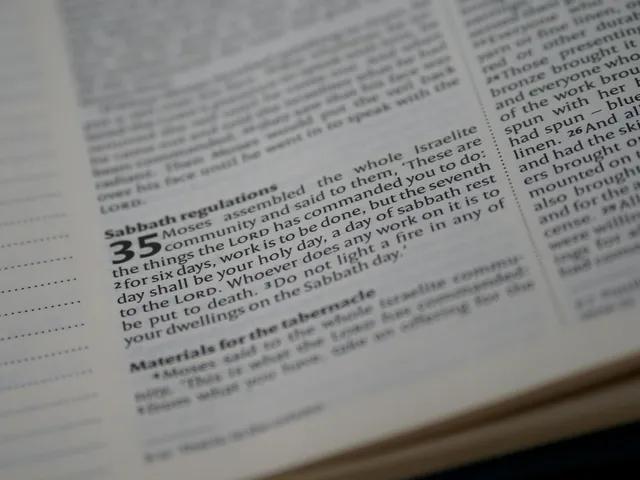
Isaiah 53 is one of the most profound and mysterious passages in all of Scripture. It has been called the "Fifth Gospel," for it reveals the heart of redemption long before the cross was raised upon Calvary's hill. The writer, inspired by the Spirit, describes a servant who would be despised, rejected, and pierced for the transgressions of others. Every line drips with both sorrow and hope, humiliation and glory. Isaiah 53 is not merely a prophecy-it is a portrait of divine love painted in earth's darkest colors.
The Shadowed Portrait of the Servant
Isaiah paints a picture unlike any earthly hero. There is no glamour here, no triumphal march, no majestic display of power. Instead, there is weakness, rejection, and grief. "He had no beauty or majesty to attract us to Him," Isaiah writes, "nothing in His appearance that we should desire Him." The Servant, instead of being celebrated, is "despised and rejected by men, a man of sorrows and acquainted with grief."
This description strikes the human heart because it turns our expectations upside down. We expect saviors to radiate strength, to command attention, to impress. But Isaiah's Servant comes quietly, even silently-bearing pain instead of wielding power. The mystery deepens when we realize that this Servant suffers not for His own sin, but for ours.
The Weight of Substitution
Few words in Scripture are heavier than these: "He was pierced for our transgressions, crushed for our iniquities." In this simple phrase, Isaiah reveals the breathtaking truth of substitution. The guilt and shame that belong to humanity are placed upon Him. The punishment due to us is taken by Another.
We often think about sin as something we can fix with better choices or stronger resolve. But Isaiah 53 reminds us that sin's cost is far deeper-it demands blood, justice, and atonement. The Servant does not merely sympathize with our pain; He bears it. He doesn't simply identify with our brokenness; He takes it upon Himself. He enters our darkness to absorb its curse and transform it into light.
The Cross Hidden in Prophecy
Centuries before the crucifixion, Isaiah foresaw the suffering of Christ. Every lash, every thorn, every drop of blood was written in prophetic ink long before the Roman nails pierced His hands. The "Lamb led to the slaughter" in Isaiah's Song of Songs becomes the "Lamb of God who takes away the sin of the world" in John's Gospel. This harmony between prophecy and fulfillment is no coincidence-it is the grand symphony of redemption playing across the ages.
What makes this so remarkable is not only the precision of the prophecy but its heart. The Servant does not suffer reluctantly. He goes willingly. Isaiah 53 tells us that He opened not His mouth. No protest, no defense, no bitterness. Only quiet surrender and perfect obedience to the Father's plan.
Rejected and Yet Redeeming
Rejection is one of humanity's deepest wounds. To be unseen, misunderstood, or cast aside leaves scars that are more invisible than physical marks. The Servant knows this pain intimately. "He was despised... we esteemed Him not." The world looked upon Him and saw failure, not victory; shame, not salvation. But through rejection came redemption.
Jesus' ministry embodied this paradox. The One who healed the sick, welcomed the outcast, and raised the dead was ultimately cast out Himself. He was crucified outside the city walls-the place of outsiders, criminals, and refuse. And yet it was from that place of ultimate rejection that salvation poured forth for all who believe. What the world rejected, God exalted.
The Silent Strength of the Servant
Isaiah compares the Servant to a lamb led to slaughter, silent before its shearers. This quietness is not weakness-it is divine restraint. In a world that equates power with noise, the Servant's silence speaks of heavenly authority. He could have called down legions of angels, yet He chose surrender. He could have silenced His accusers, yet He bore their voices in love. Here, we see the strength that only humility can hold.
The Power of Surrender
In the Christian life, this truth is deeply personal. When we face injustice, ridicule, or pain, our instinct is to defend ourselves, to fight back. Yet the Servant teaches another way-the way of trust. To surrender is not to give up; it is to give over. It is to place our cause in God's hands and to believe that He will vindicate what is right. Faith flourishes in surrender.
He Bore Our Iniquities
Isaiah says the iniquity of us all was laid upon Him. That phrase - "laid upon Him" - carries an image of transfer, an exchange so astonishing that words cannot fully capture it. The spotless Lamb absorbs the weight of sin so the sinful might inherit His righteousness. This is the divine exchange at the center of the gospel. The Servant is wounded that we may be healed; condemned that we may be justified; forsaken that we may be brought near.
In the ancient world, the high priest would symbolically place the sins of Israel upon a scapegoat, sending it away into the wilderness. Jesus, the true Servant, becomes the living fulfillment of that image-He is both the priest and the offering, the one who bears sin and the one who removes it. Every line of Isaiah 53 whispers, "This is what love looks like."
The Reward of His Suffering
The Servant's suffering leads not to despair but to triumph. Isaiah concludes that after His anguish, He "will see the light of life and be satisfied." Death does not have the final word. Out of the grave bursts glory, healing, and restoration. The Servant's humiliation becomes Heaven's highest honor. The cross gives way to the crown.
Resurrection is not a denial of suffering; it is its vindication. The reward is not only for the Servant but for those whom He has redeemed. Because He bore our griefs, we can now bear hope. Because He was crushed, we can stand restored. Isaiah's vision rises from the ashes to reveal eternal joy-the victory of mercy over sin, life over death.
Seeing Jesus More Clearly
Every Christian who meditates on Isaiah 53 eventually sees Jesus' face in its lines. The chapter is not an abstract lesson but an encounter with the heart of Christ. When we read "He was wounded for our transgressions," we realize: this was for me. This is personal. The Servant's suffering is not distant history-it's the very story that carries us home.
Imagine standing at the foot of the cross, hearing Isaiah's ancient words echo through the centuries. The soldier's hammer falls, and prophecy turns to reality. The Servant's body is pierced, His cry rises to Heaven, and love's promise is sealed forever. When we grasp this, our hearts cannot remain the same. We see sin for what it is-and grace for what it has done.
The Hidden Glory of the Servant's Path
Isaiah 53 is also an invitation to embody the Servant's way. The Christian life, too, carries crosses before crowns. We are called to endure misunderstanding, to serve humbly, to love sacrificially, and to trust God through the silence. When we walk this path, we not only honor the Servant-we reflect His light in a darkened world.
Living Beneath the Cross Today
Modern life often pushes us toward self-preservation, self-promotion, and self-reliance. But Isaiah 53 beckons us to lay down our "self" altogether. In the Servant's suffering, we discover that real strength is born of surrender and real healing springs from wounds surrendered to God's care. When we bring our pain, our shame, and our fears to the One who bore it all, redemption meets us there.
This is not theoretical faith. It's daily faith. It's the moment you pray through heartbreak, the mercy you show in conflict, the forgiveness you offer when wronged. The same Servant who bore the cross walks with us still, transforming suffering into something sacred. Every scar can become a testimony of grace.
The Servant's Song in Our Hearts
The beauty of Isaiah 53 is that it invites both awe and imitation. As we worship the Suffering Servant, we are also shaped by His example. To love those who reject us, to serve without applause, to bear burdens silently but faithfully-these are marks of those transformed by His love.
When the Servant's Song of Songs becomes our own, we move through the world differently. Grief no longer defines us. Rejection no longer breaks us. The cross, once a symbol of defeat, becomes our daily victory. In every act of forgiveness, in every quiet surrender, we echo the rhythm of Isaiah's ancient refrain: "By His wounds we are healed."
The Great Exchange Still Speaks
Isaiah 53 does not leave us in sorrow-it leads us through it. The Suffering Servant, once despised, is now enthroned. His wounds still speak. They speak of a love that stoops low enough to lift us high; a grace strong enough to cover every flaw; a victory quiet enough to reach every heart.
In our own seasons of pain, when life seems silent and God seems distant, the Servant's Song of Songs whispers back: He understands. He has been there. And because He has, there is hope beyond every wound and resurrection beyond every cross. The suffering Servant became the reigning Savior. And through Him, our suffering becomes the soil of glory.