There are seasons in life when suffering feels like a language only God understands-when prayers come out as sighs, when faith falters under the weight of unanswered questions. And yet, paradoxically, these are often the very seasons that shape our faith most profoundly. The way we encounter Christ in pain is unlike any other experience of the Christian life. There is something raw and refining about it, something that strips away the peripheral layers of belief and brings us face-to-face with the heart of the gospel: a Savior who suffered, redeems, and restores.
The Mystery of Suffering and the Presence of God
Suffering, in its many forms, confronts us with the uncomfortable limits of our control. We may pray, plan, and hope, yet life still brings illness, loss, disappointment, or betrayal. It's not that faith exempts us from hardship-it situates us within it differently. Faith invites us to believe that God's presence does not evaporate when life becomes painful. Rather, His presence often becomes clearer precisely there.
Consider the story of Joseph in Genesis. Thrown into a pit by his brothers, sold into slavery, and unjustly imprisoned, Joseph's circumstances could have cultivated only bitterness. Yet, the Scripture repeatedly notes, "The Lord was with him." That phrase recurs like a refrain, as if reminding us that God is not absent from the darkest chapters. Joseph's suffering was not wasted-it was the furnace that shaped his humility and wisdom, preparing him to save many lives, including those who wronged him.
When God Seems Silent
There are moments in suffering when God's silence feels unbearable. Prayer feels like speaking into a void. The Psalms are full of such honest laments-"How long, O Lord?" (Psalms 13:1). These cries are not evidence of doubt but of intimacy. Only those who believe God cares can cry out when He seems distant. And often, His silence is not absence but invitation-a holy pause in which we're drawn past quick answers into deeper trust.
Silence can be sacred space, where faith matures from depending on outcomes to depending on God Himself. In time, many discover that His presence was sustaining them quietly, even when He seemed to say nothing at all.
The Refiner's Fire
Peter wrote to believers facing persecution that they were being refined "as gold in the fire" (1 Peter 1:7). That image gives us a lens through which to interpret our trials-not as random cruelty but as purification. Suffering exposes what we rely on most deeply. When comfort is stripped away, when identity or success falters, what remains? It is there, in that vulnerability, that faith becomes more than a concept-it becomes our lifeline.
Refinement hurts because it requires letting go. God often allows certain losses not because He delights in our pain but because He delights in our wholeness. Like a skilled artisan purifying gold, He burns away the dross to reveal a truer beauty. Without those fires, our faith might remain shallow-attractive but untested. Through them, it becomes resilient and radiant.
Christ: The Suffering Savior
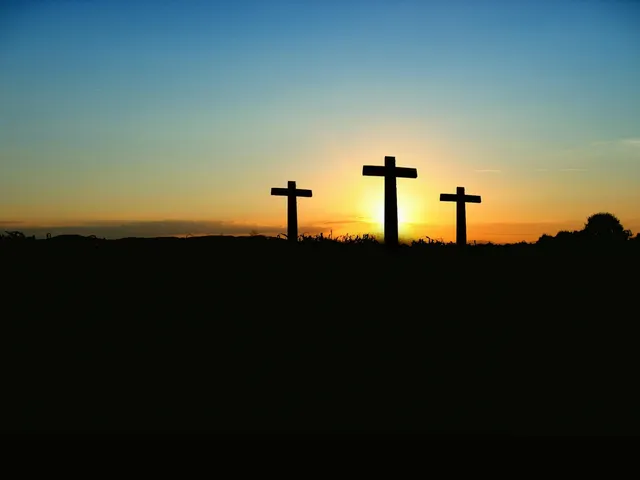
Nothing shapes Christian faith more profoundly than the realization that God Himself entered human suffering. Jesus did not remain distant from our pain; He bore it. The cross stands as the defining image of God's solidarity with the broken. It is the place where divine love met human anguish in full measure. Every scar, every tear, finds resonance there.
When we suffer, we do not suffer alone. The One who wept at Lazarus's tomb, who was betrayed by friends, who cried out "My God, my God, why have you forsaken me?" knows suffering not theoretically but personally. This is why Paul could write, "I want to know Christ-yes, to know the power of His resurrection and participation in His sufferings" (Philippians 3:10). He understood that to know Christ deeply involves walking the path He walked.
The Paradox of Resurrection
But the story does not end at the cross. Resurrection rewrites the meaning of suffering. It does not erase pain but transforms it into hope. The nails that pierced Jesus became the marks of victory. For believers, this means that no suffering is final when placed in the hands of Christ. Out of grief can come compassion. Out of affliction can emerge wisdom. Out of deep loss can blossom a more unshakable faith.
This resurrection lens does not minimize our trials-it magnifies our Savior. It reminds us that light does not avoid darkness; it conquers it.
How Suffering Builds Compassion in Us
One of the quiet miracles of suffering is how it expands our capacity to love others. When you've walked through pain, you recognize it instantly in another. You listen differently. You comfort differently. You pray differently. The Apostle Paul speaks of the "God of all comfort, who comforts us in all our troubles, so that we can comfort those in any trouble" (2 Corinthians 1:3-4). Our wounds become wells of empathy. The broken heart learns to beat with tenderness toward other broken hearts.
In this sense, suffering is not wasted-it's redirected. It becomes a ministry. The very places where we once cried out for mercy can become places where we now extend mercy. The church itself flourishes on this pattern: people healed just enough to help others who are still hurting. It's holy recycling-the transformation of pain into purpose.
Strength in Shared Weakness
There is also something profoundly strengthening about sharing our weakness with others. The modern world prizes performance and control, but the gospel prizes honesty and grace. When believers admit their struggles, they create space for real community. Not one built on perfection, but on shared dependence on Jesus. Faith thrives in honesty. And suffering, strangely, gives us the courage to be honest.
Letting Go of Control and Embracing Trust
Much of our anxiety in suffering stems from our craving for control. We want explanations, timelines, guarantees. Yet, faith calls us not to certainty of outcome, but to certainty of God's character. To say "I trust You" when nothing makes sense is one of the purest acts of worship. It's a surrender that echoes Jesus' own: "Father, into Your hands I commit My spirit."
There is a deep peace that begins when we finally release our grip. Trust doesn't mean pretending everything is fine-it means acknowledging everything is not fine, but resting in the One who still holds the world. It means believing there's a larger story unfolding, even when we can't see the next sentence.
Faith Formed in the Shadows
Many of the spiritual giants of Scripture were forged in suffering. Moses in exile learned dependence. David in the caves learned worship. Elijah in despair discovered the whisper of God's voice. Paul in prison learned joy. These were not comfortable lessons, but they were eternal ones. And if we look closer, we realize that much of God's work happens not in the spotlight but in the shadows.
Suffering strips away illusion. It teaches us to distinguish between what is urgent and what is truly important. It shifts our gaze from self-sufficiency to grace. The darkness may linger, but even there, faith grows like roots beneath the soil-hidden but strong.
Hidden Growth
Have you ever noticed that faith often grows quietly in pain? There's no applause in endurance, no spotlight on persistence. Yet that's where transformation happens. We don't emerge from suffering the same; something unseen has changed. We love more sincerely. We pray more honestly. We hold things more loosely. And over time, we realize that suffering didn't destroy our faith-it deepened it beyond measure.
Redeeming the Ordinary Tears
Not all suffering is dramatic. Sometimes it's the slow ache of daily disappointments, the grind of waiting, the ordinary griefs that wear on the soul. Yet even there, God works quietly. Every small surrender, every whispered prayer of trust, becomes part of our spiritual formation. There is holy dignity in enduring faithfully what no one sees.
Not all miracles are sudden deliverances; some are gradual transformations. Sometimes God doesn't remove the thorn but gives grace sufficient for every day it pricks. And in that quiet grace, we learn the rhythm of dependence-moment by moment, breath by breath.
When Faith Becomes Real
Ultimately, suffering has a way of distilling faith from theory into reality. Before, we may have believed in God's goodness; now we've encountered it in the valley. Before, grace was a doctrine; now it's our daily bread. Before, hope was an idea; now it's what keeps us alive. Faith ceases to be something we perform and becomes the atmosphere in which we live.
In that sense, suffering becomes sacred ground. It's where we see God not as a concept but as a companion. It's where the abstract becomes intimate, the promises become personal. And the more we are pressed, the more the fragrance of Jesus emerges from our lives.
The Beauty Beyond the Breaking
If suffering has shaped your faith, you are in good company-with saints, prophets, apostles, and above all, with Christ Himself. Every tear you've cried has been seen by the One who collects them (Psalms 56:8). Every unanswered question is met with His abiding presence. And one day, every sorrow will be swallowed by joy. Until that day, we walk by faith, letting the hard places soften us rather than harden us.
Suffering does not disqualify us from God's love; it draws us deeper into it. It is there that we learn what hope really means, what grace really costs, and what resurrection really looks like. The world may see only brokenness, but heaven sees formation. Even in the pain, Christ is sculpting something eternal in us-a faith that shines all the brighter because it's been through the fire.