Few figures in Scripture evoke as much admiration, complexity, and humanity as David-the shepherd boy who became a warrior, poet, fugitive, and king. His story moves with the full range of human emotion: courage and failure, faith and fear, worship and repentance. And yet, throughout it all, Scripture calls him a man after God's own heart (1 Samuel 13:14; Acts 13:22). What does that mean? How does his journey illuminate our own pursuit of God today?
The Shepherd Who Saw God in Simplicity
Before the throne, before the crown, before the battles and songs of victory, there was a pasture. David's journey began not in the courts of kings but among the bleating sheep of Bethlehem's hills. As the youngest son, his duties were humble, even forgotten by his family when Samuel arrived to anoint Israel's next king. Yet in that obscurity, something profound was taking root. David learned to see God in the ordinary.
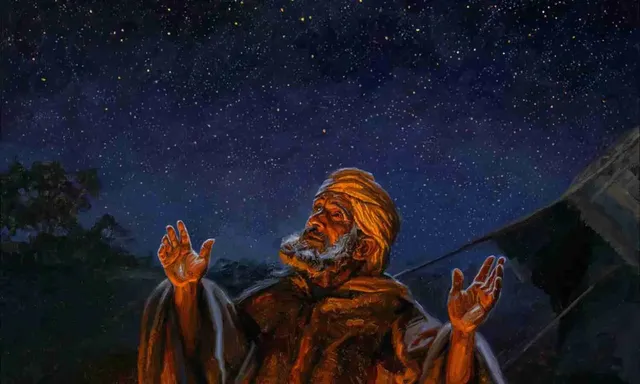
Alone under the open sky, the shepherd boy found God in whispers of wind and the rhythm of creation. He learned courage while facing lions and bears, but he also learned trust-dependence upon the true Shepherd. His songs, later shaped into the Psalms, were not merely artistic expressions but heart-cries formed in solitude. Before he led a nation, David worshiped in secret. Before he carried a sword, he carried a harp.
Faithfulness in the Hidden Seasons
We often underestimate the sanctity of small beginnings. Yet Scripture continually reminds us that God shapes His servants in hidden places. David's faithfulness with sheep prepared him for faithfulness with souls. In our own lives, too, the pasture moments-those unseen, quiet seasons-are often the training ground for greater calling. The humility of tending sheep was not wasted; it was holy preparation.
The Warrior Who Trusted Beyond Himself
When David ran toward Goliath, sling in hand, he was not moving reckless with youthful zeal. He was walking in remembrance of a faithful God. His boldness came not from self-confidence but from covenant confidence. "The Lord who rescued me from the paw of the lion and the bear will rescue me from the hand of this Philistine," he told Saul (1 Samuel 17:37). Faith looks backward to remember, and forward to trust again.
But even in victory, David's heart remained tender toward God. He refused to claim success as his own. When crowds sang his praises, he deflected glory upward. His courage was not the absence of fear; it was the presence of God. That conviction carried him through battles and betrayals, triumphs and trials.
The Test of Waiting
Perhaps the greater battle came not in the valley of Elah but in the wilderness of delay. Though anointed as king, David spent years running from Saul, hiding in caves, and resisting the temptation to seize the throne by his own hand. Twice he could have killed Saul, yet both times he refused, declaring, "I will not lift my hand against the Lord's anointed."
True trust is not proven in victory but in restraint. To wait on God's timing when everything seems unjust or delayed is one of the deepest forms of worship. The wilderness taught David that the crown must be received, not grasped. Our own seasons of waiting-unfulfilled dreams, unanswered prayers-often serve the same purpose: they refine our desires until only God remains.
The King Who Danced-and Fell
When David finally ascended to the throne, the nation flourished. He united tribes, conquered enemies, and brought the Ark of the Covenant back to Jerusalem. One of Scripture's most vivid images captures him "dancing before the Lord with all his might." In that moment, his kingship and his worship intertwined; his heart overflowed with joy at God's presence among His people. David ruled with justice, with poetry, and with praise.
And yet, the same man who danced so freely also stumbled so deeply. The story of Bathsheba and Uriah stands as a painful warning about the seduction of power and the vulnerability of the human heart. David's sin shattered lives-including his own. But the remarkable truth emerges not in his fall, but in his response: repentance. Psalms 51 records his anguish, not merely over broken commandments but over broken communion with God. "Against You, You only, have I sinned," he laments, pleading for a clean heart and renewed spirit.
Repentance That Restores
What set David apart was not moral perfection but spiritual humility. He did not excuse or minimize his failure; he brought it into the light. In doing so, he showed us the pathway back to grace. When God confronted him through Nathan, David simply said, "I have sinned against the Lord." No justification. No blame-shifting. Just honesty before holiness.
And God, in mercy, restored him. Though the consequences of sin remained, grace became the greater story. From his line came the Messiah-the ultimate King whose throne will never end. David's legacy, then, is not one of moral superiority but of divine redemption. His life whispers a truth that pulses through all of Scripture: God can redeem even the most shattered stories.
The Heartbeat of a Worshiper
More Psalms are attributed to David than to any other author. Through them we hear the full range of emotion-praise that soars, lament that aches, pleas that tremble with faith and desperation. He did not censor his grief or fear before God. Instead, he brought everything-his confusion, anger, hope, and joy-into the sanctuary of prayer. Authentic worship embraces honesty.
David's Psalms reveal a relationship, not a ritual. When he said, "The Lord is my shepherd," he spoke from memory, from the days when that shepherd boy saw God's care firsthand. When he declared, "I will bless the Lord at all times," it was forged in wilderness seasons, not royal comfort. His worship was not contingent on circumstance but rooted in covenant love.
The Anatomy of a God-Seeking Heart
What does it mean to be a man-or woman-after God's own heart? David's life gives us clues. It's not about perfect behavior, but about direction of desire. His heart consistently turned toward God, even when he failed Him. He sought not only God's hand but His face. He longed for God's presence more than position or power.
To be after God's heart is to pursue Him relentlessly, repent quickly, and rejoice deeply. It is to let His Word both wound and heal us, to live in continual response to His voice. It is to let worship flow not from duty but from delight.
The Legacy That Points Beyond Himself
David's story stretches beyond his own lifetime. God promised that his throne would be established forever-a promise fulfilled in Jesus, the Son of David. The shepherd of Bethlehem became the ancestor of the Good Shepherd. The warrior-king's victories prefigured Christ's greater triumph. Every triumph and tragedy in David's life serves as a shadow of the One who would come to heal the world's deepest wounds.
When we see David, we also see ourselves: our potential, our flaws, our longing to love God and yet our need for grace. But when we see Christ through David's story, we see the perfection that David pointed toward-the King who never sinned, who bore our failures, and who invites us into His kingdom of mercy.
Bringing It Home: A Heart Like David's
Today, we stand in the tension between calling and frailty, just as David did. We have our own shepherd's fields-our quiet responsibilities where faithfulness matters more than recognition. We face our own giants-fear, insecurity, injustice, and the hidden battles of the heart. And sometimes, like David, we stumble badly. Yet God is still looking for hearts that beat like his: hearts that yield, trust, worship, and return.
To live after God's heart is to live in pursuit, not perfection. It means bringing our whole selves-our strength and our weakness-before Him daily. It's learning to sing in the caves and to dance when the ark returns. It's finding grace when we fall and glory when we rise again. The same God who chose a shepherd boy chooses us still-not for our status, but for our surrender.
In the end, the story of David reminds us that the measure of a person's life is not found in their achievements or failures but in the direction of their heart. And the heartbeat that echoes through eternity belongs to those who, like the shepherd king, keep seeking after God-with everything they are, and everything they aren't-until one day they see His face.