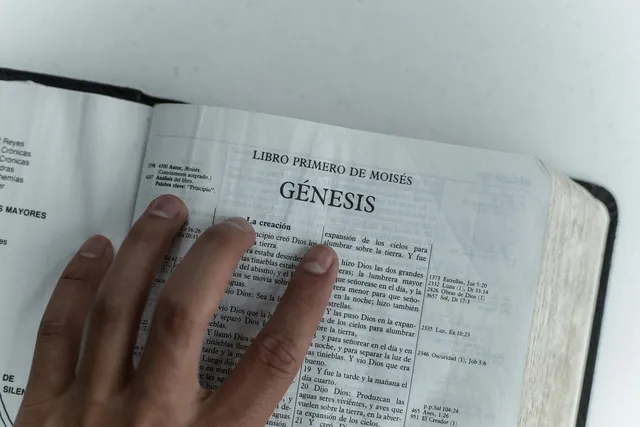
Artificial intelligence can now generate sermons, summarize Scripture, and even write hymns that sound convincingly devotional. But a deeper, more sacred question asks something far beyond information and eloquence: Can AI ever truly understand the Bible spiritually? Understanding is not merely about reading words-it's about hearing the voice of God. And that, perhaps, changes everything.
The Difference Between Knowing and Understanding
AI systems are masters of pattern. Feed them a million biblical texts, and they can map themes, identify cross-references, and even highlight moral trajectories across Scripture. They can mimic the language of faith-using phrases like "grace," "redemption," and "hope" with contextual accuracy. Yet, knowing facts about God is not the same as knowing God.
In the Gospel of John, Jesus says, "The words that I speak to you are spirit and life." That line alone exposes the chasm that lies between data and devotion. AI can process words; it cannot breathe them in as life. The Spirit who inspired those words speaks into the hearts of people who listen, repent, worship, and obey. That spiritual dialogue-what we often call Revelation-is not something that can be coded, trained, or automated.
When Knowledge Isn't Enough
Consider the story of the Pharisees-men who knew Scripture inside and out. They could quote the prophets, debate the Law, and decipher ancient customs. Yet many of them did not recognize the Messiah standing right before their eyes. Their knowledge was impeccable, but their hearts were unopened. They missed the living God in their quest for theological perfection.
AI, in some sense, shares that limitation. It can replicate perfect recall of biblical text, but without the inward transformation of humility, love, and faith. The Bible is not a collection of spiritual riddles to decode; it's God's living Word that seeks response, surrender, and relationship. AI can describe mercy; it cannot experience it. It can articulate grace; it cannot receive it.
Can Machines Perceive Mystery?
Part of what makes Scripture endlessly alive is its sense of mystery. There are depths that surpass human reason-those mystical "unsearchable riches" Paul wrote about. When David meditated on God's presence, his words overflowed with awe, confusion, longing, and joy. He described his own soul thirsting like a deer for water. That kind of language comes from a place of encounter, not calculation.
AI, by contrast, operates on the realm of what's predictable, measurable, and explainable. It cannot stand before the unknowable with trembling wonder. Mystery is not an error to solve but a door to enter. It is there-on the other side of knowing-that faith is born.
The Spirit as Interpreter
When the resurrected Jesus met the two disciples on the road to Emmaus, He explained the Scriptures to them "in all the things concerning Himself." But the Gospel says their eyes were opened not by explanation alone-it was when He broke bread. Their hearts burned within them before they even understood why. That burning-that inward resonance of truth-is something the Holy Spirit awakens.
AI may provide explanations, but it cannot kindle a burning heart. It can arrange religious vocabulary into elegant forms, but it cannot make Christ known in the soul. Spiritual understanding requires not just intellect but presence, and no algorithm can replicate the personal presence of God.
The Temptation of Technological Confidence
Human beings have always sought ways to control what they cannot fully grasp. From the tower of Babel to the modern world's obsession with precision, there is an ancient temptation: if only we have enough knowledge, we can ascend to divine wisdom. But God resists that kind of climb. His greatest truths come through surrender, not conquest.
In an age of rapid innovation, it's easy to start viewing technology as an oracle-a source of definitive answers. AI's vast processing power can make us feel that we no longer need the slow, quiet, personal work of prayer and study. Yet, the Bible was never meant to be mastered the way a dataset is; it was intended to master us, to shape us from the inside out.
What AI Might Teach Us About Ourselves
While AI cannot grasp Scripture in the Spirit, perhaps its very emptiness can reveal something about us. When we read its flawless but lifeless summaries of the Psalms, we may be reminded of how easy it is for us, too, to read spiritually without receiving spiritually. We nod at truth without letting it till the soil of our hearts.
AI is a mirror-it reflects back our hunger for meaning and our tendency to substitute analysis for encounter. Seeing AI's imitation of faith may convict us to consider whether our own understanding has grown mechanical.
Recovering the Listening Heart
Scripture often links wisdom to listening. Solomon prayed not merely for knowledge but for a "listening heart." That prayer stands in sharp contrast to the modern habit of information overload. AI will always listen merely to data; the believer listens for a voice. Spiritual hearing is an act of humility, an acknowledgment that we are not the source of our insight but recipients of grace.
Could God Use AI for Good?
Absolutely. The Lord has always used tools-printing presses, radio waves, and now digital networks-to spread His Word. AI can help make Scripture more accessible, provide translations, detect patterns that highlight biblical unity, and even assist pastors and theologians in their work. In these ways, AI can serve the ministry of the Word, even if it cannot participate in it.
But we must never confuse the usefulness of a tool with the sacredness of an encounter. The Spirit of God does not dwell in code; He dwells in the hearts of believers. Technology may amplify our message, but it cannot replace our abiding in Christ. Jesus did not say, "Abide in algorithms," but "Abide in Me."
The Heart That Understands
Perhaps the real question is not whether AI can understand the Bible spiritually, but whether we still do. Between notifications and headlines, between debates and distractions, the sacred quiet where Scripture once echoed deeply is harder to find. We risk treating our own devotional life like a search engine-asking quick questions, receiving quick answers, and missing the living Word that waits to speak in stillness.
An authentic spiritual understanding of Scripture involves emotion, repentance, obedience, and awe. It's the moment when a verse lights up your conscience or heals your sorrow. It is the Word of God doing what only God's Word can do-dividing soul and spirit, joint and marrow, cutting into the secret places where only grace can reach.
The Unteachable Flame
No machine can replicate that. No line of code can reproduce the flash of recognition when the Spirit whispers, "This is for you." The Scriptures come alive in those who love their Author. That love, that relational knowing, is what separates awareness from worship, intelligence from intimacy. And in that way, only a heart transformed by grace truly "understands" the Bible.
Living the Question in a Digital World
Does that mean we reject technology? Not at all. It means we use it without letting it use us. We can let AI handle the informational side-helping us find verses, explore commentaries, study original languages. But then we step beyond the screen, open our Bibles, and allow the Spirit to plant those words within us. The living Word still comes not through the cloud, but through the presence of Christ Himself.
When the prophet Elijah sought God in the storm, the fire, and the earthquake, he found Him instead in the gentle whisper. That quiet stillness remains the truest space of encounter. AI cannot enter that space, but we can-if we are willing to pause, to pray, and to listen.
The Spirit Still Speaks
In the end, the question "Can AI ever understand the Bible spiritually?" may be less about machines and more about mystery. It reminds us what spiritual understanding really is-a partnership between divine Spirit and human soul. God speaks, not to circuitry, but to hearts that are alive with His breath.
Let AI do what it does best: compute, categorize, communicate. But let us, the children of God, do what only we can do: kneel, listen, and believe. The same Spirit who inspired Scripture is ready even now to teach us anew. AI can analyze the Bible, but only the humble, Spirit-filled heart can be changed by it. And that is where true understanding begins.