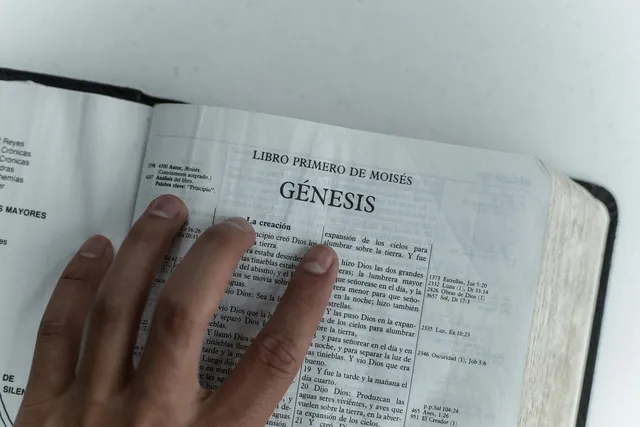
Few phrases in Christian vocabulary are as familiar-or as profound-as calling the Bible the "Word of God." We hear it in sermons, see it emblazoned on church walls, and read it in devotionals. Yet the question is worth slowing down to ask: Why do we call the Bible that? What does it mean for ink on a page, written by human hands across centuries, to be known as the divine Word?
The Living Voice Behind the Words
When Christians refer to Scripture as the "Word of God," they are not merely describing a religious text. They are confessing something extraordinary: that through the Bible, God Himself speaks. The biblical writers do not present their message as a collection of human reflections about God; they consistently declare that God revealed His truth to humanity through them. The prophets often began with the phrase, "Thus says the Lord," claiming divine origin for their message. And the New Testament writers echoed this conviction, calling Scripture "God-breathed" (2 Timothy 3:16).
That expression-"God-breathed"-is deeply personal. Breath implies intimacy, life, and immediacy. When we speak, our breath carries words into the world. So when Scripture says it is "God-breathed," it means more than inspired thoughts. It carries the sense that God exhaled His very life into these words, filling them with His living presence and purpose.
God's Word as Revelation
From the first sentence of Genesis to the final benediction in Revelation, Scripture tells a single unfolding story: the great and gracious self-disclosure of God. The Bible is not merely humanity's search for the divine; it is God's initiative-His voice breaking the silence. In a world filled with competing messages, it is God's Revelation that cuts through the noise with authority and compassion.
God Speaks-and It Happens
All throughout Scripture, God's Word is not just informative; it's performative. When God speaks, things move. "Let there be light," He says-and light bursts forth (Genesis 1:3). His Word does not simply describe reality; it creates it. This creative power continues throughout redemptive history. When Jesus healed the sick or calmed the storm, He often did so with a single phrase. His Word still carries that same potency: it brings life where there was none, order where there was chaos, hope where there was despair.
Understanding this helps us see Scripture not as a static document but as the ongoing echo of that divine creative voice. When we read the Bible, we are tracing the contours of God's continued conversation with His world.
The Word Written and the Word Made Flesh
John's Gospel opens with resounding mystery: "In the beginning was the Word, and the Word was with God, and the Word was God." This isn't a mere metaphor. It introduces Jesus Christ as the ultimate expression of God's self-communication-the living Word who perfectly reveals the Father. In Christ, the message of Scripture comes alive; He is the culmination of all that the prophets foretold.
When we call the Bible the Word of God, we aren't confusing paper with divinity. Rather, we are recognizing that the written Word points us to the living Word. Scripture bears faithful witness to Christ and finds its ultimate meaning in Him. The two expressions of God's Word-written and incarnate-stand together. One reveals God through language; the other reveals Him through life, death, and resurrection.
The Harmony Between Scripture and Christ
It's easy for modern readers to separate text from person, doctrine from relationship. But in the biblical view, there is no divide. The Christ who walked the dusty roads of Galilee is the same Christ who speaks through the pages of Scripture today. The Spirit who inspired the prophets and apostles is the same Spirit who opens our understanding and touches our hearts as we read. To encounter God's Word is to encounter God Himself.
The Word That Transforms
Unlike any other book, Scripture reads us as much as we read it. Hebrews 4:12 reminds us that "the word of God is living and active, sharper than any double-edged sword." That's a startling image: the truth of God penetrating the hidden places of our lives. It means the Bible doesn't merely leave us informed; it leaves us changed. It convicts, comforts, renews, and redirects.
Those who have walked with Scripture for years often testify that it meets them differently in different seasons. A verse that once felt like simple advice suddenly blazes with new meaning when life has taught the heart to listen. This is because the Bible's author is still alive and near. God continues to speak through His Word, not by adding new books or messages, but by breathing new understanding and application into the same eternal truth.
Human Hands, Divine Heart
Some struggle with the idea that human writers could produce something divinely perfect. But God has always delighted to use ordinary people for extraordinary purposes. Just as He used a shepherd boy to slay a giant, or a fisherman to preach to thousands, so He used fallible men and women to convey His infallible truth.
The miracle is not that human authorship is absent, but that divine inspiration is present. God worked through the languages, cultures, emotions, and experiences of real people to communicate His unchanging Word. The Bible's humanity is the very conduit of its divinity-like the incarnation itself, fully human yet fully divine.
The Divine Symphony
Across the ages, more than forty authors contributed to the Bible's sixty-six books, yet its message remains remarkably unified. This harmony is no accident. Beneath the variety of human voices runs one Author, one Spirit, one redemptive melody. The prophets, poets, historians, and apostles all play their part in a divine symphony, and Scripture remains the orchestration of God's heart toward His creation.
The Word for Every Generation
How does a book written thousands of years ago remain relevant today? Because the God who spoke then still speaks now. The world changes, languages evolve, cultures shift-but the human heart continues to wrestle with the same questions of purpose, pain, and hope. The truth of Scripture meets those questions freshly in every generation.
Whether it is a Psalms of lament echoing through a hospital corridor, a parable of Jesus whispering courage to a struggling parent, or a promise from Isaiah steadying someone's faith, the Bible still speaks with unmatched authority and tenderness. It speaks to kings and shepherds, scholars and children, the despairing and the joyful alike.
Hearing God's Voice Today
To call the Bible the Word of God is also to affirm that God is not silent. The same Spirit who inspired its pages works in the reader's heart. This means Scripture cannot be treated as a museum artifact to be admired from a distance. It is meant to be engaged-read prayerfully, wrestled with honestly, obeyed faithfully. In the quiet of morning devotion or the chaos of daily life, we tune our hearts to hear the whisper of that familiar yet astounding voice.
And yet, the Bible never exists in isolation from the community of faith. God's Word comes alive as we share it, study it, and live it together. Scripture is both personal and communal-a testimony passed through the generations, still calling out to each new listener: "Hear, and you shall live."
The Word That Endures
Jesus once said, "Heaven and earth will pass away, but my words will never pass away." Kingdoms rise and fall; languages fade; technologies come and go-but the Word of God stands eternal. Through persecution, translation, and transmission, its message has endured because its Author lives forever. The Bible's permanence testifies not to the durability of ink and parchment, but to the eternal faithfulness of the One who speaks.
This enduring Word anchors believers amid life's shifting tides. When the nations tremble, when certainties unravel, when our own strength falters, Scripture remains a sure foundation. It tells us who we are, where we belong, and in whom our hope is secure.
Listening for the Eternal Voice
To call the Bible the Word of God is to confess that the Maker of heaven and earth still desires to be known-and has spoken, clearly and compassionately, in human language. Through these ancient words, God's heart beats toward His people still. Every time we open its pages, every time its truth finds room in our hearts, the Spirit who once hovered over the waters of creation breathes again.
Scripture is not merely a record of what God said; it is the echo of what God is still saying. It invites us to listen-to tune our ears to His tone, our hearts to His rhythm, our lives to His will. When we do, the Bible becomes more than a book on a shelf. It becomes the living Word that reshapes our thoughts, revives our faith, and renews our world. And in that Word, we hear the same voice that spoke in the beginning-the voice that still calls creation to life.