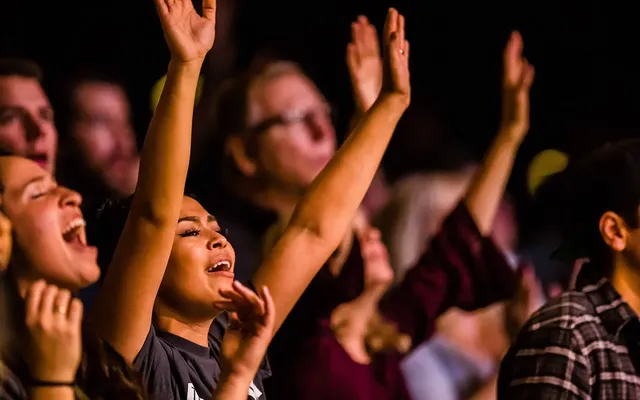
Sunday morning. Somewhere between the smell of fresh coffee, the search for a missing Bible, and the flurry of getting out the door, we head toward a familiar building. Some of us go eagerly, hearts lifted with expectation. Others admit that sometimes, it feels like routine. But in the quiet moments before the first Song of Songs begins, a deeper question can surface-why do we really go to church?
More Than Attendance: The Heart Behind Gathering
Church attendance can so easily become a number on a report or a checkmark in the week's rhythm. But the early Christians likely never saw it that way. They met in homes, around shared meals, in secret places-gathered not to fill pews but to fill hearts. They came together because they needed one another. In a world hostile to their faith, their shared life was their lifeline.
When the writer of Hebrews urges believers not to neglect meeting together (Hebrews 10:25), it wasn't a call to dutiful habit. It was a tender call to survival and strength. Church, at its best, is still that: not a place of performance, but a place of presence-a space where the weary, the joyful, the doubting, and the hopeful are all gathered beneath the same grace.
The Church as a Living Body
We often refer to the church as an institution or a building, but Scripture tells a different story. The Apostle Paul describes the church as a living body-Christ's hands and feet in the world (1 Corinthians 12). That image changes everything. If we see church merely as an event, we can attend and remain detached. But if it's a body, then gathering isn't about individual fulfillment-it's about connection, about being joined to something greater.
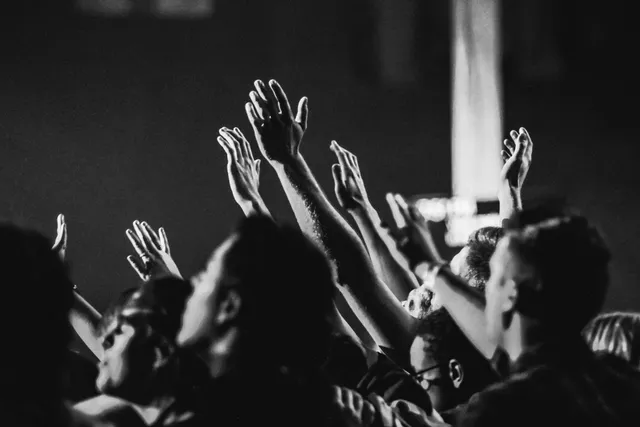
When one part of the body suffers, the others rally. When one rejoices, the rest celebrate. That rhythm can't be replicated alone in a living room. The digital age has given us new ways to hear sermons and sing along, but nothing can replace embodied fellowship-the smile of the greeter at the door, the sound of voices raised together, the quiet squeeze of a friend's hand as you pray.
When Presence Becomes Participation
There's a subtle shift that happens when we move from simply being present to truly participating. Presence says, "I'm here." Participation says, "I'm part of this." The difference is profound. When we sing, serve, or simply sit with attention, we're declaring that God is not only present in this place, but working in us and through us. The church isn't a performance we watch-it's a family we belong to.
Worship: Remembering Who God Is
In the swirl of modern life, everything clamors for our attention-our jobs, our fears, our ambitions, our anxieties. Church invites us to pause and reorient. Every call to worship is a divine interruption, reminding us of who God is and who we are in Him.
Worship isn't a warm-up for the sermon. It's a recalibration of the heart. It dethrones self and enthrones Christ. In singing truth together, in confessing, in hearing Scripture, we resist the world's narrative and realign with heaven's perspective. The words of ancient Psalms echo again: "Come, let us bow down in worship, let us kneel before the Lord our Maker" (Psalms 95:6). We go to church because our souls need that bowing, that beholding, that re-centering more often than we realize.
Community: The Grace of Being Known
It's possible to be surrounded by people and still feel alone. Church, in its truest form, calls us into relationship-not the shallow kind, but the kind that requires honesty, patience, and shared life. That's messy, of course. Real community always is. But it's in that mess that grace takes root.
When someone prays for us by name, or when a fellow believer asks how we're really doing, something sacred unfolds. We remember we're not meant to walk this faith journey alone. "Carry each other's burdens," Paul writes in Galatians 6:2, "and in this way you will fulfill the law of Christ." We cannot obey that verse in isolation.
The Church as Family-and Training Ground
Family is sometimes the most accurate, and most complicated, word to describe church. Families argue, misunderstand, forgive, and grow. So does the church. But we are also a training ground for love-a place where forgiveness is practiced and patience tested. Within that sanctifying friction, the Spirit shapes us into people who can love the world better because we've first learned to love one another.
The Word: Anchoring in Truth
One of the central reasons we gather is to be anchored again in truth. The preached Word does more than inform; it transforms. It is living and active, sharper than any double-edged sword (Hebrews 4:12). When Scripture is read aloud and expounded in the presence of faith, it cuts through confusion, revives hope, and strengthens conviction.
Hearing God's Word together guards us from the drift of private interpretation or purely emotional spirituality. It draws us back to the collective story God is telling among His people. Week after week, the pulpit and the pew meet in a holy exchange: one brings the message, the other brings the openness to receive. And through that rhythm, hearts are changed.
The Mission Beyond the Walls
If the church is the body, then Sunday is only the heartbeat-not the whole life. We gather not to escape the world but to be sent back into it. Jesus didn't call His disciples to build a fortress; He called them to make disciples of all nations. The gathered church becomes the scattering church-equipped, encouraged, and empowered to bring light into dark places.
In Acts 2, the believers devoted themselves to teaching, fellowship, breaking of bread, and prayer. But the next chapters show them going-into cities and marketplaces, prisons and homes. The church gathered in worship and scattered in mission. When we leave the Sunday service with hearts full of peace and purpose, we carry the fragrance of Christ into a world that desperately needs it.
Ordinary Faithfulness in Everyday Places
Sometimes, the mission field is not a distant land but the grocery store, the classroom, the office. What we experience in fellowship on Sunday arms us with love for Monday. The encouragement, conviction, and grace we receive together become seeds we scatter throughout the week. In this way, church isn't a compartment of life-it becomes the pulse of our entire existence.
When Church Hurts
We must also acknowledge that church is full of humans, and where humans are, hurts sometimes dwell. Many carry wounds inflicted by the very community that was meant to heal. The temptation is to withdraw, to seek God alone. And yet even in our wounds, God works redemptively. The brokenness of the church doesn't negate its beauty; it reveals our deep need for grace.
Christ loves His church-not because it's flawless, but because it's His. Ephesians 5 tells us He gave Himself up for her, that she might be made holy. When we choose to return, to forgive, to keep believing that resurrection life can flow even through imperfect people, we become part of that holy renewal. Healing often begins when we let God restore our view of His bride.
Finding God in the Ordinary Gatherings
Not every Sunday will feel like a mountaintop experience. There will be weeks when the songs don't stir, when the sermon challenges rather than comforts, when distractions weigh heavy. But even there, God is present in the ordinary. Faithfulness in showing up becomes a quiet act of worship, a way of saying, "Even when I feel nothing, I trust You're here."
The beauty of church often reveals itself over time-a slow unfolding as lives intertwine, prayers are answered, and testimonies build layer upon layer. What feels mundane becomes holy in hindsight when we realize God has been weaving stories all along.
A House of Grace, A People of Hope
At its heart, the church is not a building, a program, or an hour set aside once a week. It's a people called out of darkness into light, gathered to declare the praises of the One who saved them (1 Peter 2:9). It's the tangible reminder that though we are many, we are one. We go to church because we need the reminder of that gospel-shaped unity-and because someone else there might need the warmth of our presence too.
Perhaps the real reason we go to church isn't simply to "get" something, but to become something: a body more attuned to the heart of Christ, a family shaped by love, a community carrying God's presence into an aching world. When we gather, heaven touches earth in the simplest ways-through bread, Song of Songs, Scripture, and shared life.
Returning to the Heart
So, why do we really go to church? We go because God meets His people in gathered places. We go because community shapes what solitude alone cannot. We go to encourage and be encouraged, to remember who we are and whose we are. We go, not because we always feel like it, but because we are being formed there into the likeness of Christ.
When next Sunday arrives and the day's pace begins, pause and remember this: beneath the routines lies a mystery. The gathering of believers is a living testimony that God still dwells among His people. Every voice, every prayer, every quiet heart beating in faith becomes part of a chorus that declares, "The Lord is here-among us." And that, more than anything else, is why we go.