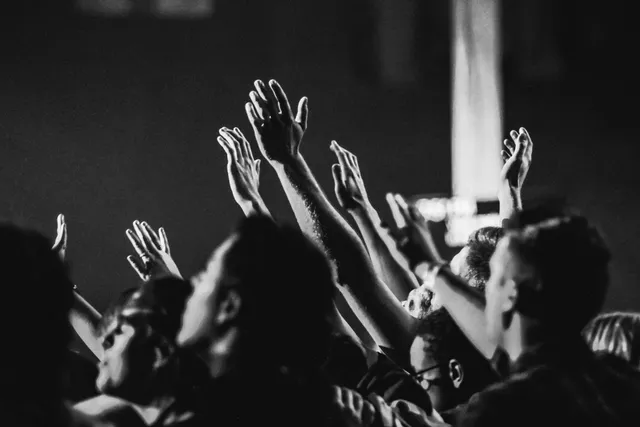
The story of the early church is one of beauty and conviction-the tender, blazing birth of a community defined not by human strategy but by divine presence. When we think of the fledgling gatherings of believers in Jerusalem, Antioch, or Philippi, we are reminded that Christianity began not as an institution but as a fellowship of hearts brought alive by the Spirit. In their homes and marketplaces, in prayer and simple meals, the earliest disciples discovered what it meant to truly belong to one another in Christ. And perhaps, more than ever, our modern world needs to rediscover that same rhythm of grace-filled community.
The Breath of New Life
It all begins with breath-literally, the breath of God poured out at Pentecost (Acts 2). The disciples, once fearful and uncertain, were filled with the Holy Spirit, and suddenly a new kind of community was born. The church was not defined by structures or slogans but by shared experience of God's living power. From that moment on, faith was not a private affair; it became communal-something lived together, shared, and expressed in the unity of hearts and lives.
We often think of the church's birth as dramatic tongues of fire and miraculous languages, and indeed it was-but beneath the miracle was the miracle of belonging. God gathered diverse people into one spiritual family. Men and women from different nations heard the same good news and were enfolded into one story. In a fragmented and divided world, that was revolutionary. It still is.
Devoted Hearts, Simple Joys
Acts 2:42-47 gives us one of Scripture's most luminous portraits of what true Christian community looks like. The early believers "devoted themselves to the apostles' teaching and to fellowship, to the breaking of bread and to prayer." Every phrase in that verse describes not only activity, but relationship. Teaching was not mere information; it was shared formation. Fellowship was not casual friendship; it was deep communion. Breaking bread meant remembering Christ's sacrifice, but also enjoying simple meals together, sharing tangible signs of grace. Prayer united their hearts before the Father, weaving their souls into one tapestry of faith and dependence.
The Power of Shared Devotion
Notice the tone of that passage-joyful, generous, unhurried. The early believers did not isolate their spirituality to an hour a week; they lived their faith in rhythms of togetherness. Everything was steeped in shared devotion. They met daily, not because they had to, but because love compelled them. In a world obsessed with independence, they modeled interdependence. Their joy was contagious, their generosity radical, and their worship natural. The result? "The Lord added to their number daily those who were being saved."
The Beauty of Shared Possession
Few aspects of the early church's life strike the modern mind more strongly than their practice of holding things in common. Acts says simply that "no one claimed that any of their possessions was their own." This was not forced socialism or compulsory giving; it was free love expressed through open hands. The gospel had redefined their idea of ownership. Because they had been given everything in Christ, they could freely release everything to serve one another.
Imagine that kind of freedom today: a community not marked by competition, but by compassion; not by scarcity, but by shared abundance. In the early church, those who had extra gave so those who lacked might have enough. Their giving was not organized by a board-it sprang out of Spirit-filled hearts. Barnabas sold a field and brought the proceeds to the apostles (Acts 4:36-37). That simple act of generosity became a model across generations.
When Love Becomes Tangible
True community always finds expression in tangible love. It's easy to talk about fellowship; it's harder to practice it when it costs us something. Yet that is precisely what made the early Christians so compelling-their love wasn't just emotional, it was embodied. They took care of the poor, welcomed widows, and shared meals with outsiders. Their communal life was a living sermon on God's generosity. As Tertullian wrote a century later, even pagan observers would exclaim, "See how they love one another!"
Ordinary People, Extraordinary Unity
The church's earliest gatherings were small, often in homes, often imperfect. Yet therein lay their strength. They were communities of real people-merchants, servants, mothers, travelers-brought together by grace. There were disagreements, certainly (as Acts 6 shows with the dispute over food distribution), but even conflict became an opportunity to deepen grace and unity. The appointment of deacons arose precisely out of a practical problem-and demonstrates how spiritual growth often emerges out of messy, human situations handled with humility.
What made it work was not flawless leadership but a shared posture of humility and obedience. They listened to the Spirit, to one another, and to the needs around them. They believed that holiness and community were inseparable-that to truly follow Christ meant to love His people in daily, concrete ways.
The Spirit as the Source of Fellowship
If we reduce the early church to merely a model of organization, we miss the heart of it. Their life together wasn't sustained by enthusiasm or clever systems; it was sustained by the presence of the Holy Spirit. The same Spirit who empowered Peter to preach also empowered believers to forgive, serve, and persevere. The Spirit was the breath that kept the body alive.
We see this in how Paul describes the church as a living body (1 Corinthians 12). Each member, unique yet essential, bound together by the same Spirit. No part is sufficient on its own. This picture corrects both pride and fear in the Christian life. The early church understood that strength was found not in independence but in unity. The Spirit's gifts were not for personal display but for communal edification.
Unity in Diversity
Consider Antioch-a thriving mix of cultures and races. From that diverse congregation came the first missionaries. Unity in Christ did not require sameness; rather, the Spirit taught them to honor difference while pursuing the same mission. Community born of the Spirit transcends boundaries the world cannot cross.
Hospitality as a Way of Life
In the ancient world, hospitality was sacred. The early church carried that sacredness into their Christian witness. Homes became sanctuaries; tables became altars. The letter to the Hebrews exhorts, "Do not forget to show hospitality to strangers, for by so doing some have entertained angels" (Hebrews 13:2). To the early believers, strangers were simply future brothers and sisters waiting to be welcomed.
Through hospitality, the gospel spread. Lydia opened her home in Philippi and became the nucleus for a growing congregation. Priscilla and Aquila hosted and discipled others while maintaining their livelihood. In their generosity, the domestic became divine. Every act of welcome reflected the heart of God-the One who invites us all to His table.
Challenges Along the Way
It would be romantic to imagine that the early church lived in a seamless utopia. In truth, they faced trials both within and without-persecution from authorities, tensions over doctrine, personal conflicts. Yet these very challenges became opportunities for spiritual transformation. When Paul and Barnabas disagreed sharply and parted ways (Acts 15:36-41), it could have fractured their mission. Instead, their parting multiplied the work. The Spirit turned even division into expansion.
The early church's perseverance under persecution was perhaps the most remarkable sign of their authenticity. They met in secret, prayed for their enemies, and bore suffering with grace. Their steadfast faith drew others who longed for such courage. Community was their strength; faith was refined in fellowship.
Lessons for Today's Church
The modern church faces a different kind of fragmentation-not from persecution, but from isolation. Digital lives, busy schedules, transient relationships-all conspire to erode the sense of belonging we were made to know. Yet the heartbeat of Acts still calls to us. To be the church is not merely to attend services but to cultivate a shared life shaped by the Spirit. The question is not "Where do I go to church?" but "How am I living as part of Christ's body?"
We can learn from our spiritual ancestors: gather often, pray deeply, share freely, forgive quickly. Let our homes, too, become places of welcome. Let our resources become instruments of mercy. Let our churches become glimpses of heaven's family, where every race, class, and background finds its place around the same table. When the world sees that kind of love, Christ is made visible again.
Becoming a Living Example
Reclaiming the early church's vision does not mean recreating its forms; it means embodying its spirit. The Spirit who filled them then fills us now. The practices of simplicity, generosity, prayer, and fellowship are timeless-yet their expression in our century will look different. What matters is the same heartbeat: love that serves, unity that shines, faith that endures.
Every act of community-whether it's sharing a meal, meeting a need, or praying over a friend-echoes that first Pentecost flame. The early church is not just our past; it is our pattern. And through the Spirit, it remains God's invitation to each generation: to become a living, breathing testimony of grace in a world aching for belonging.
The Church We Still Can Be
In the end, what made the early church radiant was not perfection but presence-the abiding presence of Christ among His people. They were ordinary men and women who took Jesus at His word and loved one another deeply. They learned that true community is not built by human plans but by divine love shaping human hearts.
Our calling is no different. Wherever believers gather-in sanctuaries or coffee shops, living rooms or public squares-the same Spirit is with us, knitting us together into a holy fellowship. The challenges of modern life make such closeness harder, but not impossible. In fact, perhaps God is inviting us to return to simplicity-to rediscover the beauty of shared lives and open hearts.
So let us devote ourselves again: to teaching that transforms, fellowship that restores, meals that include, prayer that empowers. For when we live like that, we not only remember the early church-we become it once more. And through us, the world will glimpse the face of Christ in the warmth of a true community.