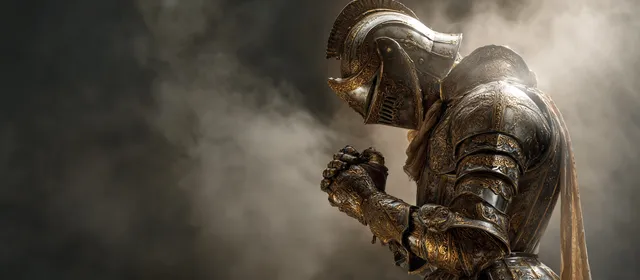
There are moments when faith feels like grasping at invisible threads - when prayers seem to vanish into silence and the evidence of God feels hidden behind the veil of everyday life. Yet, those are often the very moments when faith takes its deepest root. Believing in a God you cannot see isn't about denying reality; it's about trusting a deeper, unseen reality that holds everything together. But how do we do that in a world that prizes what can be measured, quantified, and proven? Why believe in God when you can't see Him?
The Cry for Something Real
Inside every human heart is a longing for something - or Someone - beyond ourselves. We may try to fill that ache with achievement, pleasure, or possessions, but none of it fully satisfies. Ecclesiastes 3:11 tells us that God has "set eternity in the human heart." No matter how advanced our science or how connected our world becomes, that eternal longing remains. We were made for relationship with the unseen Creator.
But let's be honest: faith can sometimes feel fragile. We want to touch, see, and know. And yet, even in those fears and doubts, something inside us still whispers that there must be more - more than what our eyes can take in or our minds can reason out. That whisper is the echo of eternity, calling us home.
Faith in the Invisible
Hebrews 11:1 defines faith as "the assurance of things hoped for, the conviction of things not seen." That's not blind optimism or wishful thinking; it's a grounded confidence that what God has promised is more real than what we can currently perceive. Every believer-Abraham, Moses, Mary, Paul-had to walk through seasons of not seeing, of waiting, of trusting God's unseen hand.
When Abraham left his homeland, he didn't have a GPS coordinate - he had a promise. When Mary accepted the message of the angel, she couldn't see the outcome - she had a word from God and the courage to believe it. Faith has always been relational, not merely intellectual. It's not just believing that God exists; it's choosing to trust that He is who He says He is, even when your eyes say otherwise.
Seeing with the Eyes of the Heart
Paul prayed that believers would have the "eyes of [their] heart enlightened" (Ephesians 1:18). That phrase is not poetic fluff - it's spiritual reality. Human sight is limited; spiritual sight, however, perceives God at work even when nothing seems to be happening. Think of the prophet Elisha's servant in 2 Kings 6, terrified by the enemy army surrounding them. Elisha prayed, "Lord, open his eyes so that he may see," and the young man suddenly witnessed the hills filled with heavenly chariots of fire. The power and presence of God were always there - just unseen until faith opened his vision.
Creation's Whisper: God Revealed in the Ordinary
Sometimes, seeing God begins with slowing down. Psalms 19 declares that the heavens themselves "proclaim the glory of God." From the complexity of a leaf to the stretch of a night sky, creation sings of a Creator. We may not see His face, but His fingerprints are everywhere. Every star, every breath, every beat of the human heart points beyond the visible world to the One who sustains it.
In a culture that trains us to see only what can be posted, scanned, or shared, this awareness is radical. To look at a sunrise and sense divine artistry - that is faith in motion. To hear a child's laughter and feel heaven close - that's evidence unseen yet profoundly real. We don't need to see God's face to know His touch.
When God Feels Silent
For many of us, the hardest time to believe is not when we're surrounded by distractions, but when we're surrounded by silence. The moments when prayer feels like an unanswered voicemail, when tragedy strikes, or when suffering seems to mock faith - those are the seasons when invisibility feels unbearable. Even Jesus experienced that sense of divine distance on the cross when He cried, "My God, my God, why have you forsaken me?" (Matthew 27:46). But that moment was not abandonment. It was the very fulfillment of God's plan - redemption being written in the dark.
Faith in the Silence
God often moves most profoundly in what feels like stillness. Think of seeds buried beneath the soil - unseen, yet teeming with life. The silence of God doesn't mean His absence; it often signals preparation. In those spaces where nothing seems to happen, faith grows muscle and endurance. We learn not just to believe in God's power, but to trust His heart.
When you can't see God, ask yourself: what has He already shown me? Look back at the moments of provision, rescue, comfort, and quiet assurance. God's past faithfulness becomes the lens through which we trust His future promises.
The Evidence of a Changed Life
Faith leaves traces. The invisible God reveals Himself through visible transformation. When love softens a hardened heart, when forgiveness defeats bitterness, when hope rises from despair - that is God in motion. You may not see His form, but you can see His fruit.
Throughout history, countless believers have lived lives so luminous they defy mere human explanation. Think of Corrie ten Boom forgiving her captors after the horrors of a concentration camp, or of missionaries giving their lives to serve forgotten corners of the world. Their faith wasn't a moral hobby; it was the living evidence of the unseen God alive in them. As Jesus said, "By their fruit you will recognize them" (Matthew 7:16).
Faith Expressed in Love
Paul wrote that "the only thing that counts is faith expressing itself through love" (Galatians 5:6). That means every act of compassion, every step of obedience, every quiet prayer whispered for another - all become visible fingerprints of an invisible God. Belief is more than mental agreement; it's embodied trust. The world may not see God directly, but it can see Him through us when our actions mirror His character.
Doubt Isn't the Enemy of Faith
It's comforting to remember that even the saints wrestled with unseen realities. Thomas, often labeled the "doubting disciple," wanted proof before he believed the resurrection. Yet when Jesus appeared and invited him to touch His wounds, Thomas responded not with shame, but with worship: "My Lord and my God" (John 20:28). Jesus' gentle correction wasn't condemnation-it was an invitation: "Blessed are those who have not seen and yet have believed."
Doubt, handled with honesty, can become the doorway to deeper faith. Faith doesn't require eliminating all uncertainty; it means trusting God in the midst of it. When you carry doubt to God rather than running from Him, you give Him room to reveal Himself in ways you could never orchestrate alone.
Living the Unseen Reality
Believing in God when you can't see Him also means training your spiritual senses to notice Him in places others overlook. Faith invites us to live differently: to forgive when it's undeserved, to hope when hope seems foolish, to love enemies, to pray in the dark. This is no naive idealism - it's the substance of heaven breaking into earth through ordinary lives. Each act of trust rewires our hearts to see the unseen more clearly.
Walking by Faith, Not by Sight
Paul's declaration in 2 Corinthians 5:7 - "We walk by faith, not by sight" - isn't a command to ignore reality. It's a reminder that ultimate reality is anchored in God's presence and promises, not our perception. This means our circumstances may blur, but His character does not. We walk forward, not because we can see every step, but because we know Who holds the path.
When Seeing Isn't Believing - Believing Is Seeing
In the end, the paradox of faith is this: believing opens the eyes of the soul. We often assume that sight leads to belief, but in God's kingdom, it works the other way around. Belief leads to true sight. When we trust Him, even faintly, He reveals Himself in ways that aren't visible to the natural eye - through peace that surpasses understanding, joy that endures pain, love that defies cynicism.
Faith turns the invisible into the unmistakable. It is how we begin to perceive the fingerprints of grace on every ordinary day, how we see beauty in ashes, and how we recognize divine purpose even in detours. We don't believe because we see; we see because we believe.
Closing Reflections: The Gift of Trust
To believe in God when you can't see Him is not failure - it is faith at its finest. Anyone can trust what they can touch, but it is sacred to trust what only the heart knows is real. The Bible's story is filled with people who walked through unseen valleys and were met by unseen hands. Their quiet courage still echoes today, whispering to every doubting soul: "Keep walking. Keep trusting. He's closer than you think."
Each sunrise is another invitation to see beyond the visible horizon - to believe that the God who shaped galaxies also shapes your tomorrow. In a world that demands evidence, faith stands as a radiant defiance, proclaiming that unseen does not mean unreal. It means eternal. And one day, the promise of 1 Corinthians 13:12 will come true: "Now we see only a reflection as in a mirror; then we shall see face to face."
Until that day, hold on to the invisible threads. For they are stronger than steel, woven by the hands of a God who has never stopped being near. Faith doesn't erase the mystery; it rests in it - and discovers, again and again, that the unseen God is the most real presence of all.