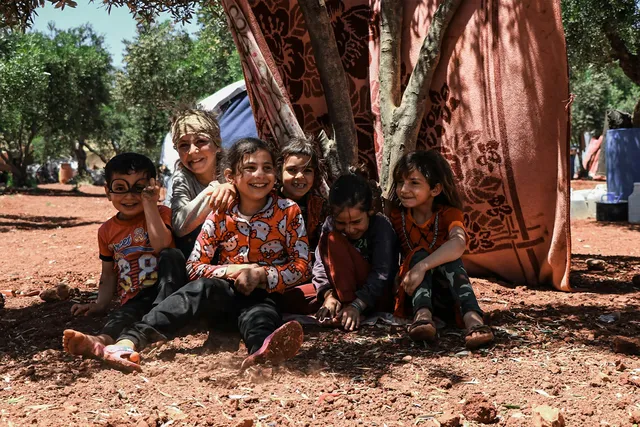
There are moments when the world seems to tilt off its axis. Earthquakes flatten cities. Wars displace millions. Pandemics sweep across nations. Faces crumple under grief that words cannot contain. In those moments-when tragedy thunders across the headlines and silence fills the spaces where laughter once lived-faith can feel fragile. And yet, it is in those same heartbreaks that the heartbeat of God can sometimes be heard most clearly, steady and sure beneath the noise.
The Shock of Pain in a World That Still Belongs to God
Every generation faces its own measure of loss, and every believer wrestles with the ancient question: Where is God when tragedy strikes? This question is not new. It trembles on the lips of Job, who tore his robe and fell to the ground saying, "The Lord gave and the Lord has taken away; may the name of the Lord be praised" (Job 1:21). It echoes in the cries of the psalmists, who poured out anguish and confusion, not because they doubted God's existence, but because they trusted Him enough to bring their questions to His throne.
When global crises erupt-whether natural disasters, wars, or humanitarian catastrophe-it's easy to feel as if God has withdrawn. But Scripture whispers another truth: pain is not proof of abandonment. Rather, it's often the stage upon which grace takes on its full and radiant light.
The God Who Enters the Ruins
At the heart of Christianity stands a cross-a brutal symbol of suffering that also shimmers with redemption. The God we follow is not aloof from our heartache. He entered into humanity's darkest hour. At Calvary, He didn't observe suffering from a distance; He hung in it, for us, and with us. When global calamity strikes, we remember that our God is not unfamiliar with pain. He still walks the dusty streets of shattered cities through the compassion of His people, still weeps over the losses that shake our faith, and still redeems what looks irreparable.
Emmanuel in the Midst of Crisis
In every crisis, the name Emmanuel-"God with us"-takes on renewed meaning. That presence isn't always dramatic. Sometimes it's quiet as a neighbor knocking at a door with a loaf of bread, or a nurse pulling another long shift because compassion won't let her rest. When the light seems gone, the smallest acts of love are proof that God is still present, working through willing hearts.
Faith Under Fire
Crises have a way of shaking what we thought was solid. Faith can bend under the weight. Yet, Scripture shows us that endurance is not born in comfort. It's forged in the furnace of trial. The apostle Peter wrote to believers who faced persecution, encouraging them that their tested faith was of greater worth than gold (1 Peter 1:7). That same truth echoes today-our suffering world still refines believers into radiant testimonies of endurance and grace.
In villages scorched by conflict, in hospitals overflowing after disaster, stories emerge that defy despair. A pastor who continues to preach among ruins. A mother holding hands with strangers in prayer amid the rubble. Faith under fire burns with a clarity that comfort rarely produces. It doesn't deny pain; it dares to trust God through it.
Strong Roots in the Storm
Jesus told of the man who built his house on the rock (Matthew 7:24-25). When the storm came-and it always does-the foundation made the difference. The faith that endures global crises is not decorative or convenient. It is rooted in relationship, in the unchanging reality of who God is. Before the storm ever breaks, we are invited to sink our roots deep in His Word, in prayer, in community. When destruction comes, those roots hold fast.
The Ministry of Lament
Too often, believers feel the pressure to skip directly from grief to praise-as if sadness signals spiritual failure. Yet Scripture gives us the language of lament: an honest dialogue with God in our despair. Psalms like 42, 88, and the book of Lamentations itself testify that lament is not the absence of faith; it is an act of faith. It brings raw emotion into God's presence, trusting that He can bear the full weight of our sorrow.
In times of global tragedy, the church becomes a collective voice of lament. We cry out on behalf of the suffering, not as those who have lost hope, but as those who refuse to turn away. In doing so, we mirror Christ, who wept at Lazarus's tomb even knowing resurrection was minutes away.
When Prayer Feels Like Ashes
During overwhelming loss, prayer can feel like whispering into a void. We want heaven to thunder in response, and sometimes it remains still. But silence doesn't mean absence. In Romans 8:26, Paul writes that when we do not know how to pray, "the Spirit Himself intercedes for us with groanings too deep for words." Even our wordless prayers become instruments of grace in the hands of God.
Prayer is less about changing circumstances and more about remaining connected to the One who does not change. It steadies our trembling hearts and keeps our gaze lifted even when everything around us seems to fall apart.
Love in Action
It's one thing to privately trust God during crisis-it's another to represent Him actively among the suffering. From the earliest days of the church, when believers risked their lives to care for the sick during ancient plagues, Christ's people have been called to incarnate love in tangible ways. Every act of mercy makes visible the invisible heart of God.
In times of global suffering, Jesus's words echo again: "Whatever you did for one of the least of these brothers and sisters of mine, you did for me" (Matthew 25:40). Compassion becomes the currency of heaven in a broken world. We find God not only in whispered prayers, but in shared meals, rebuilt homes, and wounds wrapped in care.
The Witness of Presence
Sometimes, the greatest gift we can offer the world in crisis is presence-choosing not to rush past another's pain. The ministry of presence does not rely on eloquent answers. It simply mirrors the heart of Christ, who showed up, sat with the broken, and loved them where they were. In that quiet solidarity, God's healing begins to flow.
Redeeming the Narrative
Global crises often leave behind stories of devastation, but they also open unexpected chapters of redemption. Out of wreckage rise movements of reconciliation, ingenuity, and compassion that reshape communities. Even when outcomes don't change as we wish, God is still writing His story through human faithfulness.
Consider Joseph in Genesis-a man betrayed and imprisoned, yet later able to say, "You meant evil against me, but God meant it for good" (Genesis 50:20). That tension between evil and divine providence is the pulsebeat of redemption. We may not yet see how our century's tragedies will reveal God's glory, but faith assures us they will. He wastes nothing, not even the world's deepest wounds.
Hope Beyond Headlines
The news cycle favors despair. Wrongs seem louder than rights. But believers hold a different narrative-the gospel of light that darkness cannot overcome. When tragedy multiplies, our calling is not merely to survive, but to embody hope. Hope that rebuilds hospitals. Hope that adopts the orphaned. Hope that believes, against all odds, that resurrection is still possible.
This hope isn't naïve optimism; it's a theology anchored in the risen Christ. Because He walked out of His tomb, every place of death can whisper life again. Because He still reigns, the chaos of our times cannot dethrone love. Hope, for the Christian, is not denial-it is defiance.
Living Faithfully in an Age of Anguish
How then shall we live? Perhaps with humility to acknowledge mystery, with courage to act in compassion, and with steadfastness to trust that our God still holds history. We can turn anxious energy into intercession, despair into creative service, fear into fellowship. As the world groans, the church can sing-not because we are blind to suffering, but because we believe in a Savior who transforms it.
The journey through global crisis is not an easy pilgrimage. Yet every step can become holy ground if we walk it aware of Christ beside us. Somewhere between the ruins and the sunrise, we discover that loss has not written the final line. Love has.
A Closing Reflection: The Light That Remains
When the world shakes again-and it will-remember this: the light of God is never extinguished, only hidden for a moment behind clouds of sorrow. One day, those clouds will part. In the meantime, He asks us to be candles against the dark-fragile, flickering, but faithful. Together, our small lights form constellations of hope that guide weary travelers home.
So when tragedy strikes-whether globally or within your own heart-lift your eyes. The same God who wept over Jerusalem also rose from the grave. The same Spirit who hovered over the formless deep still moves upon the chaos of our world. And the same Savior who calmed the storm still whispers, even now, "Peace, be still."
Hold fast to that peace. Live it boldly. And let the world see, through your faith, that God is not absent in crisis-He is powerfully, tenderly, unmistakably present.