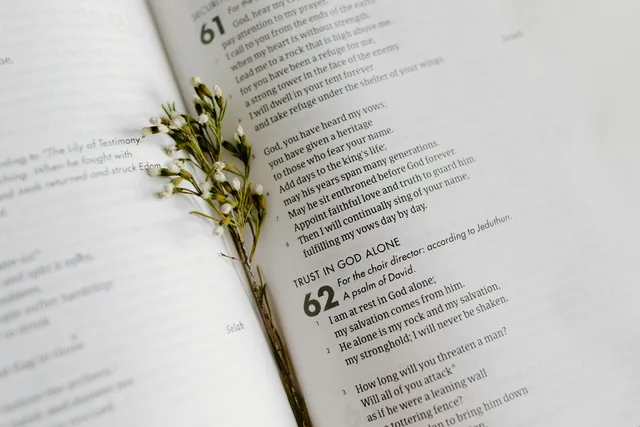
There are seasons in the life of faith that can't be neatly explained. You bow your head, whisper your prayers, and wait-but heaven feels quiet. The words feel weighty and the silence, heavier still. It's as if your voice disappears into the ceiling, unanswered and unseen. For the person who loves God but can't feel His nearness, this silence can spark something tender and troubling: spiritual anxiety-the ache of wondering whether God is still listening at all.
The Quiet Between Prayers
Every believer eventually walks through a chapter when prayer feels hollow. The rhythm that once felt natural-praise, thanksgiving, petition-suddenly feels mechanical. Some wake early to pray and feel only the hum of the air conditioner. Others sit in church surrounded by voices but sense nothing stirring in the soul. A quiet panic begins to whisper: Has something gone wrong between me and God?
This sense of absence can be frightening. We are taught to believe that God hears and loves us. Scripture promises it over and over again: "The Lord is near to all who call on Him" (Psalms 145:18). But what do we do when that nearness doesn't feel real?
When Feeling Fails Faith
Faith is not the absence of doubt, but the determination to seek God in spite of it. The silence of prayer isn't proof of spiritual failure-it's part of the journey of trust. Feelings are meaningful, but they are not the foundation of belief. Even the psalmists cried out, "How long, Lord? Will You forget me forever?" (Psalms 13:1). Doubt doesn't cancel devotion; it often deepens it.
In these quiet spaces, the Spirit is still at work, shaping us to seek the Giver rather than only His gifts. It is a holy kind of hunger that drives the soul deeper into dependence, not away from it.
Understanding Spiritual Anxiety
Spiritual anxiety is rarely about one thing. It might rise from exhaustion, grief, guilt, perfectionism, or even the honest weight of unanswered prayer. For some, it's the result of a subtle comparison-seeing others talk about "hearing from God" and feeling defective by contrast. For others, it's born from weariness in a long season of waiting.
Anxiety tells a story of uncertainty. It feeds on the unknown, and there's nothing more unknown than a silent heaven. Yet in the very place where anxiety grows, faith can bloom. Because faith, by definition, lives where evidence fades. It holds out hope when proof is absent. It believes the promise even when there's no response on the line.
The Soul's Unseen Work
Consider a seed buried under dark soil. It looks lifeless, forgotten. But under the surface, an unseen process is at work-roots are forming before the sprout breaks the surface. In the same way, God often does His deepest work beneath the silence of our waiting. His transformation starts underground, before we notice growth.
When prayer feels useless, something sacred is happening: our motives are being purified, our endurance strengthened, and our hearts quietly reshaped to desire God for who He is, not only for what He does.
The Witness of Scripture's Silence
God's people have known this silence for centuries. Abraham waited twenty-five years for Isaac, his prayer a long echo in the desert. Hannah prayed year after year for a child before the answer arrived. Even Jesus, in His darkest moment, cried out, "My God, my God, why have You forsaken me?" (Matthew 27:46). The Bible doesn't hide these silences-it records them as evidence of faith refined through waiting.
These stories remind us that God's silence is not God's absence. It is a space pregnant with purpose. Silence, in Scripture, rarely means indifference; it often precedes Revelation. Between the Old and New Testaments lie four hundred years of divine quiet-and then, in an unexpected moment, an infant's cry in Bethlehem broke the stillness forever. The silence gave way to salvation.
Job's Questions and God's Whispers
Few people knew the anxiety of silence like Job. He begged God for answers, for justice, for meaning amid loss. Heaven seemed closed. Yet when God finally spoke, He didn't give explanations-He gave a reminder of His sovereignty. Job discovered that peace doesn't always come through understanding, but through awe. Sometimes what the heart craves isn't information, but presence.
Practices for the Silent Season
When the stillness lingers, how do we keep our faith from unraveling? There's no formula, but there are holy habits that help us stay grounded.
1. Return to Simple Prayers
When words feel inadequate, simplicity can carry truth deeper than eloquence ever could. The prayer of the desperate and the prayer of the weary are equally precious to God. Whispered words like, "Lord, I'm still here," "Help me trust You," or simply, "Jesus," are enough. The Spirit intercedes where language fails (Romans 8:26).
2. Anchor Yourself in Scripture
When you cannot sense God's voice, let His written Word speak. Read the Psalms aloud. Linger over a single verse. Sometimes one line is all that holds a heart steady. Reading the Bible when you least feel like it isn't hypocrisy-it's faith in practice. It's how we remind the soul of what silence tries to make us forget: that God is faithful even when He feels far.
3. Lean on the Body of Christ
Isolation amplifies anxiety. Community, however imperfect, grounds us in shared hope. Speak your struggle to trusted believers. Let others carry your name into prayer when you cannot. There's a strength that comes from borrowed faith-those moments when someone else's confidence in God sustains your faltering one.
4. Notice God in the Ordinary
Silence sometimes pushes us to rediscover God's presence in subtle places: the sunrise breaking through the blinds, a conversation that arrives at just the right moment, a Song of Songs that brings peace. Revelation often hides in ordinary rhythms. When you open your awareness to beauty, gratitude becomes the new language of prayer.
When Waiting Becomes Worship
Waiting, when offered to God, becomes worship. It's the surrender of our timeline for His. The anxious heart says, "I can't bear this silence." The trusting heart, often trembling, whispers instead, "I will wait here, Lord, even if You say nothing." That posture transforms stillness into sanctification. It turns the absence of answers into the cultivation of intimacy.
Isaiah wrote to a people caught between promise and fulfillment: "Those who wait on the Lord shall renew their strength" (Isaiah 40:31). Waiting doesn't wear us out-it remakes us. It teaches us the slow, unhurried pace of divine timing. The anxiety that once tightened our chest can, over time, become a quiet, trembling confidence in the One who sees what we cannot.
Finding God Again in the Stillness
One of the mysteries of spiritual growth is that the more deeply we know God, the less dependent we become on constant reassurance. The silence that once terrified us becomes a trusted friend, the backdrop against which His character shines even brighter. It's not that the fear of distance disappears-it's that faith learns to rest even in uncertainty.
In the end, the silence of prayer invites us into a deeper knowing-one that isn't built on emotion, but on enduring relationship. The Lord who seemed far has been near all along, holding the quiet space like a father who listens tenderly as His child struggles to find words.
Grace for the Anxious Believer
If this is your current season-if your prayers feel like unanswered voicemails in heaven-take heart. You are not failing at faith. You are being formed by it. God's silence is never punitive; it's instructive. The Shepherd hasn't abandoned you in the valley; He's teaching you to recognize His presence without the noise of constant reassurance.
So breathe. Keep praying, even if the words come out shaky. Keep showing up to worship, even if your voice can barely rise above a whisper. Keep trusting that God is working in ways you may never see. Silence is not a sign that He's left-you may simply be standing in holy ground, listening for a whisper that's smaller, gentler, and truer than you expected.
Hope Beyond the Quiet
When prayer feels silent, love speaks in quieter ways. Through patience, through endurance, through small daily faithfulness. It's in the steady beating of your heart, the slow healing of fear, the persistence of hope when reason says there is none. These are not the absence of God's answers-they are His answers, planted in time, unfolding at His pace.
Every silent prayer still reaches heaven. Every anxious sigh is noticed by the One who knit you together. The silence will not last forever. And when His voice finally breaks it-when the dawn comes-you may realize He has been speaking all along, not in thunder, but in the whisper of grace that kept you from giving up.
Until then, keep praying. Keep waiting. Keep walking by faith-and let the quiet become the classroom where trust learns to breathe.