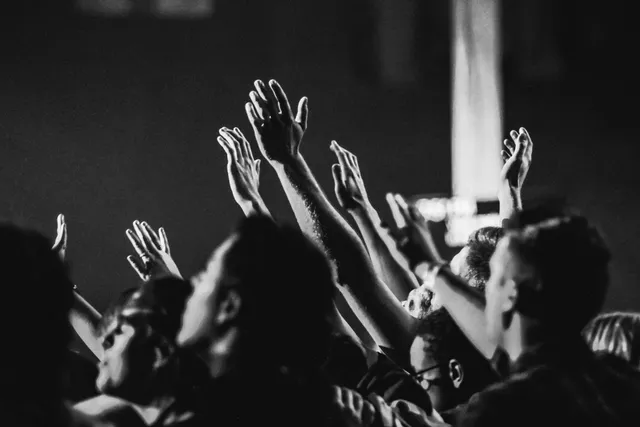
The church has never been a building. It has always been a people-a living, breathing body bound together by faith in Jesus Christ. Yet in every age, God's people have found themselves asking some version of the same question: What will tomorrow's church look like? Will it gather more in homes or on screens? Will it hum quietly under the hum of technology, or return to simpler, slower rhythms? Whatever form it takes, one thing is certain: the church of the future will still be anchored to the same Lord who promised, "I will build my church, and the gates of hell shall not prevail against it" (Matthew 16:18).
The Unchanging Center
Before imagining what's new, we must remember what never changes. The church of the future will still revolve around Christ Himself. Jesus is not just the founder of the church-He is its cornerstone. Long before projections and innovation, the heartbeat of the church was, and always will be, love for God and love for one another.
All through Scripture, every generation of believers faced change-migration, persecution, exile, revival. Yet amid shifting landscapes, God always raised up a remnant who worshipped Him in spirit and in truth. As the writer of Hebrews reminds us: "Jesus Christ is the same yesterday and today and forever" (Hebrews 13:8). The future church, then, will be both ancient and new-a body that keeps discovering creative ways to carry an ageless truth.
The Reconnected Church: Community Beyond Walls
In a rapidly digitalizing world, technology both connects and isolates. Already, many congregations meet online, share devotionals through apps, or stream live worship to believers from remote corners of the world. But will future discipleship happen primarily through screens? Possibly not exclusively. If the pandemic era taught us anything, it's that while technology can facilitate community, it cannot replace presence.
The church of the future will likely blend digital and physical, forming what some call a "hybrid fellowship." Imagine believers worshipping in a small home group while simultaneously connected to a global network of prayer partners. Yet, beyond the technology, believers will rediscover the profound power of shared meals, eye contact, and hands joined in prayer. The early church met "day by day, breaking bread in their homes" (Acts 2:46). That rhythm may return with renewed depth-community rebuilt one table at a time.
Rediscovering Fellowship in a Fragmented World
Western society often celebrates individuality at the expense of connectedness. But the gospel draws people not just to Christ, but into His body. The future church may move away from large, impersonal crowds and toward smaller, more intentional circles of belonging. Intimacy and accountability-two ancient virtues-will once again define discipleship. The more fragmented our world becomes, the more vital the church's ministry of reconciliation will be.
A Mission Without Borders
In every generation, God sends His people on mission. But the mission field of the future may not look like yesterday's map. The nations are at our doorstep. Migration, globalization, and communication have made local congregations far more diverse. Future churches will reflect the beauty of Revelation's vision: "a great multitude...from every nation, tribe, people, and language" (Revelation 7:9).
This diversity will shape worship, leadership, and ministry styles. Congregations will not only translate their messages into many languages, but also their hearts into many cultures. To do this well, believers must cultivate humility-the humility to listen, to learn, to relinquish traditions that hinder others from experiencing the gospel fully. The church of the future will be boldly missionary not because it travels far, but because it loves widely.
The Church as a Healing Presence
The church of tomorrow will be called to minister not only to spiritual hunger, but to emotional exhaustion. We live in an anxious age-loneliness rising, cynicism deepening, hope thinning in the air we breathe. And yet, this is where the light shines brightest. The world is searching for the kind of peace that only Christ gives.
Expect the future church to look more like a spiritual hospital than a lecture hall. There will be spaces for rest, confession, vulnerability, and intercession. Pastors and laypeople alike will be trained in compassion, not merely communication. Mental health ministry may become integral to gospel witness, echoing Jesus's ministry of touching lepers, listening to the brokenhearted, and restoring the outcast.
Healing as Worship
When the church lives as a place of wholeness, healing itself becomes a form of worship. The future church will lay hands not only on the sick but also on the weary and the wounded. It will become a house of reconciliation between generations, races, and ideologies. In a divided time, prophetic gentleness will become as important as prophetic boldness.
Leadership Reimagined: Shepherds, Not Celebrities
As authority structures shift, the church will also rethink leadership. The celebrity pastor model, prominent in recent decades, is already fading. The leaders of the future church will be shepherds who smell like their sheep. They will build trust not through platforms, but through authenticity.
Expect leadership to become more collaborative, gifts-based, and Spirit-led. Spiritual authority will rest less on titles and more on character. The story of Jesus washing His disciples' feet will take on renewed significance (John 13:14-15). True greatness in the coming church will look like service at ground level. The leaders who thrive will be those who kneel first.
Worship that Breathes
The soundtrack of the future church may range from traditional hymns to spontaneous songs composed in living rooms. Worship will continue to evolve as new languages, cultures, and creative expressions meet around a single truth: Jesus is Lord. The style will matter less than the spirit-the worshippers' sincerity, humility, and hunger for God's presence.
Worship may also become more participatory. Instead of an audience watching a stage, the future will see congregations more deeply involved-spoken prayers, testimonies, tactile expressions like art and silence, even gardens tended as acts of praise. The worship of the future church will be life-integrated, not event-centered.
Faith in the Public Square
As social and cultural currents grow more complex, the church will be called to bear witness in compassion and truth. The future church may not hold cultural privilege, but it will hold divine purpose. Margins often become the place where God's creativity bursts forth. The early Christians had no political influence, yet they changed the world by embodying a different kingdom.
Tomorrow's believers will live out faith not as dominance, but as presence. In workplaces, classrooms, neighborhoods, and online spaces, Christians will bear witness in small but deeply faithful ways-justice pursued with humility, mercy extended without conditions, hope spoken when others see only decline. The church of the future will not run from the world-it will quietly infiltrate it with grace.
The Return of Wonder
In a data-saturated era, we risk losing our capacity for awe. Future believers, immersed in constant information, will crave mystery again. The church's answer will not be to compete with entertainment-but to reawaken wonder. Spaces of silence, prayer, and sacrament will draw hearts back to God's transcendence.
There will be a rediscovery of sacred rhythms: Sabbath keeping, liturgical beauty, spiritual disciplines practiced not out of duty but desire. The next generation will hunger less for innovation and more for authenticity-for a sense that the holy is still in the midst of us. In the ancient story of Moses removing his sandals before the burning bush lies a prophetic glimpse of tomorrow: a church learning once more to tremble in the presence of the living God.
A Church Alive with Hope
What will the church of the future look like? It may meet in cafés, on mountain tops, in rented halls, or in virtual rooms. It may use advanced tools to share the Word or simple bread broken between friends. But its essence will not change-it will still beat with the heart of Christ. It will still carry the cross as its banner and the resurrection as its Song of Songs.
The future church will be light in dark places, family in lonely ones, and witness in weary ones. And when the Lord returns-as He surely will-He will not be seeking polished programs or impressive platforms. He will be looking for faith. May we, even now, be forming that future-one prayer, one act of love, one surrender at a time.
The future church is not something we wait for; it is something we are becoming. Every step of obedience today shapes the testimony of tomorrow. Let us build it together, not in our own strength, but in the enduring power of the Spirit who makes all things new.