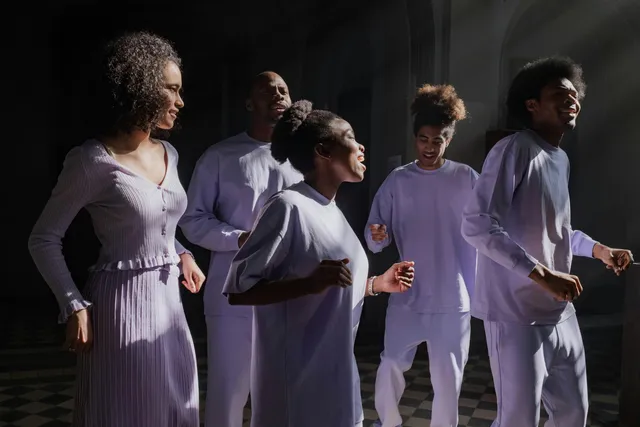
What does it really mean to worship God? Not merely sing, not simply gather or recite prayers, but to worship - deeply, truly, and biblically. We often use the word so freely that its richness can fade into routine. Yet when Scripture speaks of worship, it speaks of a heart posture - a life surrendered in awe before the living God. True worship, according to the Bible, is far more than a Song of Songs; it is the rhythm of a heart fully aligned with its Creator.
The Heartbeat of Worship
In John 4, Jesus meets a Samaritan woman by a well and, in their conversation, redefines worship. She wants to debate geography: whether worship should take place on Mount Gerizim or in Jerusalem. But Jesus lifts the conversation from place to posture. "True worshipers will worship the Father in spirit and truth" (John 4:23). Those words echo like a trumpet call through the centuries. They remind us that genuine worship is not confined by walls or traditions, but is anchored in sincerity and reality before God.
"In spirit" means that worship is not a purely external act. It springs from the inner being - the part of us that communes with God. "In truth" means that our worship must align with who God is as revealed in His Word. It's not emotion for emotion's sake; it's adoration grounded in Revelation.
More Than a Song
Modern worship often centers on music-and rightly so, for music is a powerful language of the soul. The Psalms overflow with songs of praise and lament. But biblical worship can never be reduced to melody alone. Israel sang, yes, but they also offered sacrifices, made confessions, served their communities, and obeyed God's commands as acts of worship. Romans 12:1 expands this understanding: "Offer your bodies as a living sacrifice, holy and pleasing to God-this is your true and proper worship."
In other words, worship is not something we 'attend' but something we live. The truest expression of worship happens when the ordinary becomes sacred - when washing dishes, working diligently, forgiving someone, or serving unseen all become ways of honoring God.
The Danger of Empty Ritual
The Scriptures bristle at empty, mechanical religion. The prophet Amos conveys God's lament: "Even though you bring me burnt offerings and grain offerings, I will not accept them ... But let justice roll on like a river, righteousness like a never-failing stream!" (Amos 5:22-24). The lesson resounds: Worship without obedience is noise without melody.
True worship calls for integrity. It asks whether our lips and lives match. Are we singing about surrender while clinging to control? Are we declaring God's holiness while ignoring His guidance? These are uncomfortable questions - yet deeply loving ones, because God desires truth in the inward parts.
The Posture of Awe
To worship biblically is to be confronted by the majesty of God and undone in His presence. Isaiah knew this in the temple when he cried, "Woe to me! I am ruined! For I am a man of unclean lips" (Isaiah 6:5). In an instant, his lips are purified, his guilt taken away, and his mission begins. Worship leads to cleansing and calling.
When we truly see God, we cannot remain unmoved. His holiness exposes our sin, yes-but His grace restores our hope. Like Isaiah, we find ourselves both humbled and sent, both broken and made whole. True worship reduces self and magnifies God.
The Cross at the Center
The heart of Christian worship is the cross. Every expression of praise finds its footing there, because the cross reveals the ultimate worth of God. Here we see His justice, mercy, love, and holiness converge. No temple ritual or choir anthem could ever compare to the depth of what took place on Calvary.
When we worship through Christ, we come not as distant strangers but as beloved children. Through His sacrifice, the veil that once separated humanity from God was torn from top to bottom (Matthew 27:51). That tearing was both a tragedy and an invitation - the Father opening His house to His sons and daughters.
Worship as Response
Because of the cross, worship is never our initiative; it is always a response. We don't conjure it; we return it. We love because He first loved us. We sing because He gave us a Song of Songs of redemption. We bow because He stooped first to lift us. True worship begins with gratitude for grace.
This reshapes the way we approach Sunday gatherings. We no longer come to "get something" out of worship, but to give ourselves completely to the One who gave everything for us. It is less about performance and more about surrender.
Worship That Transforms Character
Another measure of true worship is transformation. When Moses came down from Mount Sinai after meeting with God, his face shone with reflected glory (Exodus 34:29). Something about being in God's presence had literally changed his appearance. Paul later writes that "we all, who with unveiled faces contemplate the Lord's glory, are being transformed into his image" (2 Corinthians 3:18).
That same promise holds today. When we worship in spirit and truth, we begin to resemble the One we adore. Worship realigns our desires, recalibrates our priorities, and restores our love. It shapes us into people of humility and compassion, joy and faithfulness. In the light of His presence, pride loses its grip and cynicism melts away.
Community in Worship
True worship also draws us into true community. When the early church gathered, they broke bread, prayed, and lifted their voices together. Their worship was not sterile performance but living fellowship. Acts 2 records that as they worshiped, "everyone was filled with awe, and many wonders and signs were performed."
Corporate worship reminds us that we are not isolated believers but one body. Each voice adds depth to the harmony of praise. When one rejoices, all rejoice; when one weeps, all bear the burden. Worship unites hearts because it centers them on One greater than all of us combined.
The Gift of Diversity
In many churches today, worship styles vary, sometimes sparking debate. Yet the beauty of biblical worship is that it transcends style. Whether through hymns or modern choruses, silence or celebration, kneeling or dancing - what matters most is the heart. Revelation 7 gives us a glimpse of heaven: a vast multitude from every nation, tribe, people, and language, crying out together before the throne. That is the destiny of worship - unity without uniformity, many voices echoing one truth.
The Everyday Altar
If the temple of old had altars built of stone, the temple now is the believer's life. Paul tells us that we ourselves are the temple of the Holy Spirit (1 Corinthians 6:19). Each day provides a fresh opportunity to worship in the ordinary moments - through honesty, kindness, perseverance, and love. When we forgive others, love our enemies, or serve someone unseen, we lay ourselves on that everyday altar.
In this daily living, worship becomes a rhythm instead of an event. We discover that the Spirit's presence is not limited to sacred spaces. The whisper of prayer while commuting, the moment of quiet thanksgiving before a meal, the courage to act with integrity - all of these are worship. The soil of true worship is cultivated in the mundane.
How True Worship Changes the World
Authentic worship cannot help but spill outward into witness and justice. When hearts are rightly aligned with God, compassion naturally flows toward others. Think of Mary of Bethany, who poured her costly perfume at Jesus' feet (John 12:3). Her act of worship was both beautiful and practical. It filled the room with fragrance - a symbol of wholehearted devotion that still testifies centuries later.
Likewise, when we pour ourselves out in worship, the fragrance of Christ spreads through our actions. Worshiping communities become places of healing for the broken, grace for the weary, and hope for the lost. True worship doesn't stay in the sanctuary; it leaks into the streets.
The Final Vision
The Bible begins and ends with worship. In Genesis, creation sings in harmony with its Maker. In Revelation, creation's Song of Songs culminates as countless voices proclaim the Lamb's victory. From beginning to end, the story of Scripture is the story of a God worthy of worship and a people learning how to offer it rightly.
This final scene is not quiet reverence but joyful eruption-a celebration perfected in holiness. Every tear wiped away, every wrong made right, and every heart at rest in the glory of God. The Song of Songs will never fade, because its subject never ceases to be worthy.
Living a Life That Worships
So what does true worship mean according to the Bible? It means seeing God as He truly is and responding with all that we are. It means living each moment aware that every breath is a gift, every act an offering. It means surrender over show, transformation over transaction, and adoration over obligation.
When worship moves from our lips into our lives, from Sunday into Monday, it begins to change everything. The world around us takes notice-not of how well we sing, but of how deeply we love. In a culture searching for authenticity, a life of genuine worship becomes a radiant testimony.
May we, then, be counted among those true worshipers Jesus spoke of-people who worship the Father in spirit and in truth. May our lives sing louder than our songs, our obedience shout louder than our words, and our love reflect the very heart of the One we adore.
Let every breath be praise, every act be worship, and every moment be a witness to the glory of God.