Every generation, it seems, looks at the world and feels the tremors of something ending. Wars rage, disease spreads, injustice multiplies, and hearts grow weary. The headlines can feel apocalyptic, and many believers wonder, "Is this it? Are we truly living in the end times?" The question is ancient, yet always timely. The Bible does not leave us without guidance. Its pages speak often-and profoundly-about the end of the world, not as a reason for fear, but as a deep well of hope and preparation for those who belong to Christ.
The End Is Not the End
When Scripture speaks about "the end," it rarely means annihilation. Rather, it means completion, fulfillment, and renewal. In Matthew 24, Jesus tells His disciples about wars, earthquakes, and false prophets, but He reminds them: "The end is not yet." The world as we know it will indeed change, but God's plan is not destruction-it's redemption.
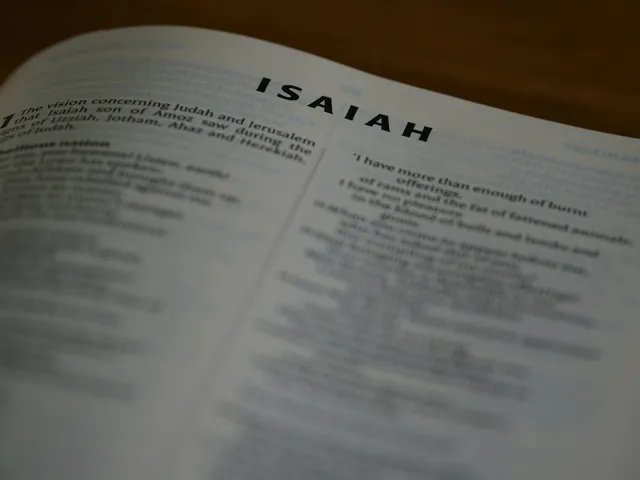
The Bible's vision of the world's end is really about the ushering in of God's perfect kingdom. The old order, corrupted by sin and decay, gives way to a renewed creation. Isaiah foresaw it as a time when "the wolf shall dwell with the lamb" and "the earth shall be full of the knowledge of the Lord" (Isaiah 11:6,9). Revelation echoes this vision when it speaks of a new heaven and a new earth, where "God Himself will wipe away every tear." The end of the world, then, is the end of sorrow, not the end of story.
Jesus' Clear but Compassionate Warnings
Jesus did not shy away from the subject. His Olivet Discourse (Matthew 24-25, Mark 13, Luke 21) is the most extensive teaching we have from His lips about the end times. He spoke with sobering realism: nations would rise against nations, love would grow cold, and deception would abound. Yet through all the warnings, His voice carried compassion, not panic.
"See that you are not alarmed," He said (Matthew 24:6). Those words still cut through centuries of fear-mongering and speculation. The Lord wanted His followers to stay awake-not afraid. The goal was not to calculate dates, but to cultivate faithfulness. "Blessed is that servant whom his master finds doing so when he comes," Jesus said, picturing the faithful believer continuing in love, diligence, and watchfulness, right to the end (Matthew 24:46).
The Parables of Readiness
To drive His point home, Jesus told stories-the wise and foolish virgins, the talents, the sheep and goats. Each story underscored readiness, stewardship, and loving obedience. The oil in the lamps symbolized more than preparedness; it was life lived in continual fellowship with Him. The end of the world, Jesus taught, will expose not only the nations, but the heart of every person.
It is not fear that prepares us for eternity-it is faithfulness. Doing the small, daily acts of obedience and compassion, loving neighbors, forgiving enemies, keeping watch in prayer-these are the ways the believer lives ready for the Lord's return.
The Apostle's Hope: Transformation, Not Terror
When the apostles wrote about the end, they spoke from a place of awe and assurance. Paul referred to Christ's return as the "blessed hope" (Titus 2:13). To believers persecuted, tired, and unsure, he held out the promise that Christ would appear in glory to make all things right. "The dead in Christ will rise first," he wrote to the Thessalonians, "and we who are alive... will be caught up together with them... and so we will always be with the Lord" (1 Thessalonians 4:16-17).
Notice how comfort saturates these words. For Paul, the end of the world is not catastrophe but consummation-the wedding of heaven and earth, the reunion of Savior and saints. The same theme runs through Peter's letters: "According to His promise we are waiting for new heavens and a new earth, in which righteousness dwells" (2 Peter 3:13). The apostles called believers not to panic, but to purity-to live with eternity shaping every choice and word.
Judgment as Restoration
But what about judgment? Scripture is clear: there will be a day of reckoning. Revelation's imagery-the seals, trumpets, and bowls-conveys the weight of divine justice. Yet even this fearsome judgment is righteous and purposeful. It is God setting the world right, removing evil so that goodness may flourish unhindered forever. John's apocalyptic vision is not meant to terrify the faithful, but to assure them that their prayers, their sufferings, their patient waiting have not been in vain.
For the believer, judgment means vindication and renewal. Christ, the Judge, is also Christ, the Redeemer. The scars in His hands, which once bore our condemnation, are the eternal reminder that mercy triumphs over wrath for those who belong to Him.
Signs Along the Way
Across Scripture, the end is accompanied by signs-cosmic, moral, and spiritual. Jesus spoke of earthquakes, famine, and pestilence; Paul spoke of a great falling away; Revelation describes conflict between light and darkness. Yet these signs are not meant for decoding secret timetables. They are, instead, reminders of divine sovereignty. Even as the world convulses, God remains in control. Every shaking is a summons to return to Him, every birth pain an advance signal of coming glory.
Believers throughout history have witnessed such signs-some in their day thought they surely lived in the final hours. Perhaps they did. Perhaps we do. But Jesus' teaching still governs the heart: "Of that day and hour no one knows." The focus is not prediction but preparedness; not when, but who-who will stand, who will trust, who will be found faithfully loving when the Master returns.
Living in the Tension of the "Already and Not Yet"
We live between two horizons: the finished work of Jesus on the cross and the final fulfillment of His kingdom at His coming. This tension-what theologians sometimes call the "already and not yet"-is the atmosphere of Christian life. Christ has already won the victory, yet we do not yet see all things under His feet. That means believers continue to pray, to witness, to serve, knowing that every act of love is an echo of the world to come.
When fear rises, we look back to the resurrection; when weariness sets in, we look forward to His return. The end of the world, in biblical terms, is not an ending to dread but a horizon of hope-the homecoming of creation to its Creator.
The Daily Practice of Expectancy
How, then, shall we live as people awaiting God's promised renewal? The New Testament offers a clear rhythm: hope, holiness, and witness. Peter tells us to be "sober-minded," setting our hope fully on the grace revealed at Christ's appearing (1 Peter 1:13). John urges us to "purify ourselves as He is pure" (1 John 3:3). And Jesus commissions us: "You will be my witnesses... to the ends of the earth" (Acts 1:8).
Each command intertwines: hope fuels holiness; holiness empowers witness. Waiting for Christ is not idle or passive. It is an active longing, a holy expectancy that expresses itself in service, compassion, and integrity. The heart that awaits His coming learns to love the present world enough to serve it well, yet loosely enough not to cling when it passes away.
The Great Renewal: A World Made Whole
The Bible ends not with a grave, but a garden-city. Revelation's closing chapters unveil a redeemed creation, radiant with the glory of God. "Behold, I am making all things new," says the enthroned Christ (Revelation 21:5). That statement captures the entire biblical story in miniature: creation, fall, redemption, restoration. The end of the world is the world's restoration to its intended beauty. Death dies, sorrow ends, light prevails.
When John describes that heavenly city, his language stretches to its limits. Gold like glass. Walls like gems. Gates that never shut. It is poetry more than blueprint-a vision meant to make us ache for home. And yet the most wondrous feature is not the streets or the splendor, but the presence of God Himself. "They will see His face." What the prophets anticipated and the apostles proclaimed will finally be sight, not faith.
What the End Teaches Us About Today
If the Bible's end-time message tells us anything, it is that God is both patient and purposeful. "The Lord is not slow to fulfill His promise," Peter said, "but is patient toward you, not wishing that any should perish" (2 Peter 3:9). The apparent delay of the end is not abandonment; it is mercy. Every new day is another chance for repentance, another heartbeat of grace. The end reminds us how precious the present is.
Knowing the world will one day be renewed does not make this life meaningless-it makes it sacred. Our words, our kindness, our prayers are seeds of the coming kingdom. Faithfulness now is rehearsal for eternity. To believe in the end is to believe that no act of goodness, no tear of intercession, no quiet stand for truth is wasted. Each is gathered up into the grand renewal to come.
Living With Hope Until That Day
We don't have to fear the end of the world, because for those in Christ, it's the beginning of everything we've longed for. Heaven and earth will meet. The timeline of human history will fold into eternity, and everything wrong will be made right. Until then, our call is simple and profound: stay awake, stay faithful, stay full of love.
When Jesus returns, He will not be looking for our charts or predictions. He will be looking for our hearts-hearts burning with love for Him and others, hearts unafraid of tomorrow because they have already surrendered today. That is the posture of hope. That is how the people of God wait for the end: not wringing hands, but open-handed, ready to receive a world made new.
So lift your eyes. The same Lord who first came in humility will come again in glory. And when He does, it will not simply be the end of the world-it will be the dawn of the world we were always meant to inhabit. Until that day, we live with expectancy, courage, and joy, proclaiming with heart and life: "Even so, come, Lord Jesus."