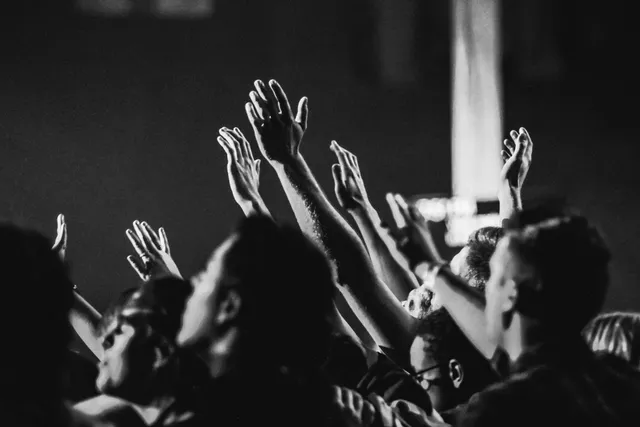
We live in an age both deeply connected and profoundly isolated. Screens link us across continents, yet loneliness remains one of the great quiet burdens of modern life. In such a world, the Bible's vision of community speaks as a healing remedy and a sacred invitation. It calls us not just to exist side by side, but to belong-truly, dearly, eternally-to one another in love.
The Divine Design for Togetherness
The story of community begins not in a church sanctuary but in the garden of Eden. Even before sin entered the world, God declared, "It is not good for man to be alone." Humanity was fashioned for connectedness-to God, to creation, and to one another. Our longing to be known and to belong isn't a flaw; it's a reflection of the heart of the One who made us.
The triune nature of God-Father, Son, and Holy Spirit-is the perfect expression of relational unity. The Christian understanding of community, therefore, flows from divine reality itself. When we gather, encourage, and love one another, we image something of God's eternal fellowship. Community is not a human invention; it's a divine imprint.
Called to One Another
Throughout Scripture, the command to live in community is woven like a golden thread. The Apostle Paul's letters to the early churches are filled with instructions that assume life together. "Bear one another's burdens," "encourage one another," "forgive one another," "submit to one another"-the list goes on. These mutual exhortations form the rhythm of the Christian life.
Community as the Context for Growth
Faith matures best in relationship. We often wish it could be otherwise-that holiness could be an individual project between us and God alone-but the Lord chooses to shape our hearts through one another. Grace is learned in real time: through patience with difficult people, generosity to those in need, and forgiveness toward those who wound us. Ironically, the very things that make community difficult are what make it sanctifying.
Christian maturity happens in the friction and fellowship of shared life.
The Early Church: A Living Example
In the book of Acts, the first believers offer a breathtaking example of communal life. They met daily, shared meals, prayed together, and held their possessions in common so that no one among them was in need. Their unity was not a program but a pulse-an organic expression of hearts knit together in Christ. Their fellowship was so authentic and generous that it drew others in; "the Lord added to their number daily those who were being saved."
Notice how practical their togetherness was. It wasn't merely emotional warmth or spiritual talk. It was embodied love. They sold fields to feed the hungry, opened homes to host prayer gatherings, and met each other's needs before their own. The witness of the early church reminds us that biblical community is both spiritual and tangible. It touches the soul and the body alike.
When Community Hurts
Yet even the first churches struggled. The Corinthians quarreled and competed; the Galatians fractured over law and grace; the Philippians needed reminders to agree in the Lord. True community doesn't avoid conflict-it transforms it. Every disappointment and disagreement becomes an opportunity for grace.
Jesus anticipated this when He prayed in John 17, asking that His followers would be one just as He and the Father are one. He didn't call for uniformity but for unity rooted in love. The strength of biblical community isn't the absence of tension; it's the presence of forgiveness. When we reconcile, we demonstrate that God's love is greater than any offense that divides us.
Restoring Broken Fellowship
Reconciliation is a deeply spiritual act. When we choose to forgive, we imitate the heart of Christ, who welcomed betrayers and doubters back into fellowship. Every healed relationship becomes a living testimony that the gospel is not merely something we preach-it is something we practice. Community is tested in failure but strengthened in mercy.
The Power of Shared Suffering
One of the most profound aspects of Christian community is its ability to carry one another through grief. Paul wrote that when one member of the body suffers, all suffer together. This shared sorrow binds hearts in a way that sermons alone never could. In times of loss or hardship, community becomes the hands and feet of Christ-bringing meals, prayers, and presence when words fall short.
In those moments, something sacred happens: the invisible love of God becomes visible. Community incarnates compassion. It turns belief into flesh-and-blood care. Weep together, Paul says, and rejoice together. Both are acts of worship.
Hospitality as a Holy Practice
Biblical community also blossoms through hospitality. Scripture consistently portrays the home as a sacred place of welcome. Abraham entertained angels without knowing it; Martha and Mary opened their home to Jesus; Lydia hosted one of the earliest house churches. Hospitality is more than good manners-it's a ministry of presence.
When we open our doors and hearts, we echo the welcome of Christ Himself. In a culture captivated by privacy and independence, the courage to invite others in becomes a quiet revolution. Hospitality says: "You matter. You belong. You are loved."
Small Acts, Eternal Impact
Sometimes community doesn't look grand at all. It's a pot of soup during a long week, a text message that says "thinking of you," a prayer whispered over a friend's name. The kingdom often advances through such small, faithful acts. Love multiplies in the ordinary when offered in Jesus' name.
Living as the Body of Christ
Paul calls the church the "body of Christ," a metaphor that captures both unity and diversity. Each member is unique, yet none can thrive apart from the whole. Eyes need hands. Hands need feet. The lone believer, isolated and self-sufficient, is as unnatural as a severed limb. We are made to function together.
When we grasp this truth, community becomes not optional but essential. Every gathering of believers-whether around a kitchen table or in a sanctuary-is a small manifestation of God's larger design: to reconcile all people into one family under Christ. We belong to Christ, and therefore to one another.
Community in a Fragmented World
Our modern pace often runs counter to this calling. We curate online personas, rush through packed schedules, and measure friendship in likes or clicks. Genuine connection takes time and vulnerability-two resources in short supply. Yet the gospel calls us to slow down, to prioritize presence over performance.
The biblical vision of community isn't nostalgic or sentimental; it's downright revolutionary. It asks us to resist the drift toward isolation by choosing intentional togetherness. That means showing up even when we feel awkward, listening more than speaking, giving when we'd rather retreat. As we practice this, the Spirit reshapes our priorities and deepens our joy.
Community as Mission
Community is not only for our comfort-it's also for our witness. Jesus declared that the world would recognize His disciples by their love for one another. The more we live out authentic, self-giving community, the more visibly we reflect the character of Christ. A loving church community is evangelism in its most beautiful form: love made visible.
In times of division or cynicism, a healthy Christian community becomes a lighthouse of hope. People are drawn to spaces where love overcomes fear, humility replaces pride, and truth is spoken in grace. Community is the canvas on which God paints His love for the world.
Finding Our Place
For anyone who has been hurt by churches or relationships, the thought of community might stir hesitation more than hope. But the invitation remains open: God is still building communities where healing and grace can take root. Finding your place may take time, but every believer has a role to play, a gift to offer, and a home to build alongside others.
When we step into community with humble hearts, something miraculous unfolds. We start to see that our stories are threads in a much larger tapestry-woven by the hands of a God who delights in connection. Even our wounds, when surrendered to Him, can become bridges that draw others closer.
Becoming the Answer to Our Own Prayers
What does the Bible say about community? It says that it is sacred, necessary, and life-giving. It is the soil where love grows, where grace multiplies, where heaven touches earth. To live in community is to live in rhythm with God's own heart.
So perhaps the longing for deeper connection that stirs in each of us is not a weakness but a calling. Maybe God placed that ache in us so that we would seek one another-and in doing so, find Him more fully. Let us be people who build tables, not walls; who carry one another's burdens with tenderness and truth; who make love believable again.
In the end, community is not merely something we join-it's something we become. And when we do, the world catches a glimpse of the kingdom that is already among us.