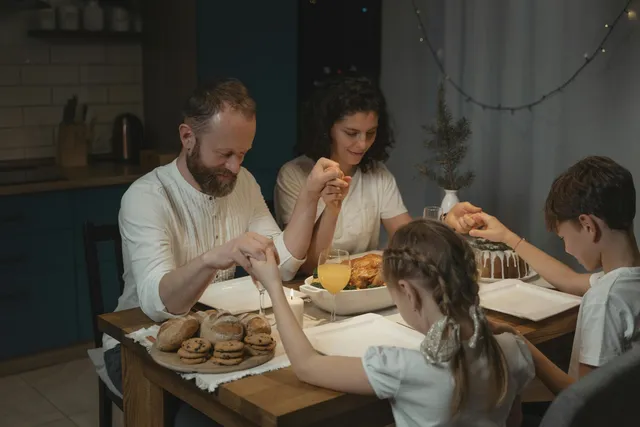
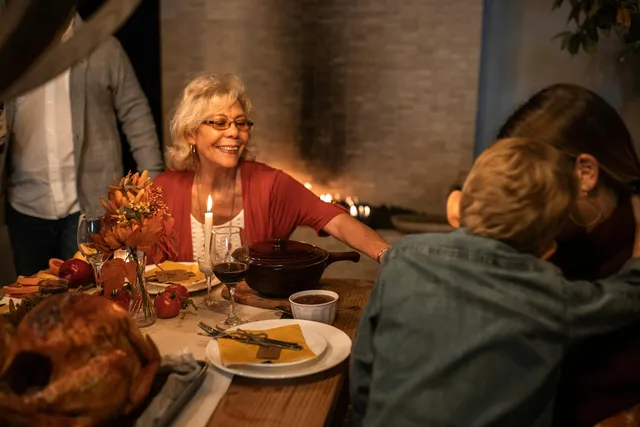
There is something sacred about a table-wood and grain and the gentle passing of plates. It is more than a structure of four legs and a surface; it is a place where hearts open and faith is quietly taught without a formal lesson plan. In an age where schedules scatter families and digital screens fill the silence once held by conversation, the simple act of sharing a meal can become a holy rhythm. It's here, in the aroma of bread baking or the laughter over spilled water, that faith is not only spoken but seen.
The Table as a Sacred Space
Long before fine china or dining rooms, people gathered around food to remember the work of God. From Abraham hosting strangers under the oaks of Mamre (Genesis 18) to Jesus breaking bread with His disciples on the night of His betrayal, the table has always carried spiritual weight. Every meal in Scripture points to a deeper truth: God meets us in the ordinary. The sacred often hides in the simple.
In a way, every kitchen can become a chapel and every dinner table an altar. Not through ritual or performance, but through presence. When we slow down enough to pray, to listen, to share both food and story, we invite the presence of Christ into our midst. Family meals can renew what much of modern life forgets-that discipleship often happens not through sermons, but through moments of togetherness.
The Power of Gathering
Something almost invisible happens when a family comes together for a meal. The clinking of forks, the passing of dishes, the small interruptions of "Can you pass the salt?"-these rhythms form an unseen liturgy. Over time, they communicate belonging and trust. Children absorb faith not only through what parents say, but through the consistency of being gathered and seen. A meal anchors them in love.
Researchers may point to social or emotional benefits of family dinner, but believers understand there's even more at stake. A family meal is a spiritual practice. It's a daily echo of the Lord's Table, a place where grace is practiced in real time. When a family member interrupts, or a dish burns, or a story goes long, grace has to show up. That's faith with sleeves rolled up-grace served family-style.
More Than Just Eating
Jesus often taught in the context of meals. Zacchaeus came down from the tree and found salvation over dinner (Luke 19:1-9). The two disciples on the Emmaus road only recognized the risen Lord when He broke bread (Luke 24:30-31). The first believers "broke bread in their homes and ate together with glad and sincere hearts" (Acts 2:46). We sometimes overlook how frequently Jesus' ministry happened at the table. His meals were not just about food-they were about Revelation.
When we model that within our homes, our tables become microcosms of His ministry. To eat together is to confess, without words, that we belong to something larger than ourselves. Every shared meal becomes a rehearsal for the heavenly banquet to come (Revelation 19:9).
Teaching Faith Without Preaching
Parents often ask how to teach children about God in a world that constantly distracts them. The answer may be simpler than it seems. Faith is most often caught, not taught. Around the dinner table, kids learn what trust, gratitude, and compassion look like in action. When they see their parents hold hands to pray, they witness reverence. When they hear stories of the day mixed with laughter and honesty, they learn that God's presence is not confined to church pews.
It doesn't require elaborate devotionals. Sometimes the best formation comes through a casual grace prayed earnestly, or the retelling of a moment where God provided at just the right time. Even silence-shared in peace rather than awkwardness-teaches that being together is enough.
Moments of Reflection
Try ending a meal with one simple question: "Where did you see God today?" The responses may start small-a bird, a smile, a kind teacher-but they begin to train hearts to recognize divine fingerprints in daily life. This practice nurtures a generational faith that is attentive and thankful. It turns the table into a training ground for seeing God's presence everywhere.
Healing Through Hospitality
Family meals also hold the potential for healing. Not every family table feels peaceful; in some homes, old hurts linger. But grace has a habit of entering even fractured spaces. When forgiveness is extended over a meal, restoration begins to take shape. We remember how Jesus used a shared table to reconcile Peter, offering bread and fish on a beach after betrayal (John 21:12-17). If the risen Christ could use a breakfast to heal broken trust, surely we can allow our dining tables to become places of mending too.
The table can be a crossroads for grace. Hospitality disarms resentment, and gratitude breaks down pride. Preparing and serving a meal communicates worth: "You belong here." For many, that message is the first whisper of the gospel they may ever experience.
The Ministry of an Ordinary Table
You don't need a large dining room or gourmet recipes to practice hospitality. The power lies not in presentation but presence. A simple bowl of soup shared in sincerity carries more weight than a feast offered from duty. Romans 12:13 tells us to "practice hospitality," not as an act of social hosting but as a way of embodying God's welcome. Every time we set another place at the table, we enact the kingdom of God-a space where all are invited, no one is excluded, and love is served generously.
Faith Formation in a Fragmented World
Today's families often live scattered lives-work schedules, extracurriculars, digital entertainment. The fragmentation makes it harder to build the habits that knit faith into everyday life. Yet the table endures. It stands quietly in the home, waiting for us to gather. A nightly or even weekly family meal can become an anchor amid constant motion, a holy pause that reminds us who and whose we are.
Faith is not built in grand gestures but in repeated acts of presence. Daily bread moments form the muscle memory of belief. Over time, these meals build trust between generations, helping children see that faith is not merely a Sunday event but a lived reality.
Practical Encouragement
If family meals have drifted from your rhythm, start simple. Choose one evening a week to reclaim. Light a candle, turn off phones, and ask everyone to share one gratitude and one prayer request. Let that space grow naturally. The goal isn't perfection-it's presence. Slowly, the table becomes not just a place to eat but a dwelling place for God's peace.
The Eucharistic Echo
Every Christian meal echoes the Lord's Supper-an act of remembrance and thanksgiving. In the breaking of bread, we proclaim that Christ gave Himself so that we might live. When we sit together as families, we mirror that divine generosity. Every meal is a small version of communion, reminding us of unity, sacrifice, and love that transcends appetite. The word "Eucharist" itself means "thanksgiving." So it is fitting that gratitude characterizes our tables.
When families give thanks before eating, they participate in a rhythm older than any recipe. They recognize that food, family, and faith all share a source: the goodness of God. In that moment-whether over roast chicken or leftovers-heaven touches earth.
A Table That Sends Us Forth
After every meal comes dispersion: dishes to wash, days to resume, work to be done. But if the table has done its holy work, everyone leaves nourished in body and spirit. What happens at the table doesn't stay there-it flows outward. A family that eats together in gratitude is more likely to live out gratitude in the world. A home that makes room for conversation can make room for neighbors, for strangers, for the weary.
This is why it matters so deeply. Family meals are not a lost tradition to be mourned but a spiritual discipline to be rediscovered. They are small sanctuaries of storytelling, forgiveness, joy, and faith transmission. Around the table, the next chapter of faith is written-not in stone or sermon, but in warmth and togetherness.
A Simple Practice of Holy Togetherness
At its core, the family meal is a gospel in motion. It declares that God provides, that love endures, and that faith can flourish in everyday life. When we gather around tables-messy or beautiful, full or sparse-we participate in something eternal. We echo the meals of Scripture and anticipate the feast to come. We build faith one meal at a time.
So tonight, set the table. Pass the bread. Pray with honesty. Listen deeply. Let your meal become an altar, your conversation a liturgy, your laughter an offering. In that sacred space of shared nourishment, faith quietly grows strong.