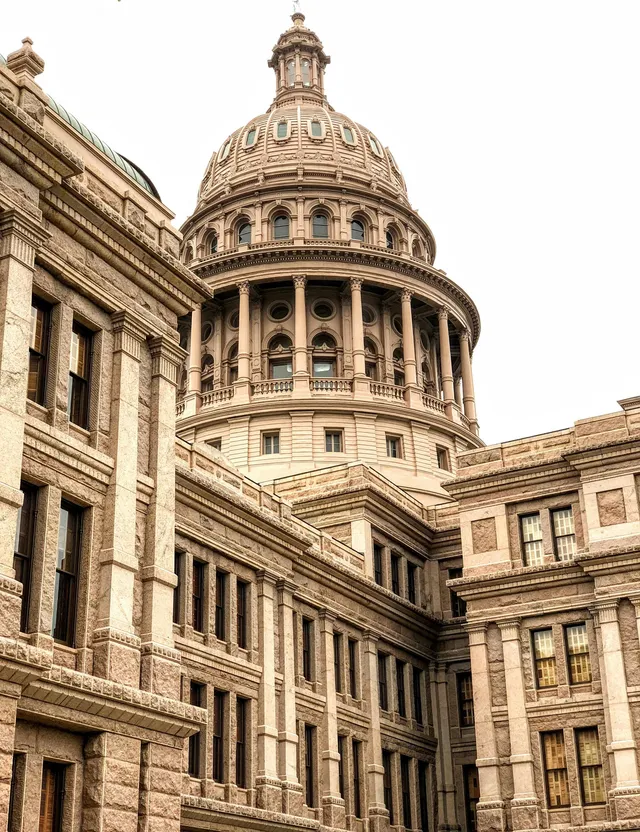
Every follower of Jesus faces a moment-sometimes quietly, sometimes painfully-when obedience to earthly law collides with allegiance to heaven. A workplace regulation that hinders integrity, a cultural mandate that contradicts Scripture, a tax policy that funds injustice. The question rises not in the classroom or the courtroom but deep within the soul: Should Christians obey every law?
The Tension Between Heaven and Earth
From childhood, many of us were taught that good Christians are good citizens. We remember the words of Paul in Romans 13:1, "Let everyone be subject to the governing authorities." The verse has been quoted for generations, sometimes to justify blind obedience, sometimes to encourage cooperation in orderly society. And, indeed, Christians have historically been called to model respect, honesty, and peace wherever they live.
Yet the same Scripture reminds us that "authorities have been established by God." That doesn't mean every ruler or law carries God's character-only that God remains sovereign over human government. There lies the tension. Earthly authority derives from divine oversight, but it does not substitute for divine rule. When laws remain within the bounds of justice and morality, obedience can be an act of worship. But when law commands what God forbids or forbids what God commands, obedience becomes disobedience to the One we serve.
Obedience as a Form of Worship
Obeying laws that protect life, uphold order, and serve the common good can honor God. Paying taxes-even when we'd rather not-funds the structures of peace in our neighborhoods. Respecting traffic laws becomes a quiet discipline of patience and self-control. Keeping honesty in business dealings fulfills Christ's call to integrity. When Jesus said, "Give to Caesar what is Caesar's, and to God what is God's," (Mark 12:17), He didn't blur the lines-He clarified them. Christians live in two kingdoms simultaneously, one temporal, one eternal.
But obedience is never ultimate. Laws are not sacred. Only God's commands bind the conscience absolutely. To obey earthly law is good-until obedience asks us to break the higher law of love and holiness. Then, our worship must take the form of holy resistance.
When Obedience Becomes Compromise
Throughout Scripture, men and women of faith faced this exact battle. Daniel refused to bow to the Babylonian king's statue, choosing a lion's den over idolatry. The Hebrew midwives in Exodus defied Pharaoh's order to kill Israelite infants, valuing life over imperial decrees. Peter and John, dragged before authorities and ordered to stop preaching Jesus, answered simply, "We must obey God rather than men." (Acts 5:29)
These weren't rebels seeking chaos. They were servants seeking faithfulness. Their defiance was not arrogance; it was allegiance. They disobeyed only when obedience would have been sin. Their courage reminds us that true submission to authority includes recognizing the One who delegates it. When human authority oversteps its boundaries, godly believers step back into the safety of divine obedience.
The Conscience Before God
There's a sacred space within each believer called conscience-tender when healthy, hardened when ignored. The Holy Spirit whispers truth there. Some Christians, through prayer and study, may perceive obedience differently depending on circumstance. Romans 14 reminds us that "each one should be fully convinced in his own mind."
For example, under regimes where justice faltered, Christians throughout history hid refugees, smuggled Bibles, or protected persecuted neighbors. Others quietly prayed for rulers, paying taxes without compromise yet refusing to endorse evil. The line is rarely comfortable; sometimes it's drawn with trembling hands. Yet where conscience and Scripture align, courage must follow.
Submission, Not Servitude
It's important to note that biblical submission isn't servility. Jesus Himself stood before Pilate-silent yet sovereign. When Pilate boasted of his power to crucify or release Him, Jesus replied, "You would have no power over me if it were not given to you from above." (John 19:11) That statement didn't excuse Pilate's guilt; it revealed divine hierarchy. The powers that be are permitted by God, but they are not God. Christians submit to the office of authority, not necessarily every action of the one who holds it.
This means we can both honor and challenge authority simultaneously. A believer might respect a government structure while speaking truth to its inconsistencies. Submission is about posture, not silence. It leaves room for prophetic critique grounded in love and righteousness. In this way, obeying God sometimes requires disobeying man-with humility, not hostility.
Walking the Line in Everyday Life
Few Christians will face fiery furnaces or royal decrees. Most of our tests are quieter: a workplace rule that pressures dishonesty; a school directive contradicting fidelity to biblical values; a legal change that conflicts with conscience. The challenge is discernment. How do we know when compliance honors Christ and when it betrays Him?
Three Guiding Questions
- Does this law require me to sin? When compliance leads directly to moral compromise, Scripture is clear: obey God rather than man.
- Does this law restrain sin or advance righteousness? Then obey joyfully, even when inconvenient.
- Can I obey externally but protest internally? Sometimes we comply while still praying, advocating, or working toward change. Daniel served his pagan government faithfully until asked to worship another god.
Applying these questions with prayer, counsel, and courage helps us walk wisely. It also keeps us from two extremes: blind nationalism and reckless rebellion. Faithful obedience keeps both idolatry and chaos at bay.
The Witness of Obedience and Resistance
How we relate to authority speaks volumes about our faith. The early church shocked the Roman world-not only by their refusal to worship Caesar but by their willingness to suffer patiently. Their quiet dignity in persecution drew attention to a higher kingdom. Christian obedience and resistance both aim at the same goal: the glory of God.
When we obey laws that align with love, we reveal God's order. When we resist laws that undermine truth, we reveal God's holiness. Each act, if done in gentleness and faith, becomes testimony. The gospel doesn't thrive through anarchy but through integrity. A believer who submits rightly and resists rightly bears witness that Jesus, not Caesar, is Lord.
Grace in Imperfect Systems
We live in a fallen world, and every government reflects that fallenness. Even the best legislations are partial at best. Yet Christians are not cynics. We recognize that imperfect systems can still be instruments for common grace. Institutions may fail, but God's sovereignty never does. This allows us to engage with laws-not as disciples of despair, but as ambassadors of hope.
Thus, believers can serve on juries, run for office, pay taxes, or advocate reform-all under the same guiding truth: Our ultimate trust is not in earthly justice but in the Judge who stands above all courts. God's law transcends but does not cancel our civic responsibility. It transforms it.
Learning from Jesus Himself
No one embodied faithful tension better than Jesus. He healed on the Sabbath, not out of rebellion but compassion. He paid the temple tax though He had every right not to. He submitted to crucifixion under unjust authority but triumphed through resurrection. His life teaches us that divine obedience can wear many faces-submission, silence, speech, service, sacrifice-but all are motivated by love.
Jesus navigated the politics and piety of His world without compromise. He neither bowed to corrupt leadership nor sought violent overthrow. Instead, He demonstrated the power of a kingdom not of this world, yet deeply engaged within it. His example invites us to do likewise-not fleeing from authority but transforming our obedience into worship.
Living Faithfully in the Gray
There will always be gray areas where laws and morality intersect uneasily. Christians will disagree on some applications. The goal is not uniformity but unity in the pursuit of truth. We must listen to one another's convictions, search Scripture, and pray for wisdom. The Spirit, not the state, shapes the conscience of the believer.
Church history offers both warning and wisdom. When regimes have demanded idolatry, the faithful have resisted and suffered. When societies upheld justice, the faithful have cooperated and contributed. The question is never simply "Is this law?" but "Does this law align with love of God and neighbor?"
A Kingdom That Cannot Be Shaken
In turbulent times, as laws shift and cultures change, Christians can feel disoriented. Yet Hebrews reminds us we belong to a kingdom that cannot be shaken. No legislation can repeal the gospel. No government can silence God's Word. Our ultimate allegiance stands firm even when the world trembles.
So whether you're filing taxes, voting your conscience, standing against injustice, or praying for rulers you struggle to respect-remember who you belong to. Compliance, when right, is worship. Resistance, when necessary, is also worship. Both are expressions of the same devotion: Christ is Lord.
The Law Above the Laws
Should Christians obey every law? Not blindly, but faithfully. We obey where obedience honors God. We resist where obedience dishonors Him. We pray for our authorities, work for the common good, and live peaceably as much as possible. But our hearts remain anchored to a greater throne. For ultimately, laws will fade, nations will fall, and powers will pass-but the Word of the Lord endures forever.
Every act of faithful obedience, every moment of courageous resistance, is part of the same confession: Jesus Christ is King. And in that confession lies not only our duty, but our freedom.