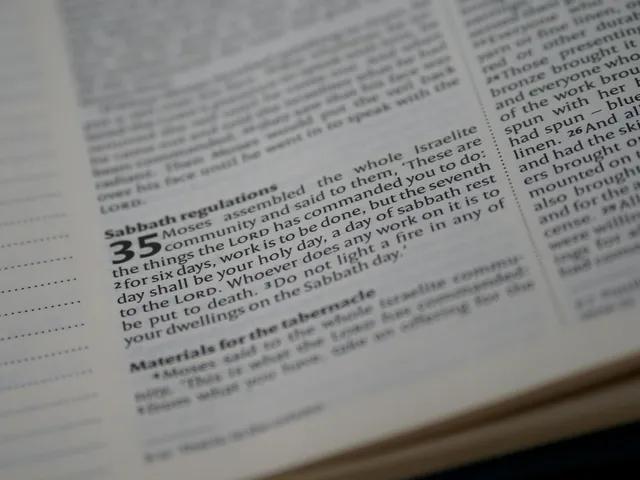
In every generation, the question of sexual morality has stirred both curiosity and conflict-inside the church and outside it. We live in a world where boundaries shift rapidly, and what once seemed sacred can now feel negotiable. Yet amid all the noise, the Bible's vision of sexuality remains as luminous and challenging as ever. It's not a set of arbitrary restrictions meant to shame or constrain us, but a divine invitation to wholeness, intimacy, and freedom. To understand sexual morality in the Bible is to step into a greater story-the story of God's covenant love.
The Story Begins with Creation
The first chapters of Genesis are not just history; they are a theology of intimacy. God creates humanity, male and female, in His image (Genesis 1:27). Sexuality is not an afterthought. It is woven into our design, reflecting something about God's own relational nature. When Adam and Eve are joined, they become "one flesh" (Genesis 2:24)-a union of body, soul, and spirit that mirrors unity, mutual delight, and covenant.
Before sin ever entered the world, human sexuality was holy. It was honest, vulnerable, without shame. The first mention of nakedness-"The man and his wife were both naked, and they felt no shame" (Genesis 2:25)-is more profound than it appears. It tells us that in God's eyes, the human body is not filthy, but sacred. The problem came not with desire, but with distortion. When sin entered, intimacy fractured into hiding, blame, and isolation. The story of redemption ever since has been about God restoring that original purity of love.
When Desire Goes Astray
The Bible doesn't shy away from portraying the misuse of sexuality-it confronts it head-on. From the days of Sodom to the tangled story of David and Bathsheba, Scripture shows how easily passion, when detached from God's design, can destroy hearts and families. The issue is never that desire is evil, but that it can become misdirected when it seeks fulfillment outside of God's will.
Paul's teaching in his letters brings this into sharp focus. In 1 Thessalonians 4:3-5, he writes that it is God's will "that you should be sanctified: that you should avoid sexual immorality... that each of you should learn to control your own body in a way that is holy and honorable." For Paul, sexual purity isn't prudishness-it's worship. The body is a temple of the Holy Spirit (1 Corinthians 6:19-20). What happens in our physical lives reflects what's happening in our spiritual life.
Holiness, Not Just Abstinence
It's easy to reduce sexual morality to a list of do's and don'ts, but that misses the heart of it. In the Bible, sexuality is more than behavior-it's identity and vocation. We are called to holiness, which means set apart for a sacred purpose. Sexual purity, then, isn't about fear of pleasure but the protection of something precious. It's about preserving the holiness of what God has declared good.
The biblical writers understood that sexual sin wounds not only the body but the soul. The Proverbs warn of adultery's bitterness and deceitful allure (Proverbs 5-7). Jesus, in His Sermon on the Mount, deepens the standard-not to condemn but to purify the heart. "Anyone who looks at a woman lustfully has already committed adultery with her in his heart" (Matthew 5:28). Here, the battleground is the imagination, not just behavior. True chastity begins with the eyes and the inner life.
The Covenant Context
The Bible's understanding of sexual ethics can't be separated from covenant. From Genesis onward, sex is God's appointed seal of a covenant relationship. Marriage isn't merely a contract; it's a sacred mystery that mirrors God's faithfulness. That's why adultery in Scripture is often used as a metaphor for idolatry-because both betray covenant love. God calls Israel His bride; Christ calls the Church His beloved.
Marriage as Sacred Icon
In Ephesians 5, Paul unveils the most profound image of all: marriage as a living parable of the relationship between Christ and the Church. "Husbands, love your wives, just as Christ loved the church and gave himself up for her." This isn't romantic idealism-it's sacrificial love. Biblical sexual morality protects that sacred image. Within the covenant of marriage, desire is sanctified; outside it, it becomes disordered, severed from love's true purpose.
The Redemption of Broken Stories
Yet the Bible also refuses to condemn those who have stumbled. Its pages are filled with restoration. The Samaritan woman at the well had cycled through five husbands; the woman caught in adultery was dragged before Jesus by religious leaders; David carried guilt upon guilt. Yet in each case, God's response wasn't to destroy, but to redeem. Broken sexuality is not the end of the story-it's the beginning of grace.
Jesus' words to the sinful woman-"Neither do I condemn you; go and sin no more"-represent the Gospel's heartbeat. He doesn't minimize sin, but He also doesn't weaponize shame. Forgiveness restores dignity. Purity, in Christ, is not the absence of a past-it's the presence of a new heart.
Sexual Integrity in a Confused World
In today's culture, the word "morality" can sound repressive, but for believers, it is the language of freedom. We live in a world aching for meaning, often confusing pleasure with intimacy and freedom with autonomy. Yet the Bible insists that true freedom is found in obedience, not rebellion. God's commands are not chains but boundaries that lead to flourishing.
Sexual integrity is not about perfection-it's about alignment. When our desires align with God's design, we begin to live whole, integrated lives. This integrity transforms how we treat others, how we see ourselves, and how we relate to God. It fosters tenderness within marriage, patience in singleness, compassion toward those who struggle, and humility within community.
Singleness and Holy Desire
For those not called to marriage, biblical sexuality still holds profound meaning. Singleness is not a waiting room-it's a vocation of devoted love to God. Scripture honors celibacy not as deprivation but as fullness, a way of living undivided. Paul's own life demonstrated that intimacy with God can satisfy more deeply than any earthly bond. For every believer, married or single, the underlying call is the same: to offer our bodies as living sacrifices, holy and pleasing to God (Romans 12:1).
Transforming the Conversation
What would happen if the Church reclaimed a redemptive vision of sexuality-one rooted in love, holiness, and compassion? Too often, the conversation around sexual morality has been marked by fear or silence. Yet the biblical story speaks with hope: creation, fall, redemption, restoration. Sex is not the problem; sin is. And grace is greater than sin.
We need communities where confession is safe and healing is possible. Where young believers learn not only what the Bible says, but why it says it-because God longs for our freedom, joy, and flourishing. The Church's task is not to shame the world into moral compliance, but to embody a better way, living lives of integrity that make holiness beautiful again.
Living the Vision
How do we live out biblical sexual morality in everyday life? It begins with worship. When we love God fully, we love others rightly. Prayer, Scripture, and community keep us grounded in truth and grace. In practical ways, that may mean setting healthy boundaries, nurturing marriages with tenderness, or cultivating inner purity through humility and accountability. It means seeing every person we meet as someone made in the image of God, never as an object to satisfy desire but as a soul to honor.
And when we fail-and we all do-it means running back to the cross. There we discover again that holiness is not something we achieve, but something we receive. Christ's righteousness covers our shame, restores our hearts, and invites us into new creation living. Sexual morality, in the end, is a story about grace reclaimed, image restored, and love made whole.
Love That Redeems
In a world that often distorts love into appetite and freedom into indulgence, the Bible offers a better vision: love that is faithful, patient, sacrificial, and true. Sexual morality in Scripture is not a relic of the past but a Revelation of enduring beauty. It is God's way of teaching us how to love well-with our hearts, our minds, and our bodies.
Every story in Scripture, even those marked by failure, points to a God who redeems. His call to holiness is not a rejection of who we are, but a restoration to who we were meant to be. May we, as His people, walk in that redemption-living out a sexuality shaped by grace, anchored in truth, and radiant with divine love.