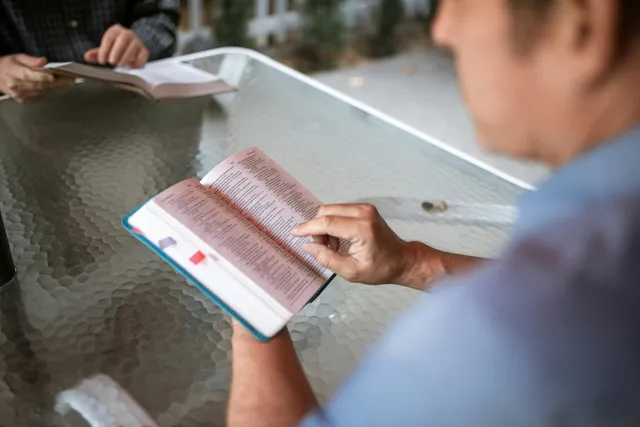
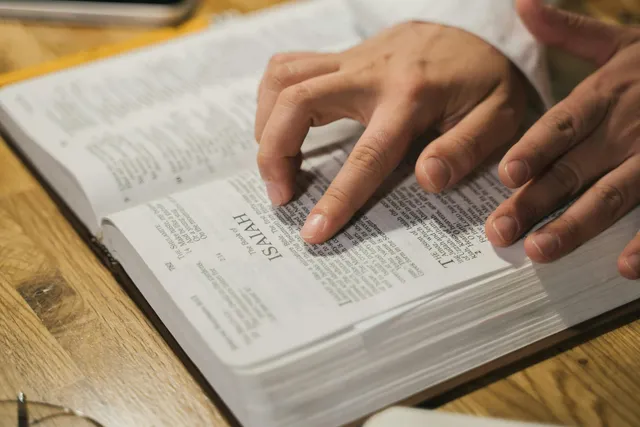
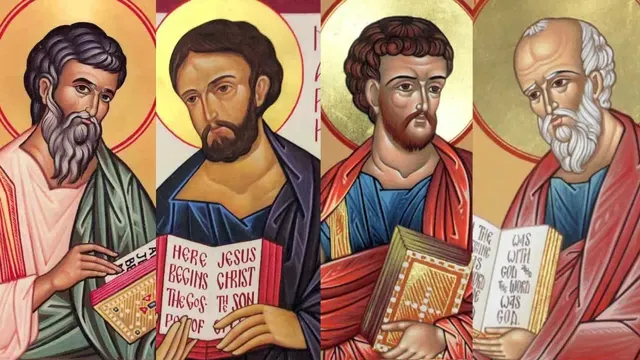
Sometime around 2001, a small hardcover book with a gold cover started appearing everywhere: on church bookstore shelves, in airport kiosks, stacked by the register at the grocery store. It was ninety-three pages long and it cost about ten dollars. Inside was a prayer most Christians had never heard of, drawn from two verses tucked into nine chapters of names in 1 Chronicles. Within two years the book had reportedly sold more than nine million copies. There were Jabez journals, Jabez devotionals for teenagers, Jabez coffee mugs, Jabez bracelets. And there were sermons, plenty of them, warning that the whole thing had become a Christianized good luck charm.
Two decades later the merchandise is gone, but the question it raised has not aged a day. Is it right to ask God to bless you, to expand your life, to keep pain away from your door? Or does praying someone else's words, night after night, turn prayer into a vending machine with a scriptural coin slot? The answer requires us to do something the phenomenon mostly skipped: read the verses where they actually sit.
Two Verses in the Middle of a List
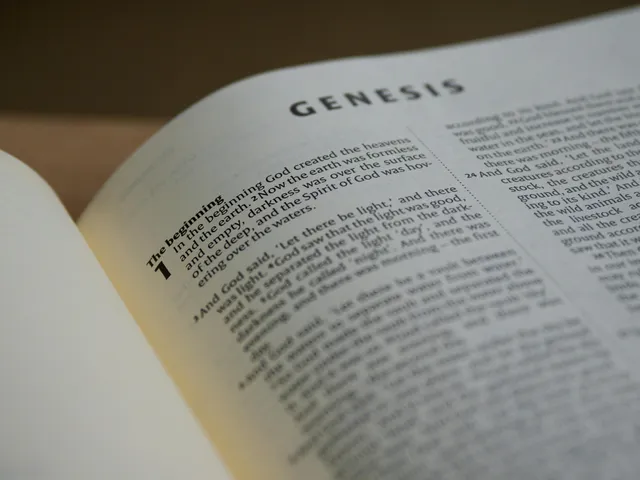
Open 1 Chronicles and you walk into a wall of names. Adam, Seth, Enosh. Nine chapters of genealogy, the longest stretch of uninterrupted lineage in the Bible. Most readers skim it or skip it entirely, which is part of why Jabez was such a surprise find. He shows up in chapter 4, inside the records of the tribe of Judah, with no father named, no clan clearly attached, and no story before or after.
The text says simply, "Jabez was more honorable than his brothers," and then explains his name: his mother called him Jabez "because I bore him in pain" (1 Chronicles 4:9). The Hebrew is a wordplay. Jabez (Ya'bets) is a near-anagram of the word for pain or sorrow ('otseb). It is the kind of name a woman gives a child when the labor nearly killed her, or when the circumstances surrounding his birth were grim enough that she wanted the memory attached to him for life. We are not told which. We only know he grew up carrying a name that meant trouble.
Then comes the prayer: "Oh that you would bless me and enlarge my border, and that your hand might be with me, and that you would keep me from harm so that it might not bring me pain!" And the chronicler adds five words that have fueled a thousand sermons: "And God granted what he asked" (1 Chronicles 4:10).
Here is the detail almost every popular treatment of Jabez misses. These chapters were written for people who had just come home from exile in Babylon. They were standing in a wrecked city, holding onto land deeds that may or may not still mean anything, trying to prove they belonged to the tribes that God had given this soil. The genealogies are not filler. They are a property record and an identity document rolled into one. The whole book of Chronicles is asking a returned exile the question, "Does God still keep covenant with people like us?" And right in the middle of the land allotments of Judah, the writer stops to tell us about a man with a cursed name who asked God for more territory and got it.
What Jabez Actually Asked For
Strip away the marketing and the prayer has four parts, and each one is more modest and more theological than the bestseller suggested.
He asks for blessing. In the Hebrew Bible, blessing is not a synonym for comfort or success. It is the thing God promised Abraham and repeated to Isaac and Jacob, the favor of God resting on a family line so that through it the world is served. To ask God to bless you is to ask to be included in what He is already doing, not to be handed a bonus.
He asks that his border be enlarged. In a book obsessed with who got which parcel of Judah, this is a request for actual ground. Jabez wants a larger share of the inheritance God gave Israel. It is worth saying plainly: this is not a prayer for a bigger house or a promotion. It is a man asking God to give him a real stake in the land of promise, the very thing the exiles reading the scroll were desperate to recover.
He asks that God's hand be with him. This is the request that quietly governs the other three. Throughout Scripture, God's hand is His active presence and power, the thing Nehemiah kept crediting for every open door. Jabez does not want the land without the One who gives it.
And he asks to be kept from harm, "so that it might not bring me pain." He names his own name back to God. The child born in sorrow asks that sorrow not be the last word over his life. Some translations render the second half as "that I may not cause pain," which is also possible in the Hebrew and is arguably more striking: a man asking that the curse attached to his name not be passed on through him to others.
The Prayer of a Man Who Refused His Own Label
Read that way, Jabez is not a man gaming the system. He is a man who was handed a definition at birth and brought it to God instead of accepting it. His brothers presumably had better names and easier beginnings. He was "more honorable" than they were, and the chronicler proves it not by listing his accomplishments but by recording his prayer. What made Jabez honorable was that he knew who to ask.
That is a story anyone can recognize. The person raised in a house where they were told what they would amount to. The one whose file follows them, whose family reputation precedes them, whose own failures have become their nickname. Jabez belongs to them. He is in the Bible precisely because his life did not have to end where it started.
How a Prayer Became a Program
Bruce Wilkinson's book was not cynical, and it is worth being fair to it. He wrote with real warmth about a prayer he had prayed every morning for thirty years, and much of what he urged was good: pray boldly, ask God to use you more widely, expect Him to answer. He framed "enlarge my territory" largely in terms of expanded ministry influence, not money.
But the book included a challenge that proved hard to contain. Readers were invited to pray the prayer word for word every day for thirty days and watch what God did. That is where the trouble began. A thirty-day trial turns a prayer into a protocol. It plants a question in the reader's mind that Scripture never plants: what happens on day thirty-one if nothing changed? And the merchandising that followed flattened whatever nuance the book had. By the time the prayer was printed on a wall plaque, it had stopped being a cry and become a slogan.
There is also a problem of method. Jabez is a descriptive text, not a prescriptive one. The Bible reports that this man prayed this prayer in this situation and God answered. It does not command us to repeat it, any more than Gideon's fleece commands us to lay out wool on the floor before making decisions. Narrative shows us what God is like. It does not always hand us a technique. When we mine the Old Testament for isolated success stories and treat them as repeatable procedures, we end up with a Bible full of life hacks and no story.
Why Formulas Fail
Jesus was blunt about this. "When you pray, do not heap up empty phrases as the Gentiles do, for they think that they will be heard for their many words" (Matthew 6:7). The problem He names is not repetition itself. He gave His disciples a prayer to repeat. The problem is the belief that the words themselves have leverage, that the right phrasing in sufficient quantity obligates God to act.
That belief is not faith. It is closer to magic, which is why it keeps resurfacing in every generation under a new brand. Magic puts the power in the formula and the practitioner. Prayer puts the power in a Person and leaves the outcome in His hands. The two can look almost identical from the outside. The difference shows up when the answer is no.
James puts his finger on the other failure mode: "You ask and do not receive, because you ask wrongly, to spend it on your passions" (James 4:3). Notice that he does not fault the asking. He faults the aim. The question Scripture presses is never whether you are asking too much, but what the enlarged life is for. A bigger border in Judah served the covenant. A bigger platform, a bigger salary, a bigger reputation may serve nothing but the self, and God is under no obligation to fund that.
So Ask Anyway
The overcorrection is just as damaging. Plenty of believers, having been burned by prosperity teaching or embarrassed by the Jabez craze, have quietly stopped asking God for anything concrete. Their prayers have become weather reports and disclaimers. They tell God how they feel and then release Him from any obligation to do something about it.
Scripture will not let us settle there. "Ask, and it will be given to you; seek, and you will find" (Matthew 7:7). Jesus told a story about a widow who wore down a judge by sheer persistence, and the point was not her technique but her refusal to quit (Luke 18:1-8). Paul prayed three times for a thorn to be removed and received a no that turned out to be a deeper yes (2 Corinthians 12:7-9). Hannah prayed for a child with such intensity that Eli thought she was drunk. The Bible is full of people who asked God for specific things, and almost none of them apologized for it.
So it is entirely legitimate to pray what Jabez prayed, as long as you pray it as he did: as a cry, not a lever. Ask God to bless you, meaning put His favor on your life so it counts for something. Ask Him to enlarge your borders, meaning give you more capacity, more responsibility, more people you can actually help. Ask that His hand be with you, because without it the larger life is just a larger burden. Ask to be kept from harm, and add what the Lord's Prayer adds: "deliver us from evil."
Praying It Honestly
Here is a way to hold both truths at once. Pray Jabez, but pray it slowly, and stay on the third clause.
Most of us race through "that your hand might be with me" to get to the territory. Jabez probably did not. For a man who had been named after pain, the presence of God was not a nice addition to the land grant, it was the whole point. If you find that you can pray the first two clauses with enthusiasm and the third one with indifference, you have learned something important about what you actually want.
And then add the clause the prayer does not contain, the one Jesus prayed in Gethsemane: not my will, but yours. That single sentence is what separates intercession from incantation. It does not weaken the asking. It frees you to ask with everything you have, because you are no longer responsible for engineering the answer.
God granted what Jabez asked. The chronicler does not tell us how, or how long it took, or what the land looked like afterward. He just leaves the man there in the middle of a list of names, a small loud voice in a long quiet record, proof that the God who keeps genealogies also hears individuals. That is the real find in 1 Chronicles 4, and no one has to sell it to you.