There are mountains that tower over geography, and there are mountains that tower over human history. Mount Sinai is both. Somewhere in the wilderness of the Sinai Peninsula-barren, windswept, removed from the clamor of civilization-God called a man by name and spoke words that would reshape the faith and moral compass of the world. At Sinai, Moses did not just climb a mountain; he ascended into the presence of the Almighty. It was there that heaven touched earth, and divine law touched human hearts.
The Mountain That Trembled
Scripture tells us that as Moses stood at the foot of Mount Sinai, the earth quaked, thunder rolled, lightning flashed, and a thick cloud descended (Exodus 19:16-19). The people trembled-not only because of what they saw, but because of what they perceived: the holiness of God on display. The mountain was enveloped in fire, smoke rising like a furnace. Even the strongest hearts knew to keep their distance. This was not a casual encounter. This was majesty revealing itself.
God's holiness often reveals the distance between our comfort and His glory. The Israelites were summoned to consecrate themselves before approaching the mountain, a reminder that no one enters the presence of God lightly. And yet, this same God would soon call Moses to draw near. What terrifies the crowd becomes an invitation for the one who listens in faith. Sinai reminds us that reverence and intimacy with God are not opposites-they are the two sides of true worship.
Ascending into Obedience
Moses' climb up Sinai marks one of the most dramatic stages of his relationship with God. The journey upward was not only physical-it was spiritual. Each step carried the weight of responsibility, fear, and longing. What must it have been like to stand alone between heaven and earth, waiting for the voice of the Eternal?
In our own lives, spiritual ascent rarely comes with comfort. God often calls us higher through seasons of surrender and waiting. Obedience is not found in motion alone but in the posture of a listening heart. On Sinai, Moses shows us that those who are willing to climb in obedience will find that God meets them with Revelation.
The Silence Before the Voice
The mountaintop encounter did not begin with booming words but with stillness. In that sacred silence, the voice of God began to shape Moses' understanding of His nature and His law. The Ten Commandments were not simply moral rules; they were the framework for a covenant relationship-a divine blueprint for how humanity could live in fellowship with a holy God and one another. The silence before the voice matters, because it is in stillness that we learn to hear what truly speaks to the heart.
The Covenant and the Fire
When God spoke from Sinai, He revealed not only His law but His heart. Every command begins with relationship: "I am the Lord your God." Before the stone tablets, before the words etched in divine fire, there was identity. Sinai was not about control-it was about covenant. It was God saying, "You belong to Me. Live as My people."
Fire, in Scripture, is both destructive and purifying. On Sinai, that fire symbolized the intense purity of God's presence. It consumes what is false, yet ignites what is faithful. In our spiritual lives, the fire of Sinai still burns-not as judgment alone, but as transformation. When we allow God to inscribe His truth upon our hearts, we, too, become living tablets of His covenant, shaped not by stone but by the Spirit (2 Corinthians 3:3).
The Weight of Glory
Moses remained on the mountain forty days and nights, enveloped in the cloud of God's glory. When he finally descended, his face shone with a radiance so intense that the people could hardly look at him. That light was not his own; it was the reflected glory of the One who had spoken to him face to face.
There is a deep lesson here: those who spend time with God begin to carry His presence with them. Holiness is not a veneer one can manufacture; it is a reflection of the divine light that transforms us from within. The glow of Moses' face was a visible sign of communion-a light the world could not ignore.
When Glory Descends
It is easy to imagine glory as distant, unreachable, reserved for mountaintops and prophets. Yet through Christ, the glory of God came down to dwell among us. In the transfiguration (Matthew 17:1-8), Jesus stood on another mountain, His face shining like the sun, His clothes radiant with light. There, beside Him, appeared Moses and Elijah-witnesses to the continuity of the divine story. Sinai's glory had not dimmed; it had found its fulfillment in the living Word who came not to abolish the law but to fulfill it (Matthew 5:17).
Sinai in the Soul
For every believer, there is a personal Sinai-a place where God meets us with both flame and grace. It may not be a physical mountain, but a season of testing, Revelation, or calling. Sometimes, God's glory comes wrapped in thunder and cloud; other times, as a whisper in the wilderness of our hearts. Either way, the mountain within us is a place of transformation.
To meet God on our own Sinai requires courage. The reason many avoid that ascent is not because the climb is too steep, but because the encounter is too real. God's voice often calls us to lay down idols, confront hidden fears, and embrace obedience. Yet only on that mountain does the heart learn what freedom really means.
The Wilderness Around the Mountain
It's worth noticing that Sinai did not rise in a lush valley or beside rivers flowing with ease. It rose in a desert-a place of scarcity, silence, and dependence. God's greatest revelations often come not in seasons of abundance, but in times of wilderness. The Israelites had left Egypt's chains behind, but their hearts were still learning what it meant to be truly free. In the wilderness, they found a God who provided manna from heaven and water from the rock-and who demanded trust instead of fear.
So, too, our deserts become the proving ground of faith. When all familiar comforts fade and we stand face to face with emptiness, we may discover that God is nearer than ever. The wilderness is not abandonment; it is invitation. Sinai rises precisely there, amid the barrenness, to remind us that holiness does not depend on circumstances but on presence.
Law, Love, and the Heart of God
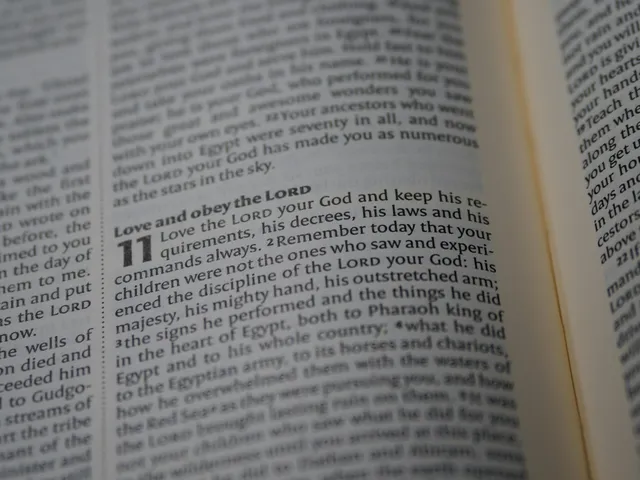
The law given at Sinai is sometimes seen as stern and severe, but its foundation is love. Every "You shall not" protects something precious; every command flows from the heart of a God who longs for communion with His people. When Jesus summed up the law-"Love the Lord your God... and love your neighbor as yourself" (Matthew 22:37-39)-He was not replacing Sinai, but revealing its essence. Love was, and remains, the heartbeat behind every divine instruction.
When we grasp this, the tablets of stone become more than ancient artifacts-they become mirrors showing us who we were meant to be. The commandments are less about limitation and more about liberation. They lead us out of the slavery of sin into the freedom of divine love.
Returning Down the Mountain
Moses did not stay on the mountain indefinitely. After beholding God's glory, he descended to bring God's truth to the people. That descent is part of every believer's calling. We are not meant to hoard Revelation, but to embody it, carrying the reflection of God's presence into a world hungry for light. The encounter must always lead to mission.
When you've been on your own Sinai-when God has spoken, healed, or refined you-the natural response is to bring that radiance into daily life. Every ordinary valley is waiting for someone who has met God on a mountain.
Sinai and the Cross
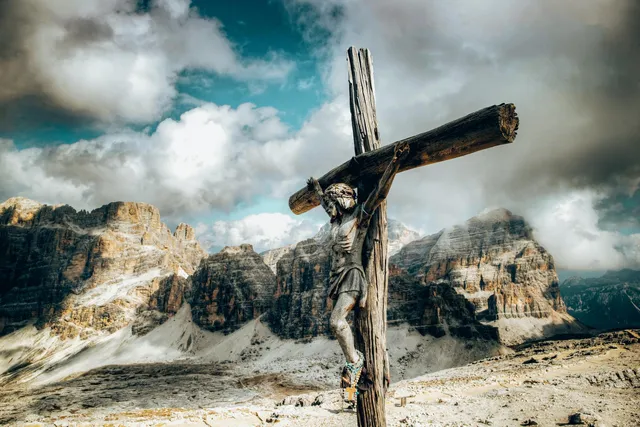
In many ways, Sinai points forward to another mount-Calvary. The same God who thundered from Sinai in holiness would, centuries later, reveal His love through the suffering of Christ. On Sinai, law was given; on Calvary, mercy fulfilled it. Sinai showed us the justice of God; Calvary showed us His heart. Together they reveal a complete picture: the God who is both holy and compassionate, both consuming fire and tender shepherd.
Standing between these two mountains, we find the rhythm of redemption: reverence without fear, law fulfilled by grace, obedience animated by love.
Living in the Echo of Sinai
Even now, the echo of Sinai rolls through time. Every moment of awe in worship, every stirring of conviction, every whisper of divine calling carries its resonance. The same God who thundered there still speaks-perhaps not from smoke and fire, but through Scripture, through the still small voice of His Spirit, through the grace of His Son.
If you listen closely, you may find that your own life has its Sinai moments-places where God's presence calls you higher, demands reverence, yet offers closeness. And in those moments, your faith becomes more than belief; it becomes encounter.
The Climb Continues
In the end, Mount Sinai is not just an ancient mountain of stone and legend-it is a living metaphor for every believer's journey. We ascend through obedience, we tremble in awe, we listen in silence, we are transformed by glory, and then we descend carrying light. The God who once spoke from the mountain now speaks within us through Christ, inviting the world to see His character in our lives.
To climb your personal Sinai is to choose encounter over comfort, holiness over habit, relationship over ritual. And when you do, you'll find that the same God who called Moses by name still calls you-by grace, with purpose, into His presence. The mountain may seem high, but the invitation is open: Come up and meet the God who speaks.
"The mountain of the Lord is holy, and those who ascend it will find not only law, but love-not only majesty, but mercy."