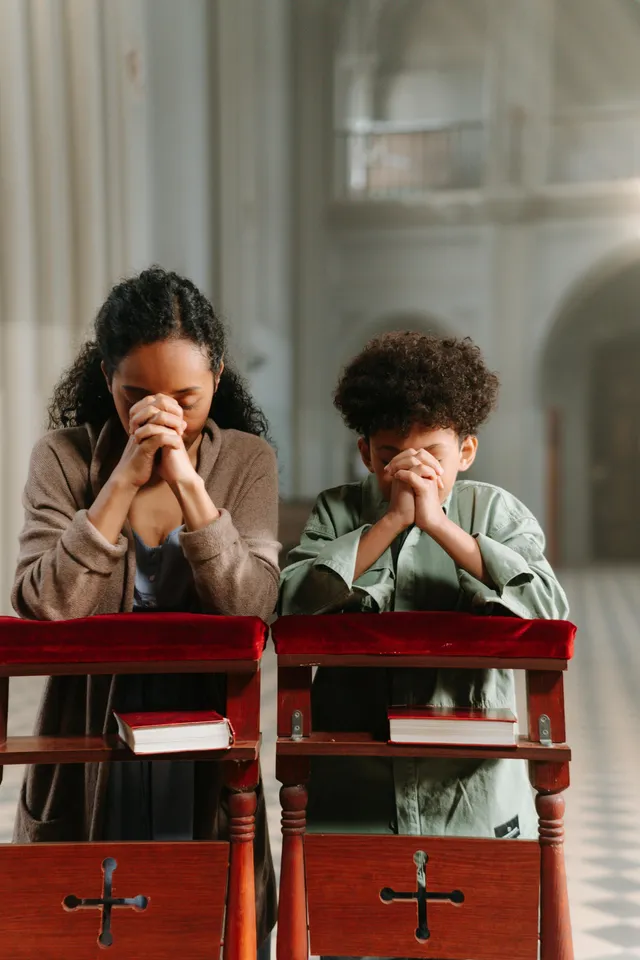
Raising children with faith has never been an easy calling, but in today's culture-where countless voices compete for our children's attention-it can feel like standing in the middle of a storm with only a candle. Yet faith persists precisely because God's light was never meant to be measured by the darkness surrounding it. As parents, grandparents, mentors, and church leaders, we have the breathtaking privilege of helping young hearts discover the reality of God's love and truth in a world that often seems intent on eroding both.
The Cultural Crossroads: Where Faith Meets Influence
Modern culture is overflowing with influences-digital content, peer expectation, celebrity lifestyles, and an endless stream of trending opinions. Children growing up today hear a thousand messages a day about identity, success, and self-worth. Many of those messages are subtle distortions of truth: they whisper that fulfillment is found in achievement or popularity, rather than in Christ.
As parents of faith, we cannot insulate our children from culture, but we can teach them how to walk through it wisely. In John 17, Jesus prayed not that His followers be taken out of the world, but that they be protected from the evil within it. That's the model for parenting in the modern age-not escape, but equipping.
Shaping Perspective Without Fear
It's tempting to respond to cultural challenges with anxiety or defensiveness. Yet raising kids with faith begins not with panic, but with peace. We parent best when we lead from confidence in God's sovereignty rather than fear of the world's brokenness. Our children don't need us to convince them that the world is scary-they need us to show them that hope is stronger.
Philippians 4:8 gives a powerful blueprint: "Whatever is true, whatever is honorable, whatever is just, whatever is pure... think about these things." We can help our children discern truth by pointing them continually toward what is worthy of their focus.
The Home as a Living Testimony
If faith is to flourish in uncertain times, it must have roots-and those roots almost always begin at home. The family isn't just a social unit; it's a spiritual formation ground. When Scripture speaks about teaching children, as in Deuteronomy 6:6-7, it describes faith not as an event but as a way of life, spoken of "when you sit at home and when you walk along the road."
Faith is caught as much as it is taught. Kids remember far more of what they see in our lives than what they hear from our lips. What if, instead of trying to manufacture faith moments, we invited God into ordinary ones-meals, homework time, driving to soccer practice? These are the quiet moments where sincerity matters most. They teach that God isn't just for Sunday; He's for every day.
The Power of Imperfect Witness
Interestingly, children don't need perfect parents to develop an authentic faith. In fact, honesty about our shortcomings often strengthens belief. When we admit failure, ask forgiveness, and show how grace restores us, we model the very heart of the gospel. Parents who pretend to have it all together teach legalism. Parents who confess need teach grace.
Faith grows in the soil of humility. Letting our children see that we, too, rely daily on Christ's mercy teaches them that faith is not a badge of perfection but a relationship of dependence.
Creating Counter-Cultural Rhythms
Our routines shape what our children love. Without intentional rhythms, the pace of digital life will dominate every spare second of attention. Screens, schedules, and social feeds have become today's altar of constant connection. To raise children with a deep, enduring faith, we must gently reclaim time and space for stillness, reflection, and Scripture.
That doesn't mean rejecting technology or modern life-it means redeeming it. You might consider family worship evenings once a week, device-free dinners, or starting and ending each day with gratitude. Small, consistent rhythms build lasting values. The point isn't performance but presence: making room to encounter God together.
Traditions that Tell a Story
Faith-filled traditions are anchors in a restless culture. Lighting Advent candles. Writing prayer lists. Serving together at a shelter. These repeated acts tell your children a story-the story that God's people have always relied on Him, generation after generation. When a child remembers these moments years later, they remember not just what you did, but what you believed.
Teaching Truth in a World That Redefines It
Perhaps no task feels as challenging today as teaching children what is true when truth itself is often treated as fluid. Yet Scripture isn't timid on this point-Jesus declared, "I am the Way, the Truth, and the Life." (John 14:6). Our goal is not to produce children who can parrot back doctrine; it's to help them love the Truth so sincerely that counterfeit versions cannot seduce them.
Truth, when lived in love, becomes luminous. It isn't enough to recite right answers; we must embody compassion, mercy, and justice so our children see that God's commands are beautiful, not burdensome. In a culture fixated on self-expression, biblical truth may seem restrictive at first glance. But when children discover that God's boundaries are actually invitations to freedom, their faith deepens with joy rather than fear.
Helping Them Think Biblically
When teenagers wrestle with hard questions about sexuality, ethics, or purpose, avoidance doesn't prepare them for the world-they need honest, gracious conversation. We can ask questions with them, explore Scripture side by side, and admit when we don't have every answer. Show them that wrestling with doubt is not the opposite of faith-it can be the process through which faith is refined.
Faith That Acts: Serving Together in a Self-Focused World
Today's culture often tells young people, "Follow your heart. Do what makes you happy." Yet the gospel's invitation sounds entirely different: "Take up your cross and follow Me." Counterintuitive, yes-but profoundly life-giving. Children who experience faith as service discover that love isn't just a word; it's an action.
Look for opportunities to serve as a family-whether it's delivering meals to a neighbor, visiting a nursing home, or sponsoring a missionary. These experiences reorient a child's worldview. They learn that faith is not self-centered but others-centered. And in that process, they begin to see faith not as a rulebook, but as the heartbeat of compassion.
When Serving Feels Small
Sometimes the smallest acts of faithfulness make the biggest impressions. A child who watches their parent speak kindly to a cashier or forgive a family member learns something more enduring than any sermon could convey. Jesus often compared the kingdom of God to a seed-tiny, but full of potential. Likewise, our children's understanding of faith grows through small daily seeds of kindness, patience, and prayer.
Guarding Their Hearts Without Shielding Their Eyes
It's one of the hardest balances to find: how to protect innocence without raising children unprepared for reality. Proverbs 4:23 tells us, "Above all else, guard your heart, for everything you do flows from it." Guarding doesn't mean isolation-it means making sure what enters their heart builds love for Christ rather than confusion about Him.
We equip our children by giving them both roots and wings. Roots of conviction that hold steady against falsehood, and wings of courage to engage the world with grace. Teach discernment rather than simple avoidance. Discuss movies, music, or news stories through a biblical lens. When they learn to think critically from faith, they're less likely to be swayed merely by what's popular.
Faith That Feels Real in Everyday Life
In the end, what keeps faith alive in our children isn't how often they attend church or memorize verses (though both are valuable). It's whether they see faith intersecting their actual lives. Does your family pray when decisions arise? Celebrate answered prayers? Talk about God's presence in joy and sorrow alike? When faith feels relevant to every facet of life, children grow up knowing that God isn't a distant figure but an intimate companion.
Model gratitude over complaint. Inventory blessings together. Read a Psalms during tough moments. These aren't forced disciplines-they're simple invitations to remember that God is with us even when life feels ordinary. A faith that is woven naturally through daily living becomes unshakable when the storms arrive.
A Legacy That Lasts
Raising children with faith in today's culture is not about building a fortress against the world-it's about nurturing a flame that can shine within it. Our children will face challenges, doubts, and distractions. But if they learn from us that faith is not fragile but fierce, not rigid but resilient, then they will stand strong long after we are gone.
Faith handed down is more than information-it is inheritance. And the greatest heritage we can offer is not wealth, success, or comfort, but a living testimony that Jesus is trustworthy, that His Word endures, and that His grace is enough for every generation.
So keep the candle lit. Tell the stories. Pray over little hearts. Live the love you hope they'll learn. The same God who entrusted these children to us will be faithful to finish the work He began in them-and in us. (Philippians 1:6)