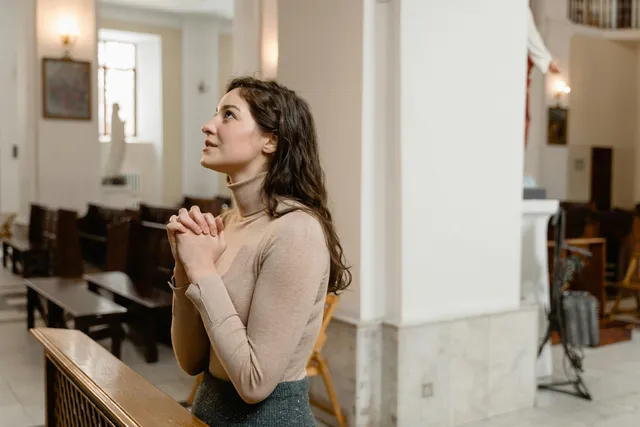
There's something compelling about the way Elijah prayed. His story isn't only about fire from heaven or rain after drought-it's about a man who dared to believe that his words could move the heart of God. Elijah did not whisper half-hearted prayers. He prayed with conviction, with courage, and with a deep certainty that God listens. To pray like Elijah is to step into bold faith, to look past impossibilities, and to trust that heaven bends near when we call on the Lord with our whole being.
The Posture of a Bold Pray-er
Elijah first appears in Scripture with almost no introduction: "Elijah the Tishbite, from Tishbe in Gilead, said to Ahab..." (1 Kings 17:1). No pedigree, no preamble-only a man fully convinced that he stood before God. That's the secret foundation of bold prayer: identity. Elijah knew whose presence he was in. He says, "As the Lord, the God of Israel, lives, whom I serve..." He anchored his request on the character and authority of Yahweh, not on his own strength.
Bold prayer begins with bold confidence in God's character. Before you even ask for a miracle, you must know the heart of the Miracle Worker. Elijah's boldness wasn't arrogance; it was intimacy. The more deeply we know God, the more courageously we can pray.
Seeing Beyond What Is
When Elijah declared that there would be no rain except at his word, the landscape was arid and unyielding. There was no visible sign of change, yet Elijah spoke God's promise into the dry air. Most of us hesitate here. We want to see a small cloud before we risk asking for rain. But the prophet teaches us something crucial: the bold pray-er sees beyond circumstance to God's reality.
When we pray timidly, it's often because we're staring too long at what looks impossible. Elijah looked past it. His gaze was set on a God who rules over skies, seasons, and kings. That same perspective fuels our faith today. Instead of "Lord, if You can" prayers, we begin to pray "Lord, because You can."
Faith That Leans Forward
Faith isn't blind optimism; it's leaning with your whole weight on the character of God. Elijah leaned in so completely that when he prayed for rain, he bowed low, face between his knees (1 Kings 18:42). That posture speaks of desperation mingled with confidence-this was not a man hedging his bets. He prayed until the answer came. Seven times his servant ran to look toward the sea. Six times-nothing. The seventh time-a cloud the size of a man's hand. God was moving.
Bold prayers endure the silence. They refuse to quit on the sixth lookout. Perseverance and expectation often run hand in hand; where one weakens, the other sustains. Elijah's example whispers to us: don't stop praying just because you can't yet see the answer rising on the horizon.
When Boldness Looks Like Stillness
Not every moment of Elijah's life thundered. There were seasons of waiting-by the brook of Kerith as ravens brought him bread, in the house of a widow whose oil and flour never ran out, and later, under a broom tree when despair almost swallowed him. These quieter scenes remind us that boldness is not always loud. Sometimes it is found in the simple act of staying in the presence of God when everything in you wants to run.
To pray boldly does not always mean commanding heaven to act dramatically. Often, it means whispering through tears, "Lord, I'm still here. I still believe You are good." That's just as powerful. Elijah's confidence in God's character was not only proven when fire fell; it was proven when no one was watching, when he listened for God's whisper on the mountain and realized that the Lord was not in the wind or the earthquake, but in a still, small voice.
The Quiet Fire
There's a boldness that comes from refusing to let silence shake your faith. Many of us imagine courage as noise and action, but Elijah learned that spiritual boldness often burns quietly. It's the unwavering trust that God has heard you, even when there's no echo. When we pray like that-listening, not demanding-we're shaped for endurance. Our prayers stop being mere petitions and become communion.
Aligning Our Hearts with Heaven
One reason Elijah's prayers carried such power is that they were aligned with God's heart. He prayed within the will of God, not against it. This alignment isn't mechanical-it's relational. The closer you walk with the Lord, the more naturally your desires and God's desires begin to intertwine. You pray what Heaven is already yearning to release.
When Elijah called down fire on Mount Carmel, it wasn't about proving his prophetic status. It was about revealing the glory of the true God to a nation drifting toward idols. The prayer wasn't self-centered. It was kingdom-centered. A bold prayer that glorifies God rather than self carries divine weight. The motive behind our prayer determines the measure of its boldness.
Obedience: The Engine of Bold Faith
Bold prayers often follow acts of quiet obedience. Elijah went where God sent him-first to a hidden brook, then to a widow's home, then to face a furious king. Each step of obedience prepared him for the next level of trust. There's a rhythm in the life of faith: listen, obey, pray, repeat. Obedience refines boldness. It removes the need for spectacle and leaves room only for surrender.
If you long to pray like Elijah, practice obedience in the small things. When God nudges your heart-pray for someone, speak a word of encouragement, give generously-respond without delay. The courage to obey today strengthens the faith to pray big tomorrow.
When the Answer Costs Us Something
Sometimes the boldest prayers are the ones that cost us. Elijah prayed for fire, and the fire came-but that same act set in motion a chain of events that left him hunted and exhausted. Courageous prayer will always intersect with surrender. When we pray for God's will, we must be ready to walk in its consequences. That's not a warning to fear, but an invitation to trust God's larger story. Elijah discovered that even when the cost was high, the companionship of God in the cave was sweeter than the applause on the mountain.
Learning to Hold Heaven's Perspective
To pray boldly, we must live from heaven's vantage point. Elijah stood "before the Lord," a phrase that appears repeatedly in his story. It means more than physical presence-it suggests a consciousness of God's reality that overrides earthly anxiety. When the world trembled with drought and the king seethed with anger, Elijah's confidence was undisturbed. He lived aware of another kingdom.
This is the essence of bold prayer: not presumption, but proximity. We live, breathe, and pray from nearness to God. It's not about wielding divine power like a weapon; it's about reflecting the heartbeat of the Father. The closer we stay to His heart, the more naturally bold our prayers become, because we begin to pray what pleases Him most.
Bold Prayer in Our Everyday Lives
Most of us will never call down literal fire from heaven-or face monarchs in confrontation-but our daily arenas are filled with opportunities to pray with Elijah's kind of faith. We can speak life into a dying hope. We can trust God for provision when resources seem empty. We can pray healing over bodies and relationships, declaring that our God reigns over despair. Every act of bold prayer testifies that God is still living, still listening, still mighty to save.
In the quiet corners of modern life-kitchens, classrooms, hospital rooms, church altars-bold prayers still rise. They sound different, yes, but their essence remains the same: faith that refuses to shrink back. The mother praying over her prodigal child. The pastor asking God for revival in a weary congregation. The believer whispering for comfort in the midst of grief. All of them, in some way, echo Elijah's trust: "The Lord, before whom I stand."
Becoming People Whose Prayers Matter
James 5:17-18 reminds us that "Elijah was a man just like us." That line almost feels too generous. Just like us? Yet that's Scripture's point-Elijah's power wasn't in his perfection but in his prayers. He was a mortal, flawed man who dared to believe God could do what He said He would do. That invitation stands open to us today. To become people whose prayers matter, we don't need titles or platforms; we need focus, intimacy, and courage.
Every bold prayer re-centers our faith on God's capability rather than our weakness. It calls us out of comfort zones into divine dependency. Sometimes it changes circumstances, sometimes it changes us-but every time, it draws heaven and earth a little closer together.
When Heaven Meets Heart
To pray like Elijah is to walk onto the mountaintop of faith and the valley of doubt-and keep praying in both places. It's to believe that God still delights in showing Himself strong on behalf of those who trust Him. Bold prayers don't require eloquence or drama. They require courage anchored in intimacy.
You can pray bold prayers. Not because you are strong, but because God is faithful. Every time you stand before Him-whether you whisper or cry out-heaven listens. The same God who answered Elijah with fire answers you with grace, power, and love. So go ahead. Bow low. Speak honestly. Ask largely. Believe fiercely. And watch, in God's perfect time, for the cloud rising on your horizon-a sign that bold faith still moves the heart of Heaven.