There are seasons in life when even the most steadfast believer feels like hope is slipping through their fingers - when prayers seem unanswered, and the horizon looks dim. In such times, many have found themselves turning instinctively to the Psalms. These ancient poems, songs, and prayers capture the full spectrum of human emotion: anguish, joy, despair, gratitude, longing, and triumph. Yet beneath their raw honesty runs a consistent current of faith - an unbreakable tether to hope in God. To read the Psalms is to encounter souls laid bare before a loving Creator who listens and responds.
When the Soul Finds Its Voice
The beauty of the Psalms lies in their ability to give voice to what we struggle to articulate. Whether we are singing in triumph or whispering through tears, the Psalms speak for us. They remind us that faith does not silence our pain - it sanctifies it. David, Asaph, the sons of Korah, and the other psalmists never shadow their anguish; they bring it into the light of God's presence. "How long, Lord? Will you forget me forever?" (Psalms 13:1). These are not the words of a faithless heart, but of one that trusts God enough to bring Him its deepest questions.
In voicing such cries, we find ourselves strangely comforted. It is as though God Himself leans down to say, "I understand that ache." Hope often begins not in the absence of sorrow but in the courage to bring sorrow to God.
The Geography of the Heart
Every Psalms seems to walk us through a kind of emotional geography: valleys of despair, rivers of tears, mountaintops of praise. Yet the direction is almost always upward. Even in lament, there is movement toward faith. In Psalms 42, the writer begins, "My tears have been my food day and night," but ends by preaching to his own soul: "Put your hope in God, for I will yet praise Him." This self-talk of faith is not denial - it's direction. It says, "I may be low, but I know where my help comes from."
Turning Pain into Prayer
The Psalms teach us to transform pain into prayer. A complaint becomes communion once it is offered to God. The psalmists model the spiritual discipline of turning every emotion heavenward. Grief becomes worship when it is expressed in trust. Fear becomes courage when spoken in the presence of a God who sees. This movement of the heart - from despair to dialogue - is where hope is often reborn.
Hope in the Shadows
Some of the most luminous words of hope were birthed in darkness. Psalms 23, one of the most beloved texts in all of Scripture, emerges from the shadow of uncertainty - "Even though I walk through the valley of the shadow of death, I will fear no evil, for you are with me." Hope does not promise that valleys will vanish; it promises that we will not walk them alone. The Shepherd's presence becomes the light by which we keep putting one foot in front of the other.
Similarly, Psalms 46 invites us to be still and know that He is God - not when the world is peaceful, but amid uproar and chaos. Mountains may fall, waters may roar, yet the refrain remains: "God is our refuge and strength, an ever-present help in trouble." The psalmists do not paint a world free of storms; they show us a God who is steady within them.
When Praise Feels Impossible
There are days when praise feels hollow - when life's noise drowns out every melody of joy. Yet the Psalms remind us that praise is not always a reflection of our feelings; it is an act of faith. It is choosing to anchor our hearts in divine truth when our emotions are caught in the undertow of despair.
Psalms 77 portrays this struggle vividly: the psalmist begins overwhelmed by sleepless nights and troubled thoughts, but then he says, "I will remember the deeds of the Lord." Memory becomes the bridge that carries him back to hope. Sometimes hope begins not in fresh miracles but in remembering the faithfulness of old ones. Rehearsing God's past mercy is the spark that reignites present trust.
The Transforming Power of Remembering
We live in a world that forgets quickly - both pain and deliverance. But the Psalms teach us to remember. Psalms 103 tells us unequivocally: "Forget not all His benefits." To remember God's mercy is to resist despair's claim. Each recollection of divine faithfulness becomes a stepping stone toward renewed confidence. Hope, in this way, is not wishful thinking but historical gratitude - a recognition that the God who has acted before will act again.
When Silence Speaks
There is a quieter form of hope woven through the Psalms - the kind that rests, waits, and listens. Psalms 131 gives us a gentle image: a weaned child with its mother, quieted and content. Not demanding, not grasping, but secure. This is the hope of surrender - the rest found not in obtaining what we crave but in trusting the heart of God.
Such hope may not roar; it may whisper. It may not fix every broken thing, but it keeps us near the One who can. The Psalms teach us that stillness can be a spiritual act - a way of proclaiming, "My hope is in You," even when no outward change seems to come.
Christ in the Psalms
Every thread of the Psalms points, ultimately, toward Christ. He sang them, prayed them, and fulfilled them. On the cross, His cry echoed Psalms 22: "My God, my God, why have you forsaken me?" And in doing so, He entered fully into the human condition of anguish and trust. Yet, that same Psalms ends in triumph - a declaration that all nations will remember and turn to the Lord. Thus, even the most desolate words of lament lead to resurrection hope.
When we read the Psalms through the lens of Jesus, we see that our hope is anchored not merely in emotion, but in redemption. The Shepherd of Psalms 23 lays down His life for the sheep; the King of Psalms 2 reigns victorious over opposition; the suffering servant of Psalms 22 becomes the risen Lord of all. Hope becomes not a concept but a Person.
Living the Psalms Today
The Psalms invite us into a daily rhythm - one that holds both lament and praise, petition and thanksgiving. As modern believers, we can make their patterns our own prayers. When words fail us, we can borrow theirs. When faith wavers, their testimonies remind us that doubt and belief often coexist - and that God welcomes both.
It might mean reading a Psalms aloud each morning, letting the poetry reshape our perspective before the day's demands take over. Or it could be whispering Psalms 121 on a sleepless night: "I lift up my eyes to the hills - where does my help come from?" These moments form a quiet rebellion against despair - daily acts of choosing hope.
Community in the Psalms
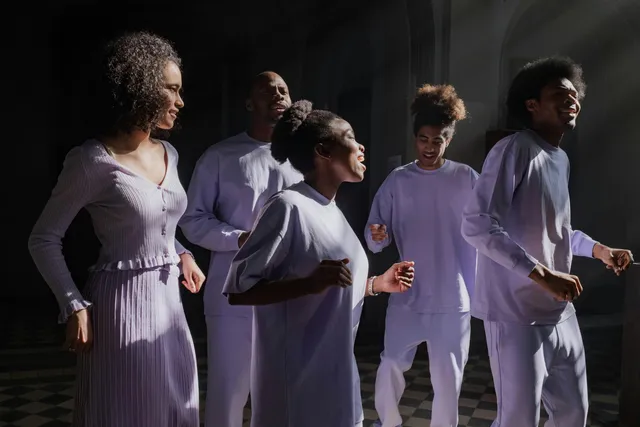
Many Psalms were written for corporate worship, to be sung by the gathered people of God. In that light, they remind us that hope is not meant to be shouldered alone. When one voice falters, another can carry the Song of Songs. The church, like the ancient choirs of Israel, becomes the echo of hope: singing truth over one another, declaring God's goodness even when tears remain.
In worship and fellowship, we learn anew that hope shared is hope multiplied. The Psalms give language not only to personal faith but to communal perseverance - a chorus of trust that spans generations.
Finding Hope Again and Again
Hope, in the language of the Psalms, is not a fragile wish but a steady orientation of the heart toward God. It is a turning, again and again, to the One who never turns away. Whether in the exuberant praise of Psalms 100 or the aching silence of Psalms 88, we are reassured of a constant truth: God is present, God listens, and God saves.
Perhaps that is why people through centuries - the brokenhearted, the repentant, the weary, the joyful - have turned to these ancient songs. They mirror our humanity and reveal God's constancy. They do not promise an easy path, but they light the way through it.
The Song That Never Ends
Hope, like the Psalms themselves, is not a single note but a symphony. It weaves lament and laughter, longing and assurance, into a melody that keeps calling us home. To find hope in the Psalms is to find ourselves continually redirected toward the Source of all hope - the living God who turns mourning into dancing, despair into trust, and silence into Song of Songs.
So the next time the night feels long and the dawn seems distant, open the Psalms. Let their words become your own. Cry out, remember, be still, praise - for in doing so, you will find that hope is already there, quietly rising, waiting to sing with you once more.