The Quiet Miracle That Holds Families Together
Every family-no matter how loving-has moments of strain. Harsh words spoken in haste, misunderstandings that cut deep, disappointments that linger in silence. Over time, these small wounds can begin to feel immovable, forming unseen walls between hearts once open. Yet, there is one act that can rebuild what seemed beyond repair: forgiveness. In Christian family life, forgiveness is not a polite courtesy or a passing emotional relief; it is the heartbeat of love itself. It is what keeps grace flowing through our homes when everything else threatens to dry up.
Forgiveness is not weakness. It is a deliberate act of spiritual strength. When Jesus taught us to pray, He placed this practice right at the center-"Forgive us our debts, as we also have forgiven our debtors" (Matthew 6:12). Notice the rhythm there: we receive forgiveness as we give it. The two are woven together so tightly that to neglect one is to starve the other. In family relationships, this truth becomes painfully real. To live together as imperfect people, bound by love, means we will have to forgive often-and deeply.
When Love Meets Imperfection
Family is God's workshop of grace. It's the place where we learn patience, humility, and the constant art of beginning again. But in that workshop, there are sharp tools-misunderstandings, disappointments, selfish moments-that can wound if we're not careful. Still, these places of hurt are also the places where love grows its roots the deepest.
Forgiveness as a Daily Practice
We often imagine forgiveness as a grand act: a tearful reconciliation after years of hurt, a dramatic moment of peace. Sometimes it is that. But more often, forgiveness happens in the daily, ordinary exchanges that shape our homes-a quiet decision not to reply in anger, a gentle word instead of a harsh one, a choice to believe the best about a loved one rather than hold suspicion. In these small moments, we mirror the faithfulness of God, who forgives us daily and invites us to do the same.
Forgiveness is the invisible glue that keeps relationships from shattering. Without it, even good intentions and warm memories begin to fade under the weight of unhealed tension. But with forgiveness, we find the courage to keep loving people who are still learning how to love us well.
The Cost-and the Freedom-of Letting Go
To forgive is costly. It costs our pride, our right to get even, our desire to prove a point. Yet that is exactly why it sets us free. The cross of Christ shows us what forgiveness truly looks like: full of pain, yet full of love. When Jesus said, "Father, forgive them; for they know not what they do" (Luke 23:34), He wasn't minimizing the suffering. He was redefining it. He turned an act of injustice into a river of redemption. In family life, when we choose forgiveness, we participate in that same sacred exchange-trading bitterness for peace, resentment for renewal.
Why Forgiveness Feels So Hard
Part of the struggle is that forgiveness often feels unfair. Why should I let someone off the hook when I'm the one who was hurt? But true forgiveness doesn't mean excusing wrong; it means releasing the other person from your vengeance so that God can work in both of your hearts. It creates space for the Holy Spirit to heal what our anger cannot. Romans 12:19 reminds us, "Do not take revenge... it is mine to avenge; I will repay, says the Lord." In the family context, this doesn't mean ignoring boundaries or staying silent in unhealthy situations. It means surrendering the final word to God, trusting His justice and His mercy more than our own.
Forgiveness Builds Generational Strength
When forgiveness takes root in a family, it doesn't only heal the present-it rewrites the future. Children who watch their parents forgive begin to understand something sacred about love. They see that relationships are not abandoned at the first sign of friction. They learn that grace is stronger than pride. They grow up internalizing the rhythm of God's mercy, and when their own mistakes come, they know how to return home rather than run away.
Every choice to forgive sends quiet ripples through generations. A mother who chooses tenderness instead of bitterness toward her husband teaches her children what loyalty really means. A father who admits his mistakes and seeks forgiveness models humility that will echo in his children's marriages. Even siblings who reconcile after years of distance can change the temperature of an entire family tree. In forgiving one another, we don't just heal ourselves-we become conduits of God's restoration for those yet to come.
The Legacy of Mercy
Consider Joseph in Genesis-the son betrayed by his own brothers, sold into slavery, forgotten in prison, yet later raised up to save those same men from famine. When Joseph finally revealed himself, his brothers expected revenge. But instead, he wept and said, "You meant evil against me, but God meant it for good" (Genesis 50:20). Joseph chose forgiveness, and his decision preserved not only his family but the unfolding story of God's people. In every family that embraces mercy, God writes similar redemption stories-quiet miracles that whisper, You are still mine, and I am not done with you yet.
Practical Steps Toward Forgiveness at Home
Forgiveness may sound spiritual, but it must become practical if it's going to change our homes. Here are a few ways to begin living it out:
- Pray before you speak. When tension rises, step away for a moment and ask God to settle your spirit. Even a brief prayer can redirect your emotions toward grace.
- Name the hurt. Forgiveness doesn't mean pretending you're fine. Naming the wound honestly before God allows Him to begin healing the real pain, not just the symptom.
- Remember your own forgiveness. When we recall how much we've been forgiven by God, our hearts soften toward others' flaws. Mercy grows in thankful soil.
- Release the outcome. True forgiveness isn't about controlling how the other person reacts. It's about setting your own heart free. Let God handle the rest.
- Keep forgiving. Sometimes forgiveness needs to be renewed daily, especially when the consequences of the hurt remain. Jesus taught us to forgive "seventy times seven" (Matthew 18:22)-a way of saying, endlessly.
These simple practices can transform the emotional climate of a home. They remind everyone that love is not about perfection, but persistence-that by God's grace, we can always begin again.
When Forgiveness Requires Boundaries
Forgiveness never means consent to ongoing harm. Sometimes love must be firm. Ephesians 4:32 tells us to "be kind and compassionate to one another, forgiving each other, just as in Christ God forgave you." Kindness includes wisdom. Compassion includes safety. In some cases, forgiving someone might mean releasing them to God's care from a distance, rather than continuing an unhealthy pattern. Setting boundaries is not unloving-it can be one of the most loving acts, because it honors both truth and dignity. Forgiveness frees the heart; boundaries protect it.
Grace That Changes the Atmosphere
Have you ever noticed how a home can "feel" tense-how the air itself seems heavy when bitterness lingers? Forgiveness changes that atmosphere. It restores warmth, laughter, and safety. It doesn't erase the past, but it reinterprets it through love's lens. When every member of a family knows that mercy is possible, that wrongs can be acknowledged without permanent exile, hearts begin to rest. Forgiveness turns a house into a sanctuary.
In homes marked by forgiveness, conversation flows more freely. Apologies are offered more readily. Laughter returns faster after a disagreement. Forgiveness restores the rhythm of grace, allowing the Holy Spirit to move through the everyday moments of family life-mealtimes, chores, sudden tears, late-night talks-with a quiet strength that holds everyone together.
Forgiveness and the Cross at the Center of Home
Ultimately, our ability to forgive flows from remembering what we have received at the cross. Every Christian act of forgiveness is grounded in that greater story: while we were still sinners, Christ died for us. When we forgive within our families, we are not performing moral heroism-we're simply letting His mercy overflow through us. We are saying, in essence, "What I've received from Him is too precious to keep to myself."
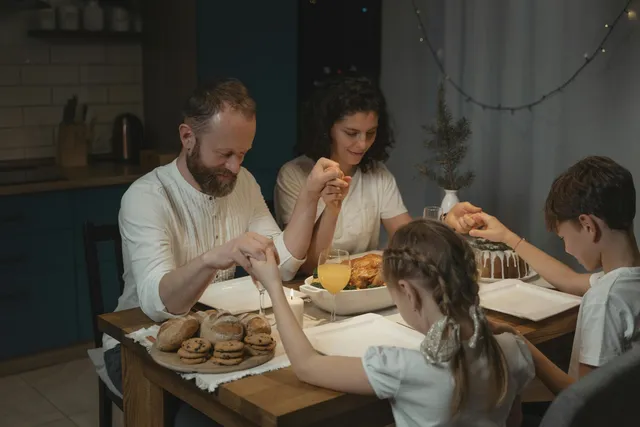
That's why family life is one of the deepest spiritual callings. It's where we practice the gospel day after day-in arguments, reconciliations, and the silent moments of choosing grace over grievance. The family altar, whether it's your dinner table or your living room, is the daily crossroads where forgiveness keeps love alive.
A Closing Word: The Gift Only Grace Can Give
Forgiveness never comes naturally. It is a miracle that happens when our pain meets God's mercy. In family life, it's the miracle that makes everything else possible. Without it, affection fades into duty; with it, duty blossoms into joy. Forgiveness allows us to keep seeing one another as God sees us-not as the sum of our failures, but as beloved works in progress, steadily being renewed by grace.
So today, if there is tension in your home, take this as your invitation. Don't wait for the perfect apology. Don't wait for the other person to change first. Bring your hurt and your hope before the Lord. Ask Him to help you forgive-not because you feel ready, but because He is. Then watch how His peace begins to flow through your family, binding hearts together again in the tender mercy that never runs dry.
Forgiveness is essential in family life not because it erases pain, but because it redeems it. It turns wounds into witnesses of God's faithfulness, and ordinary families into living reflections of divine love. And when that love is alive in a home, no failure, no misunderstanding, no storm is greater than the grace that sustains it.