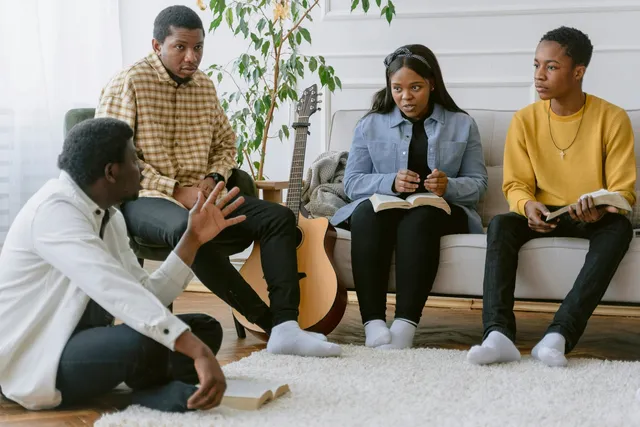
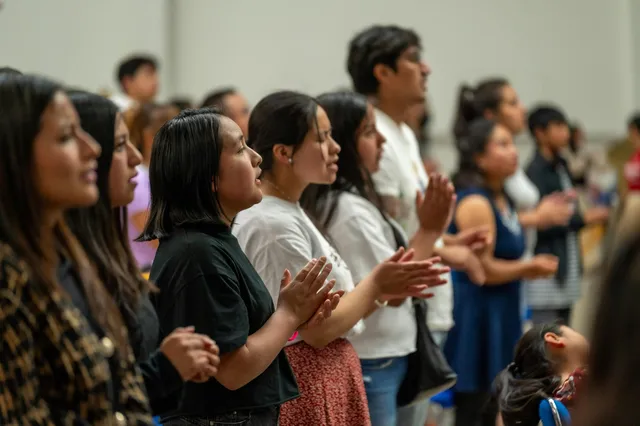
When Jesus walked along the dusty roads of Galilee, He didn't set up a classroom or publish a curriculum. He gathered people. Fishermen, tax collectors, zealots, and women who had been healed - they came together not around ideas alone, but around relationship. Every meal shared, every mile walked, every story told by the firelight became part of the timeless lesson of discipleship: that following Jesus is not a solo journey but a shared one. If faith is the flame, then relationships are the lanterns that carry it forward.
The Heart of Discipleship Is Connection
Discipleship, at its core, is about learning to live the way Jesus lived. But Jesus did not live in isolation. He lived in community - teaching crowds, praying with His disciples, eating with sinners and saints alike. His ministry was profoundly relational. To become a disciple of Jesus is to become a person of relationship - with God, with other believers, and with the world He loves.
When we think of the Great Commission, we often focus on the command to "go and make disciples" (Matthew 28:19). Yet that command assumes connection. We cannot make disciples from a distance; discipleship requires presence, patience, and proximity. It happens over kitchen tables, through shared prayers, in moments of confession and encouragement. It's in the slow, imperfect work of walking together that lives begin to change.
Jesus' Model: Friendship as Formation
Consider how Jesus formed His disciples. He didn't simply lecture them; He lived alongside them. He invited them into His days - the miracles, the interruptions, the quiet retreats. He corrected them when they misunderstood His mission, celebrated their small steps of faith, and washed their feet when pride threatened their unity. His discipleship strategy was remarkably personal.
The Vulnerability of the Table
One of the most sacred scenes in the Gospels takes place at a table. At the Last Supper, Jesus broke bread and said, "Do this in remembrance of me." The table became a living picture of relational discipleship. He was showing His followers that to remember Him was not merely to recall His words, but to live out His love with one another. The act of breaking bread was, and still is, the act of sharing life deeply.
There's something profoundly humbling about Jesus choosing a meal as the symbol of His ongoing presence. Meals evoke community; they slow us down. In a world that glorifies independence, the table reminds us that God's kingdom grows through interdependence. Discipleship happens best when hearts are open and hands are extended.
We Learn God's Character Together
It's easy to imagine that spiritual growth is mostly between "me and God." But Scripture tells another story. So many of the fruits of the Spirit - love, patience, kindness, gentleness - only grow in relationship. They can't mature in solitude. We learn forgiveness when someone wrongs us and we choose grace. We learn patience in the face of others' imperfections (and they, in ours). Community becomes the classroom where the virtues of Christ take root.
Think of the early church described in Acts 2. The believers devoted themselves to the apostles' teaching, to fellowship, to breaking bread, and to prayer. Those four pillars were relational, not abstract. And the result? "And the Lord added to their number daily those who were being saved" (Acts 2:47). Growth flourished in the soil of connection. Lives were transformed not through isolation but through a shared life centered on Jesus.
Iron Sharpens Iron
Proverbs 27:17 offers a simple but profound image: "As iron sharpens iron, so one person sharpens another." This verse captures the essence of relational discipleship. Growth happens not merely by encouragement but also by honest confrontation, accountability, and love that dares to speak truth. When we walk with trusted believers who both challenge and support us, we find ourselves being shaped more closely into Christ's likeness.
Relationships Reveal Our Discipleship
Our relationships don't just support our discipleship - they reveal it. Jesus said, "By this everyone will know that you are my disciples, if you love one another" (John 13:35). The proof of our discipleship is our love. That means our daily interactions are not separate from our spiritual growth; they *are* the proving ground of it. How we treat our family, our friends, our coworkers, and even strangers becomes a testimony to the One we follow.
Love is the language of discipleship. It is how the world knows whom we belong to. When believers truly live out love - sacrificial, forgiving, persevering love - others are drawn to the reality of Christ in us. It was this kind of visible community that made the early Christians so distinct in the Roman world. They cared for the sick, welcomed outcasts, and shared their resources generously. Their love was not theoretical; it was tangible.
The Challenges of Relational Discipleship
Of course, relationships are not always easy. They expose our rough edges - our impatience, our pride, our tendency to withdraw when hurt. That's precisely why they matter in discipleship. We can't become more like Jesus while avoiding the people He loves. The process of learning to forgive, to listen, to humble ourselves - these are the crucibles where Christlike character is forged.
Discipleship without relationship can seem safer. We can study our Bibles privately, attend sermons anonymously, and measure growth by how much we know. But Jesus calls us to something riskier and deeper. True discipleship invites vulnerability - being known, corrected, encouraged, and shaped by one another under the lordship of Christ.
The Gift Hidden in Imperfection
Even within Jesus' own circle there were misunderstandings and betrayals. Peter denied Him; Judas sold Him for silver. Yet Jesus did not withdraw from them. He continued to teach, to love, to pour Himself out. That is the model for us - to stay engaged, even when relationships are messy. In the imperfection of community, we glimpse the grace of God who never gives up on us.
Mentorship and Multiplication
One of the most beautiful fruits of relational discipleship is multiplication. When Paul wrote to Timothy, he said, "The things you have heard me say ... entrust to reliable people who will also be qualified to teach others" (2 Timothy 2:2). The faith spreads not through programs but through relationships - one life investing in another. A mentor takes time to listen, guide, and pray alongside. A friend models faith in the ordinary grind of life. A parent quietly shapes a child's heart through daily grace. Each relationship becomes a living link in the chain of spiritual heritage.
Discipleship reproduces through love. Programs can spark interest, but relationships sustain transformation. Our world is hungry not just for teaching but for belonging. When we walk authentically with one another - not pretending perfection, but pointing each other toward Christ - our faith becomes contagious.
In the Everyday Moments
It's easy to think of discipleship as something that happens in Bible studies or church buildings, but most spiritual formation occurs in the quiet, daily interactions of life. It's in the phone call to a struggling friend, the shared laughter over dinner, the reconciled argument that almost split us apart. Each moment of connection can be a moment of discipleship when we approach it with humility and love.
Even the short conversations we have after Sunday service or while serving together in ministry can shape our souls. The Spirit often uses our relationships to whisper His truth, to encourage us in faith, and to remind us that we're not alone. God builds His kingdom in the ordinariness of community.
Grace, the Thread That Holds Us
Ultimately, relationships in discipleship are sustained by grace - God's grace to us and our grace to one another. We will fail each other. We will misunderstand, disappoint, and occasionally wound. But grace allows us to begin again. Just as Jesus restored Peter after his denial, He invites us to restore and walk with one another in love. Grace turns broken relationships into renewed witness.
When the church lives out this kind of grace-filled community, it becomes a mirror of God's heart. We show the world what reconciliation looks like, what patience feels like, and what divine love can accomplish in human hearts. These are not small things. They are the building blocks of a faith that changes the world one relationship at a time.
A Living Invitation
Relationships do not merely accompany discipleship - they define it. Every handshake, every shared prayer, every tear and word of affirmation becomes part of the spiritual story God is writing in us. Following Jesus always leads us toward others, not away from them.
To be a disciple is to belong. And to belong is to love as Christ loved us. In a fragmented and disconnected age, this relational way of discipleship is radical - and deeply needed. When we commit to walk together, we begin to reflect the unity Jesus prayed for in John 17: that we would be one, just as He and the Father are one.
So the invitation is simple and profound: draw close. Share life. Don't journey alone. Somewhere in the imperfection of human relationships, you will encounter the perfect love of God. That is where discipleship comes alive - not in isolation, but in communion, where hearts meet and Christ is seen.
May we learn to follow Jesus not only with our minds and hearts, but with our friendships, our families, and our communities - because in the end, relationship is the soil where discipleship bears its most lasting fruit.