In a world that prizes self-sufficiency and personal autonomy, Christians are called to a remarkably different rhythm-one that honors both individual responsibility and the deep, spiritual beauty of belonging. The tension is real: faith is profoundly personal, yet it was never meant to be private. How do followers of Jesus remain independent people, capable of discernment and strength, while remaining rooted in a loving and interdependent community? The answer requires humility, wisdom, and a willingness to be shaped by both solitude and fellowship.
The Sacred Tension Between the Individual and the Body
From the very beginning, Scripture weaves both independence and community into the fabric of faith. God created Adam and declared that it was not good for him to be alone (Genesis 2:18). Yet, when He called Abraham, the Lord spoke directly to one man, challenging him to step out in faith-even apart from his kindred and country. Both truths remain side by side: God calls individuals personally, but He always leads them into the greater story of His people.
In the New Testament, Paul describes believers as many parts of one body (1 Corinthians 12). The hand cannot say to the eye, "I don't need you." Yet, the hand still functions as a unique part of the whole. Each believer contributes something vital-something only they can bring. The goal, then, isn't to surrender individuality, but to surrender isolation. Our independence becomes transformed when we willingly participate in the life and needs of the larger body.
Why Independence Still Matters
Christian independence isn't rebellion-it's maturity. In Galatians 6:4-5, Paul urges believers to "test their own work" and carry their own load. Spiritual growth requires personal responsibility: owning our walk with Christ, developing discernment, and pursuing holiness even when no one is watching. This inner independence strengthens the community, not weakens it, because a self-aware believer is better equipped to give, serve, and discern truth.
The Gift of Personal Faith
Consider Jesus' rhythm of life. He often withdrew to solitary places to pray (Luke 5:16). Before major decisions, such as choosing the twelve disciples, He spent the night alone with the Father. Solitude, for Jesus, was not a retreat from relationship-it was a way to renew it. Genuine independence allows believers to listen for God's voice personally, rather than simply echoing the opinions around them. Without quiet seasons of personal communion with Christ, community life risks becoming noisy but shallow.
Independence also safeguards conscience. In times when cultural voices-even within the Church-pull believers in conflicting directions, personal conviction rooted in Scripture keeps faith alive and authentic. A mature Christian doesn't wait for consensus to obey God. Like Daniel in Babylon or Esther in Persia, sometimes faith begins with one solitary heart that says, "If I perish, I perish."
When Community Becomes the Lifeline
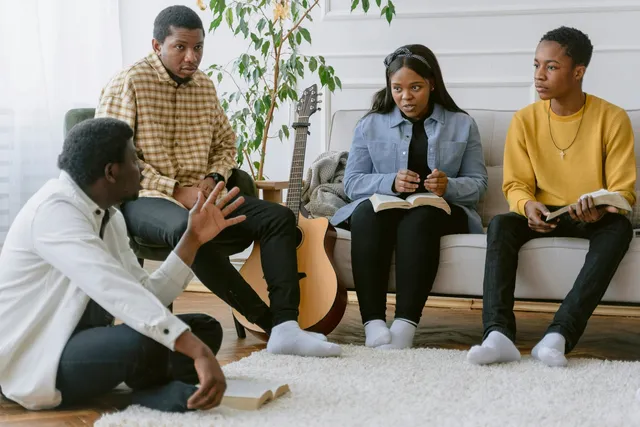
Yet independence alone can harden into pride. In our modern world, where faith can easily become individualized-a 'me and Jesus' affair-the biblical pattern reminds us that the Christian life blossoms in shared fellowship. Acts 2 paints a picture of believers devoted to teaching, breaking bread, and prayer together. They shared possessions, met daily, and rejoiced together. It wasn't a utopia; it was a spiritual family learning to love in a world of scarcity and persecution.
Community shapes faith in ways independence cannot. When we gather, our rough edges meet others' rough edges-and grace becomes not just an idea but a practice. Forgiveness, generosity, patience-these are forged in the fire of shared life. This is the brilliance of God's design: we grow best when we stop centering only on ourselves.
The Church as a Mirror
One of the most humbling aspects of community is that it reflects what we might prefer to ignore. Just as an honest friend can reveal blind spots we don't see, the Church-imperfect and messy as it is-reveals spiritual truths that solitude sometimes shields us from. James 5:16 calls us to "confess your sins to one another," a command that shatters the illusion of self-sufficiency. Healing begins in shared vulnerability, where independence bows before love.
To balance the two, Christians must embrace community not as a crowd, but as a calling. The Church isn't a social club or cultural event-it's a spiritual home. And like all homes, it requires work, patience, and forgiveness.
Jesus: The Perfect Model of Balance
No one balanced independence and community more perfectly than Jesus Himself. He lived fully dependent on the Father, yet deeply connected to people. His ministry grew from solitude but was carried out in the company of friends, followers, and strangers. He washed the disciples' feet and ate with sinners, showing the humility of true community life. Yet He also walked out into the hills alone, rising early to pray while it was still dark.
His independence empowered His community; His community deepened His independence. Jesus didn't fear solitude, nor did He shun the crowd. He engaged with both, knowing that spiritual strength requires the flow between them. For Christians, imitation of Christ means learning this rhythm: solitude with God refines us; fellowship with others expresses what that solitude teaches.
Walking the Tightrope of Modern Faith
In today's culture, the pull in both directions is strong. The secular message of radical independence whispers, "You don't need anyone. Do your own thing." Meanwhile, the fear of missing out can tempt believers to find identity only through community approval-serving tirelessly, posting faith-themed updates, or measuring worth by involvement. Both distortions rob the soul of balance.
Healthy independence is not isolation, and community is not conformity. The challenge is to hold both with grace. When you read Scripture alone, remember you're reading a communal story meant to shape a people. When you worship with others, remember that you bring your own heart, story, and prayers-gifts God uniquely placed within you for the sake of others.
Practices for Daily Balance
- Begin each day in solitude: Even five minutes of quiet before God can center your heart before meeting the world.
- Engage intentionally with your faith community: Attend not just for yourself, but as someone ready to serve, listen, and encourage.
- Seek interdependence, not dependence: Ask for help when needed, but also cultivate the habit of giving and contributing.
- Embrace accountability: Let trusted friends or mentors speak truth into your life; independence without accountability easily drifts into pride.
- Celebrate diversity within the body: The fact that others see and experience God differently than you is not a threat-it's a blessing.
When Balance Feels Impossible
There are seasons when the balance between independence and community feels unattainable. Maybe you're in a time of isolation-due to illness, distance, or emotional fatigue. Maybe community has wounded you, and the thought of returning feels painful. God understands. Even Elijah, after miracles and victory, retreated into despair, believing he was utterly alone. Yet God whispered gently, reminding him of the seven thousand others who still hadn't bowed to Baal. We are seldom as alone as we feel, and never as forgotten as we fear.
Healing may take time, but God's design remains redemptive. When the Spirit leads you into solitude, let it refine your soul, not harden it. When He leads you back into fellowship, let grace, not fear, open the door.
Becoming Whole in Both Directions
The healthiest Christians are those who have learned to breathe in solitude and exhale in fellowship. They know when to retreat and when to rejoin. They don't idolize either space, but instead let each nourish the other. This is spiritual rhythm-the movement of a faithful life that rests in God alone yet beats in time with others around it.
In the end, independence and community are not enemies to be reconciled; they are partners in the pursuit of Christlikeness. To be independent in Christ is to stand firm in conviction and identity. To live in community is to express that conviction through love. When these coexist, the Church becomes both strong and tender, and the world sees in us a reflection of the God who both dwells within us individually and gathers us into one body.
A Closing Word: Living the Balance
Perhaps the secret is not to balance independence and community as if they are weights on a scale, but to let love hold them together. Love calls us into relationship and strengthens us to stand alone when needed. Love seeks peace without losing truth. Love moves from the quiet room of prayer into the vibrant household of God's people.
To walk with Christ is to learn this rhythm daily-listening alone, loving together, and living as one body filled with countless hearts. The journey is lifelong, but every step taken in grace draws us closer to the image of the One who perfectly balanced both: dependent on the Father, devoted to His friends, and free for the sake of the world.